The international economic forum's cultural program showcases Uzbekistan’s modern approach to executing its foreign policy
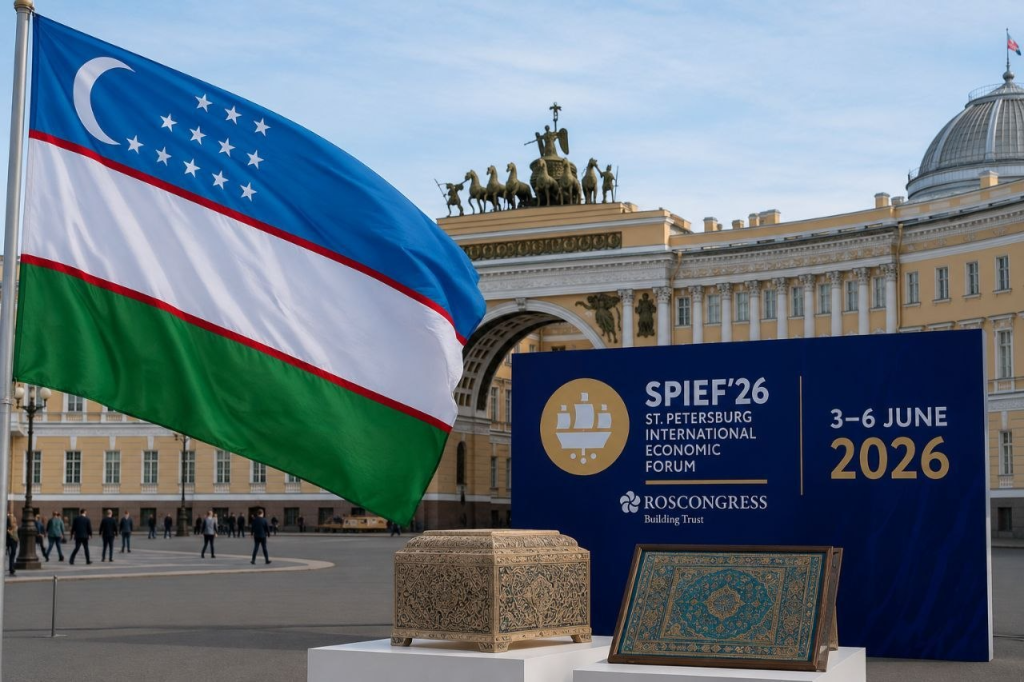
The St. Petersburg International Economic Forum (SPIEF) has long been recognized as a leading global platform for discussions on the global economy, investment, and geopolitical developments.
In recent years, its agenda has expanded significantly, moving beyond purely economic topics. The forum provides states with an opportunity to demonstrate their soft-power potential, as cultural diplomacy becomes an important tool for strengthening their international image and influence.
According to Lobar Khushnazarova, an independent researcher at Tashkent State University of Oriental Studies, Uzbekistan’s participation in this forum, featuring a large-scale cultural program, is an important strategic step. Amid a complex geopolitical situation, economic interests, cultural influence, and trust between peoples are increasingly important and integral to modern foreign policy.
As Aide to the President of Russia Yuri Ushakov reported, around 20,000 representatives from more than 100 countries are expected to take part in the forum. The presence of heads of state and high-ranking political figures underscores the event’s high international status. Particular attention is drawn to the participation of President of Uzbekistan Shavkat Mirziyoyev, which reflects both the country’s active foreign policy and Uzbekistan’s growing authority on the world stage.
Culture remains one of the most effective ways to maintain dialogue among peoples. Amid intensifying international competition, it is art, music, literature, and historical heritage that help strengthen mutual understanding and remind us of the universal human values that unite different societies and states.
The Petersburg Seasons festival, held as part of the forum, is gaining particular importance. The program presented by the Uzbekistan Art and Culture Development Foundation demonstrates a qualitatively new level of the country’s participation in the international cultural space.
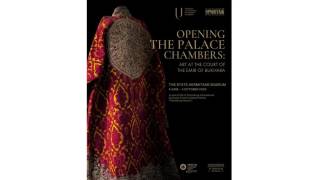
One of the central events will be the exhibition “Opening the Palace Chambers: Art at the Court of the Emir of Bukhara”, organized in collaboration with the Hermitage. The project offers a unique opportunity to introduce an international audience to the traditions of Uzbek statehood, palace culture, and artistic heritage.
The exhibition will bring together rare items from the collections of the Bukhara State Architectural and Art Museum-Reserve, the State Museum of Arts of Uzbekistan, the State Museum of Applied Arts and History of Handicrafts of Uzbekistan, and the State Museum of the History of the Temurids. The jewelry, works of applied art, and historical artifacts on display reflect the high level of cultural development among the peoples of Central Asia.
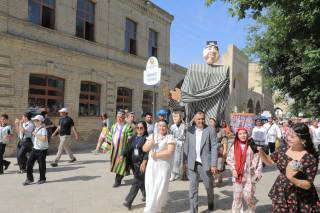
The significance of the project extends far beyond museum activities. The program includes scientific conferences, lectures, seminars, traditional music concerts, and masterclasses. This creates new opportunities for scientific cooperation and academic exchange.
Uzbekistan presents its cultural heritage not only as an exhibition object but also as an important element of international humanitarian cooperation. This approach reflects the growing role of cultural diplomacy in the country’s foreign policy. The cultural program at SPIEF 2026 is not merely a series of exhibitions and festival events. It serves as an effective diplomatic mechanism that strengthens Uzbekistan’s international image, promotes its national cultural heritage, and develops trust-based relations between states.
Heritage of Temur and the power of cultural influence
In modern international relations, a country’s influence is determined not only by its economic potential and political weight but also by culture, historical memory, and humanitarian ties, which are increasingly important in shaping a nation’s international standing.
One of the most significant projects will be Uzbekistan’s participation in the exhibition “Earthly Love and Heavenly Love. Vladimir and Konstantin Makovsky”, held at the Fabergé Museum. The exhibition will bring together collections from more than 25 museums across multiple countries and will serve as a vivid example of international museum cooperation.
Nine unique exhibits from the collection of the State Museum of Arts of Uzbekistan will not only showcase the national cultural heritage but also demonstrate the high professional level of the country’s museum school. This underscores the growing integration of Uzbekistan’s cultural heritage into the global museum space.
As experts note, museum diplomacy is among the most effective forms of cultural diplomacy because museums are where an objective understanding of the history, values, and civilizational experience of peoples is formed. Uzbekistan’s participation in international museum projects contributes to a deeper understanding of its historical and cultural heritage.
Another notable event in the cultural program will be the staging of George Frideric Handel’s opera Tamerlano at the Mariinsky Theatre. The performance exemplifies a creative dialogue between cultures and offers a modern interpretation of historical heritage.
The image of Amir Temur, an outstanding statesman who played an important role not only in the history of Uzbek statehood but also in the development of Eurasian civilization, gives the production particular significance. Through this image, an international audience can gain a deeper understanding of Central Asia’s history and culture.
The project’s uniqueness lies in combining European Baroque musical traditions with Uzbek national musical culture. The use of national instruments in Handel’s work enabled an original artistic solution that symbolizes a dialogue between different cultural traditions.
The participation of People’s Artist of Uzbekistan Jenisbek Piyazov, actress Yulduz Rajabova, the national choir, and folk instrument ensembles demonstrates the country’s high creative potential. More than 160 artists are involved in the performance, making it one of the forum’s largest cultural projects.
At SPIEF, Uzbekistan is presenting itself not only as a promising economic partner but also as a country with a rich cultural heritage. This aligns with modern trends in international relations, where culture is increasingly an effective tool for strengthening mutual trust between countries.
The cultural initiatives held during the forum also demonstrate Uzbekistan’s desire to shape the global humanitarian agenda actively. This confirms the strengthening of the country’s international authority and the expansion of its presence in the global cultural space.
Uzbekistan’s cultural program reflects a new approach to the country’s foreign policy, in which culture is viewed not as an add-on to economic diplomacy but as an independent and effective tool for advancing national interests. The exhibition and stage projects presented in Saint Petersburg are an important strategic resource for strengthening Uzbekistan’s international standing.
Musulmon Ziyo, UzA