EU and Uzbekistan discuss investment and reforms to strengthen the Trans-Caspian Transport Corridor
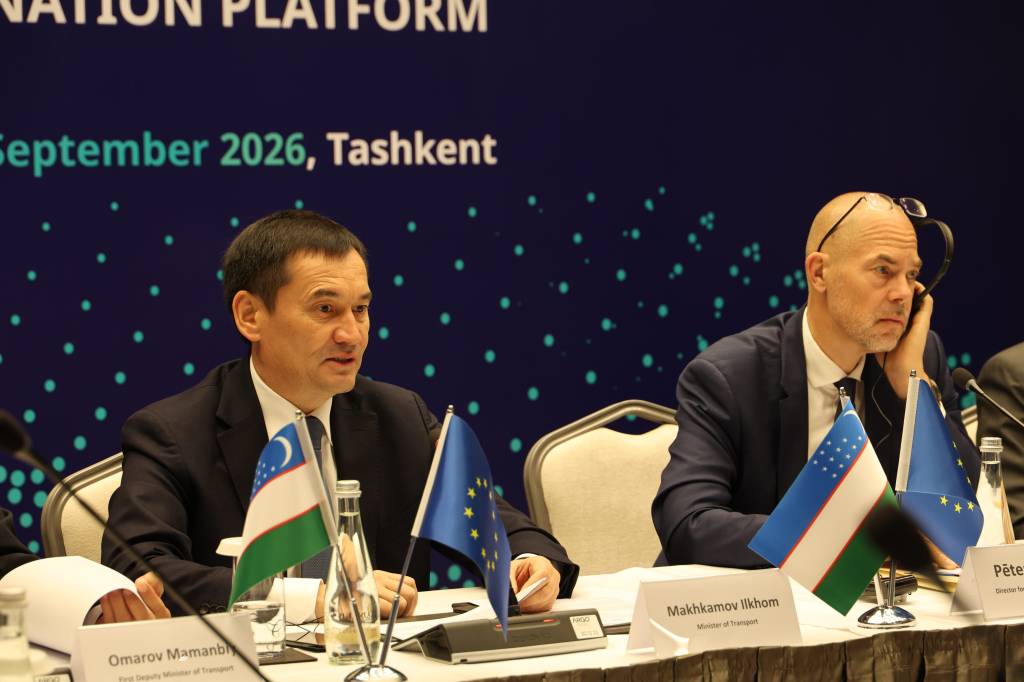
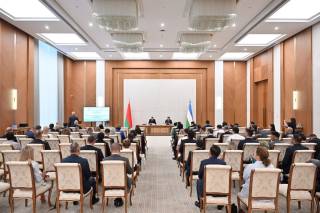
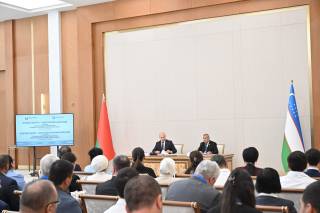
Government representatives, the European Union, international financial institutions, development partners and private-sector representatives met in Tashkent for the Second National Conference on the Trans-Caspian Transport Corridor (TCTC) in Uzbekistan. The conference examined how investment and reforms can strengthen Uzbekistan’s role in sustainable connectivity between Central Asia and Europe.
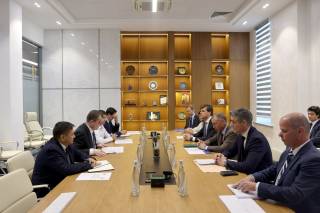
Co-chaired by Uzbekistan’s Minister of Transport, Ilkhom Mahkamov, and Pēteris Ustubs, Director for Asia and the Pacific at the European Commission’s Directorate-General for International Partnerships, the conference brought together national and international partners to discuss infrastructure priorities, project preparation and practical measures to improve the Corridor’s performance.
“As the Trans-Caspian Transport Corridor is moving from ambition to implementation, today’s conference is about turning shared priorities into concrete projects, stronger coordination and real investment on the ground. For the EU, this corridor is not only a transport route across a map, but a platform for partnership, sustainable growth and stronger regional cooperation between Europe and Central Asia”, Pēteris Ustubs, Director for Asia and the Pacific, European Commission said.
Discussions covered investment in railway and road infrastructure, including project readiness, financing requirements and the reforms needed to advance priority proposals. The program also included the World Bank’s 2026 flagship report on the TCTC, bringing a Corridor-wide perspective to the national investment discussion.
Participants considered how logistics centers and services can connect national production and trade with the Corridor, and what operating conditions and business-environment improvements could support investment. The digitalization session addressed cross-border exchange of transport and trade documents, including eTIR, eCMR and electronic certificates of origin, with attention to interoperability, international standards and the practical steps needed for implementation.
The private-sector session presented recommendations developed with business input and considered the proposed Private Sector Advisory Committee (PSAC) as a channel for bringing operational experience into policy dialogue. Company representatives also shared project proposals and discussed the preparation and partnerships required to take them forward.
The conference forms part of the EU-funded TCTC Coordination Platform under the EU Global Gateway strategy. The Platform supports consultation and coordination among the five Central Asian countries, the European Union, international financial institutions and other partners. Follow-up through the Platform will help maintain dialogue on priority proposals, project preparation, and measures to improve the Corridor’s efficiency and competitiveness.
Nasiba Ziyodullayeva, UzA