Building trust: how to fight fake news
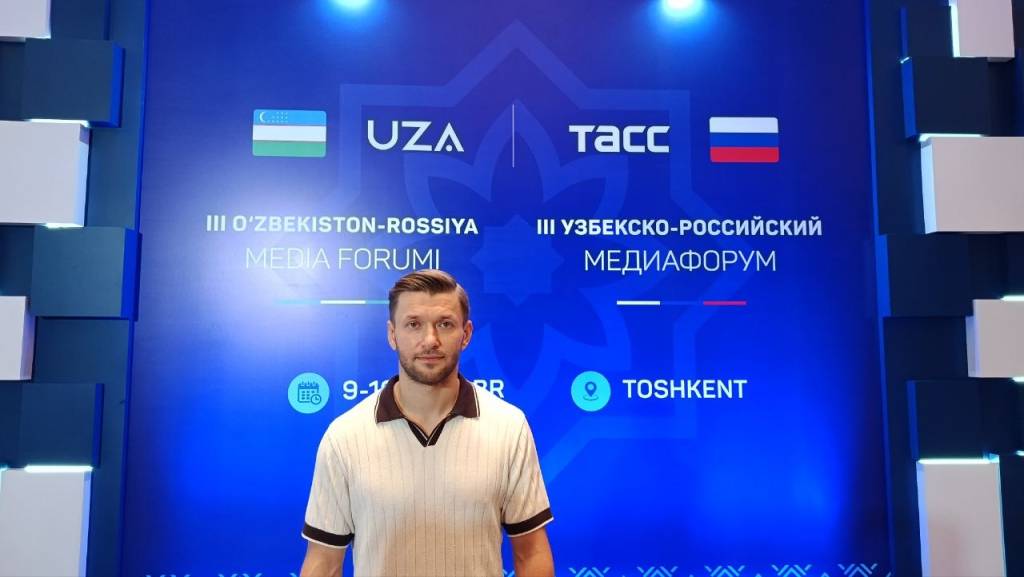
We spoke with Daniil Bisslinger, Vice President of the Global Fact-Checking Network (GFCN), about combating fake news, why artificial intelligence cannot fully replace humans in fact-checking, and the development of international cooperation in this field.
– Many media outlets are shutting down their fact-checking departments, believing that AI can do the job on its own. What do you think about this?
– I think artificial intelligence is a useful tool, especially in areas where we have considerable expertise. It is undoubtedly highly effective at analyzing large amounts of data. But personally, I would put it this way: I would trust artificial intelligence to build a television set, but I would keep the remote control and the authority to press the buttons in human hands. That is why the process should be overseen by experts and specialists who truly understand the subject.
– So, is fact-checking in your organization performed by people?
– Our fact-checking combines human expertise with artificial intelligence, while remaining under human supervision.
– How are responsibilities divided? Which tasks do specialists handle, and which does artificial intelligence handle?
– Our team includes specialists, methodology experts, subject-matter experts, analysts, and journalists. In fact, fact-checking today is no longer just about verifying facts. It is about building a comprehensive infrastructure of trust.
On the one hand, we need to focus on public education and improving media literacy, while working closely with experts and journalists. On the other hand, we must develop the technological side of our work by introducing neural network-based solutions, creating platforms and implementing content labeling. Finally, the institutional dimension is equally important: international cooperation, developing unified standards and establishing common approaches. All of this, of course, requires qualified professionals.
– What do you verify, specifically? If your organization fact-checks, what does it focus on?
– First and foremost, we verify facts. That is our mission.
– So, do you verify every claim that appears online?
– No, only those that come to our attention. Just imagine: if billions of false reports are published every day, there is hardly any way to check each one and reliably determine what is true and what is false. That is why we say building trust matters more today than combating every individual piece of misinformation. Trying to fight every fake is like trying to stop a volcanic eruption with a school fire extinguisher. It is simply impossible.
People need something they can rely on – trustworthy sources and communication channels they can turn to for accurate information. This is particularly important in an era when information spreads rapidly and is produced in enormous volumes.
– Am I right in understanding that you primarily verify information that becomes popular, trends, and attracts large numbers of views?
– Not necessarily. We are interested in information that attracts attention for various reasons. Our analysts review materials, read regular news summaries, and analyze data from news aggregators. Neural networks also help us identify relevant content and extract the information we need from large datasets.
In addition, our partners sometimes draw our attention to specific claims. I would say that we operate at the final stage of a fairly extensive information-gathering process, where our responsibility is to determine which materials require further analysis.
– Is it possible to stop the spread of fake news once it has gone viral and is trending?
– It may be impossible to prevent fake news from appearing altogether, and stopping its spread isn’t always possible. Fake news taps into people’s deepest emotions, exploits sensational topics, and offers simple answers to complex questions.
There is no way to stop this process at the push of a button. Algorithms pick up false information and spread it almost instantly.
That is why it is far more important for us to encourage people to adopt a mindset of informed skepticism, to ask questions and to understand which questions they should be asking. Most importantly, when they have doubts, they should have reliable sources they can turn to. That is exactly what we are working to achieve.
– If certain individuals systematically spread false information, can you take any action or report them to organizations authorized to respond to such conduct?
– There are certain nuances here. Fake news is not always created within our country (Russia). Very often, it originates beyond our borders. Sometimes we can identify those responsible, and sometimes we cannot. Where possible, particularly when malicious or even illegal activities are involved, the relevant authorities can certainly be alerted. Our task, however, is to establish what is true and what is false and then communicate the findings to a wider audience, either independently, in cooperation with colleagues or with the support of our network of experts, so that people are not left with false impressions.
– So, you cooperate with media outlets that can later publish corrections or fact-checking reports?
– Yes, that is also one form of cooperation. Recently, we signed an agreement with OANA, the Organization of Asia-Pacific News Agencies, the largest international association of news agencies, bringing together state and non-state news agencies across the Asia-Pacific region. It includes representatives from approximately 40 countries. This is an extensive network for disseminating news and information, with which we maintain regular contact.
In addition, we have experts from more than 50 countries. Each has their own network of contacts and audience. We work closely together: in some cases, we support one another; in others, our colleagues suggest materials that deserve our attention, and in some instances, our cooperation involves deeper integration. Our goal is to build a healthy system of international information cooperation.
We are talking so much about cognitive sovereignty today for a reason. This concept does not mean isolating a country within its own information space. On the contrary, it involves broad international cooperation that enables citizens to form their own opinions about events both within their country and beyond its borders.
– You mentioned that you recently established a new company.
– Not just recently. It was literally just before I came here. I flew in from the United Arab Emirates, where we registered our first international branch, GFN International. I believe this will significantly expand our capabilities, both in developing our expert network and organizing specialized events. We now have another international presence and an additional platform for our work. I hope it will not be the last, as we intend to expand further.
– What exactly will your branch do?
– It will organize events, work with experts and implement educational projects. It will also support the development and promotion of our specialized technologies for detecting fake news, labeling content and other related activities. Essentially, it is an additional platform for expanding international cooperation.
Combating disinformation is increasingly becoming a challenge that cannot be addressed through technology alone. Artificial intelligence can analyze vast amounts of data, identify suspicious publications and help specialists detect false information. However, making a final assessment still requires human experience, professional expertise and accountability.
At a time when false information spreads faster than it can be debunked, it is especially important not only to recognize fake news but also to have access to trustworthy sources. After all, a society’s information security depends not on how many false narratives we expose, but on people’s ability to distinguish reliable information from manipulation on their own. And perhaps this is the central message of our conversation: it is impossible to defeat every piece of misinformation, but it is possible to create an information environment in which the truth has a better chance of being heard.
Roman Bondarchuk, UzA