A Turkic scholar studies the “lost” heritage of the Timurids in European archives
Unique manuscripts and historical monuments from the Timurid era, long considered lost, are being identified in European archives.
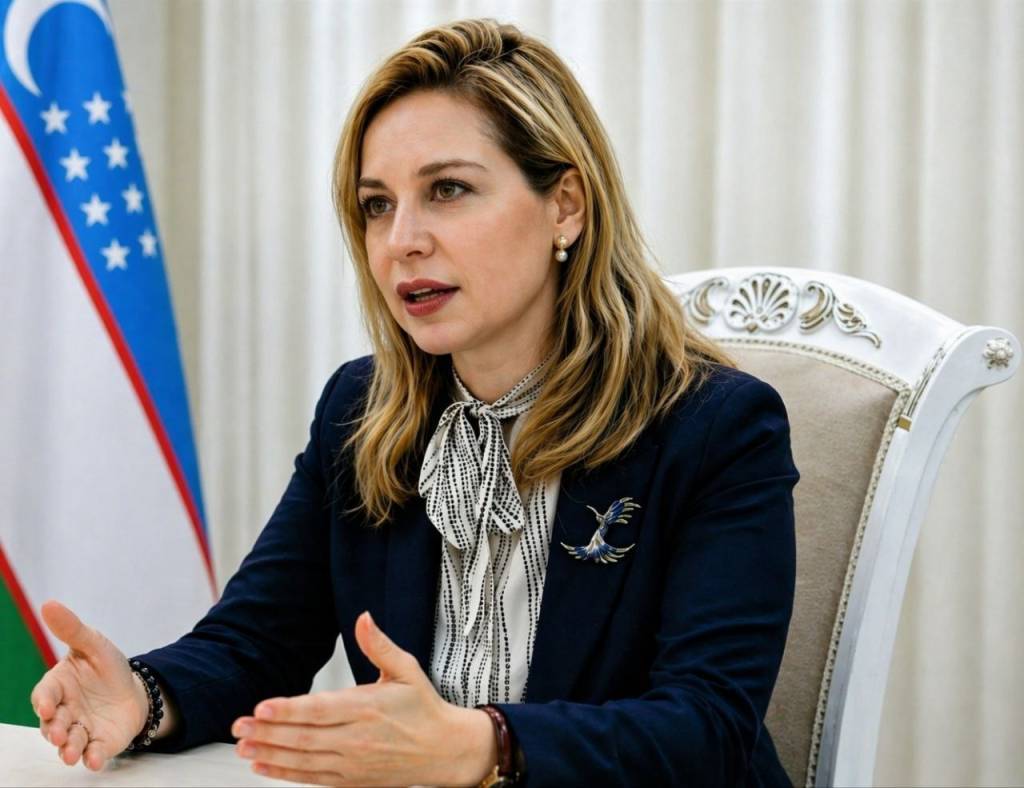
This was reported by Professor Selin Şenocak, Chair Holder of UNESCO Cultural Diplomacy.
According to her, as part of the project “In the footsteps of the ancestors”, which she leads, important monuments from the Timurid era of the 14th-15th centuries were discovered in the archives of Oxford, Edinburgh, Paris, Berlin and Vienna. As the researcher noted, these works are valuable historical documents and an integral part of the cultural and spiritual memory of Turkestan.
Selin Şenocak emphasized that the consistent policy of President of the Republic of Uzbekistan Shavkat Mirziyoyev, aimed at studying the heritage of the Timurid era, gives new impetus to such research.
“We are becoming convinced that Uzbekistan’s history is preserved not only within the country, but also in numerous European libraries and archives, where its heritage is represented in scattered form. This concerns not hundreds, but tens of thousands of books and manuscripts”, the scholar noted.
According to available data, Amir Temur’s work “Tuzukoti Temuri”, as well as early divans by Alisher Navoi written in the Chagatai language, are kept in renowned research and library institutions in Oxford and Berlin. In addition, European archives hold a work recounting the conversion to Islam of the first Turkic ruler, Satuq Bughra Khan. These monuments were taken from Turkestan during the Russian Empire and the Soviet Union.
According to the scholar, in recent years, several European universities have been offering educational programs for the study of the Uzbek and Chagatai languages. European states are increasingly recognizing the value of the historical heritage preserved in their archives. As part of the 2025 inventory, about 1,000 works have already been registered in various libraries. The ultimate goal of the project is to create a “Digital Library of Turkestan” in cooperation with researchers from Uzbekistan.
For Selin Şenocak, who was born in France and comes from the family of Sheikh Shakir Effendi, whose ancestors left Bukhara in 1862, this research work is of particular importance.
“Every study I conduct is a step toward fulfilling my great-grandfather’s dream, which he was unable to realize during his lifetime. Bringing his intention to life is my duty. Uzbekistan is not a foreign country to me, but the land of my ancestors, my Motherland”, Selin Şenocak noted.
UzA