Uzbekistan’s experience in preventing violent extremism receives high recognition at the GCERF Governing Board Meeting
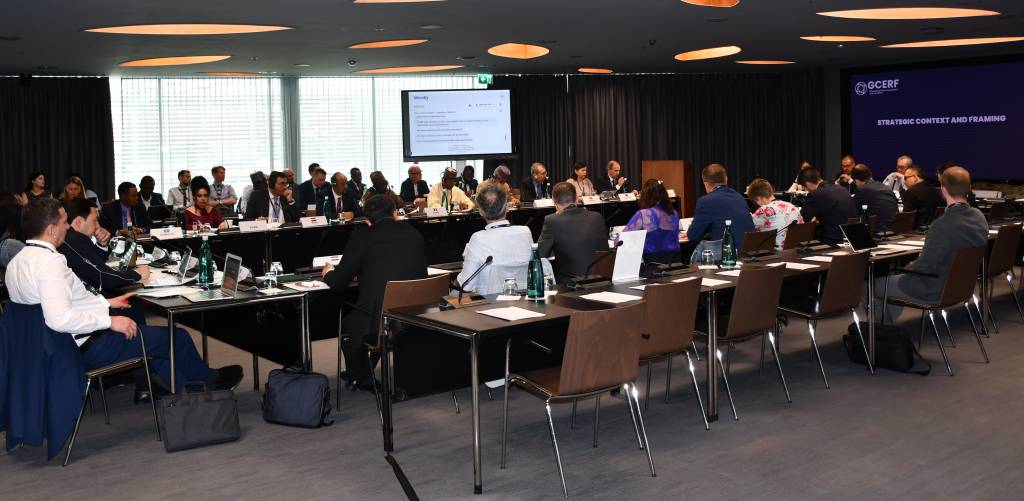
Bakhtiyor Mustafayev, Deputy Director of the Institute for Strategic and Regional Studies under the President of the Republic of Uzbekistan (ISRS), attended the 24th Meeting of the Governing Board of the Global Community Engagement and Resilience Fund (GCERF) in Geneva on 2-3 June.
The meeting brought together senior representatives from more than 40 countries that are members of the GCERF Governing Board and its partner network. Discussions focused on enhancing the effectiveness of the Fund’s programs and identifying strategic priorities for its future activities.

A dedicated session examined the evolving risks and resilience factors in Central Asia. Mr. Mustafayev moderated the discussion. Participants explored the changing nature of contemporary threats, which increasingly affect the social sphere and necessitate comprehensive preventive approaches.
Participants noted that the countries in the region are facing new challenges stemming from shifting migration routes and the spread of extremist ideologies on digital platforms. Under these circumstances, preventive efforts to strengthen social cohesion, support vulnerable groups, and prevent violent extremism are becoming increasingly important.
Against this backdrop, Uzbekistan’s experience in this field drew considerable interest among participants. Members of the Governing Board praised the country’s comprehensive system of measures to reduce vulnerability factors and provide targeted support to at-risk individuals.
Particular recognition was also given to Uzbekistan’s system for rehabilitating and reintegrating returnees. Experts noted that this approach is among the most successful practices in the region and offers valuable lessons for the international community.
Special attention was also given to the results of cooperation between ISRS and GCERF in preventing violent extremism. As noted by Mr. Mustafayev, substantial progress has been made since the parties signed the Memorandum of Understanding in 2024. A Country Support Mechanism has been established, the GCERF Investment Strategy for Uzbekistan has been developed, and funding has been provided for projects implemented by local civil society organizations (CSOs).
Currently, with support from the Fund, the NGOs Barqaror Hayot, Istiqbolli Avlod, and the Republican Center for Social Adaptation of Children are implementing initiatives. Their activities focus on strengthening local communities, supporting at-risk families, empowering young people, and enhancing digital literacy.
Tangible outcomes of these efforts include the establishment of child development centers and sports facilities, the launch of the “Start Your Career” and “Legal Clinic” laboratories, and small business development support programs. Particular attention is being devoted to the Youth Digital Resilience initiative, which aims to establish a media center to foster critical thinking skills and responsible information consumption among young people.
Following the session, participants reaffirmed their interest in expanding cooperation with Uzbekistan and expressed readiness to advance joint initiatives to prevent violent extremism, promote social integration, and strengthen the resilience of local communities.
UzA