Work to ensure employment and increase incomes reviewed
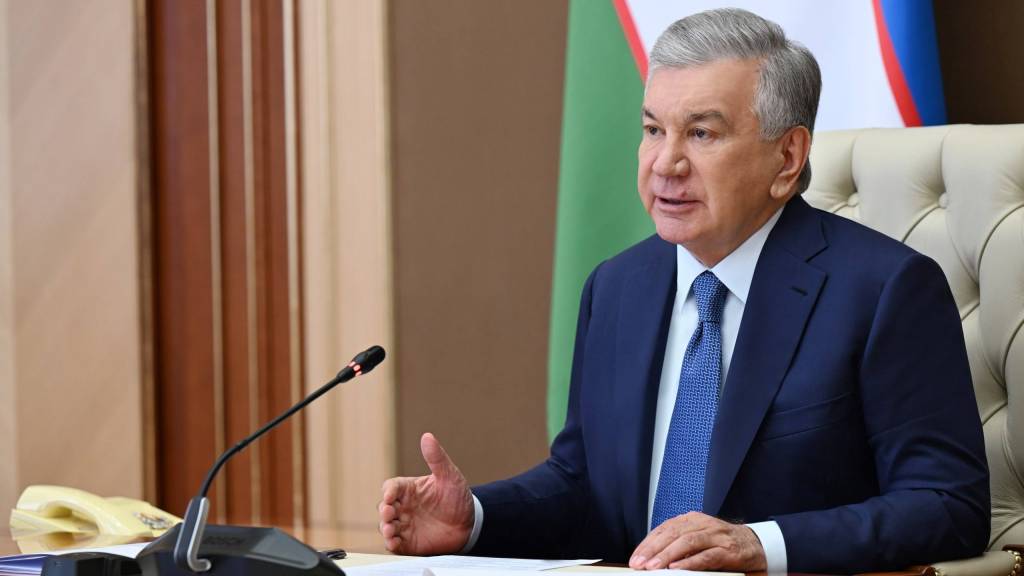
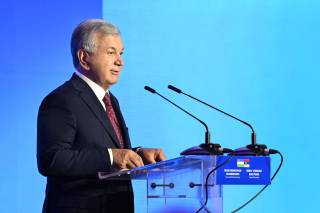
President Shavkat Mirziyoyev chaired an expanded meeting on measures being implemented in the regions to ensure employment and raise household incomes.
On September 3, the Head of State chaired a meeting to discuss efforts to reduce poverty and raise household incomes to a new level. At the meeting, the system for organizing work in the regions was fundamentally revised, with key powers and resources transferred to the district level.
Under the new system, task forces led by hokims are being formed in each region and district. Employment agencies and economic sector organizations will collaborate to tackle employment and income growth challenges directly within local communities.
At today’s meeting, the implementation of these tasks, the activities of the task forces, and the effectiveness of using available opportunities in the regions were reviewed.
It was noted that the task forces have already begun operating across all regions. To ensure the effective organization of their activities, two responsible officials have been assigned to each region, for a total of 28 representatives from the economic sector. The Reform Headquarters, ministries, banks, and local hokimiyats have begun operating under the new system.
It was also noted that some officials continue to organize work from their offices without visiting mahallas or assessing the specific conditions of families and enterprises. The Head of State highlighted that this method would not produce effective results.
It was noted that hokims should adopt a broader perspective on poverty reduction beyond just maintaining the Social Register. While the Social Register supports the population, poverty reduction requires providing families with sustainable income sources, generating employment, developing infrastructure, and establishing essential conditions.
At the meeting, officials cited specific examples showing that every district has opportunities to expand employment.
Specifically, the Qushkupyr district’s situation drew criticism, where a €43 million textile enterprise intended to create 1,300 jobs has been inactive since the start of the year. To resume operations, the bank could designate a crisis manager and restore production to full capacity.
It was also noted that restrictions on the assets of 124 enterprises, valued at a total of 6 trillion UZS, could be reconsidered, with these assets transferred to bank management. This move could help restore 10,000 jobs.
Based on the example of Oqoltin Mega Textile in Oqoltin district, it was observed that facilities fully completed and transferred to banks’ balance sheets should be operated rather than sold in fragments. This strategy would create jobs for hundreds of individuals.
Overall, about 2,500 property assets worth 10 trillion UZS are currently on state-owned banks’ balance sheets. Using them effectively could help restore up to 40,000 jobs.
Responsible officials were directed to conduct a comprehensive inventory of enterprises transferred to banks’ balance sheets and settle debts within one week. By the end of the year, they should either sell these enterprises as complete production units or restore their operations with managerial support.
Starting October 1, enterprises in rural districts that employ members of low-income families will pay social tax on those employees at a rate of 2 percent.
The meeting also focused on using private-sector opportunities effectively. As a positive example, the experience of Oqoltin district was cited, where an entrepreneur established a private school with 880 places and provides free education to 110 children from low-income families.
An important condition of this initiative is that parents of children receiving free education be employed and that their children attend school regularly. As a result, parents gain employment while their children receive a quality education.
It was noted that a garment enterprise in Khazarasp district has 400 open positions, but many women cannot take up employment because they lack childcare facilities. The head of the enterprise expressed readiness to provide meals and transportation for women if a land plot is allocated for the construction of a kindergarten.
In this regard, it was emphasized that if entrepreneurs propose ready-made projects to establish kindergartens, schools, and technical colleges and intend to provide free education for children from low-income families, the state is prepared to put land plots up for auction at a starting price of 1 million UZS.
Opportunities in the services sector were also discussed. The ground floors of apartment buildings can provide convenient services for residents, including hair salons, beauty salons, small shops, tailoring workshops, and repair shops for shoes and household appliances. However, converting residential premises into non-residential premises currently requires excessive approvals and permits.
It was proposed to allow ground-floor apartments in apartment buildings to be used for trade and service activities without converting them into non-residential premises. These activities would be authorized through a notification process.
The responsible officials were instructed to develop, within one month, a list of services that may be provided in such premises, along with the relevant safety requirements.
Additional tasks for organizing work at the district and mahalla levels were also identified. First and foremost, instructions were given to identify, in each region, underutilized and vacant buildings and land plots where production and services can be expanded, and to link them to new projects.
The task was set to locate entrepreneurial projects along busy streets in districts and mahallas based on master plans. In historic cities and tourist mahallas, streets are to be landscaped in an “old city” style, while the number of guest houses, retail outlets, and service facilities is to be increased.
In agriculture, the importance of renewing old orchards, bringing unused land into productive use, and increasing returns per hectare was emphasized. This will make it possible to use land more efficiently, increase yields, and create additional income sources for the rural population.
Instructions were given to identify vacant areas around apartment buildings, regulate illegally occupied land plots, create playgrounds, sports and fitness areas, and public green spaces, and improve street lighting.
The importance of encouraging the population to adopt a healthy lifestyle and of organizing mass walking activities, physical exercise, and morning and evening workouts in mahallas and on streets was also emphasized.
Instructions were given to create conditions for large-scale vocational, craft, and language training for young people, women, and unemployed citizens in available schools, technical colleges, universities, and other institutional premises, as well as in classrooms outside regular study hours.
It was emphasized that every mahalla has active citizens and representatives of the older generation who care about community affairs. Bringing them together within the mahalla will help engage people in constructive initiatives and overcome dependency and indifference.
Under a recently signed Presidential Decree, the position of Deputy Prime Minister for Mahalla Affairs has been established, and a responsible official has been appointed. He has been tasked with coordinating, within a unified system, the activities of hokims, district agencies, the “mahalla of seven”, and banks, and integrating the electronic platforms they use.
From now on, separate meetings on mahalla-related issues held by officials coordinating the activities of the “mahalla of seven” will not be permitted. All issues will be discussed once a week under the chairmanship of the Deputy Prime Minister, with the participation of all relevant officials.
The Head of State emphasized that properly organizing work in mahallas, ensuring that state policy reaches the grassroots level, and providing every family with a sustainable source of income are among the most important tasks for officials at all levels.
At the meeting, reports were also heard from local reform task forces, regional heads, district and city hokims, and other responsible officials.
UzA