Tashkent – Delhi: A collaboration defined by outcomes, not proximity
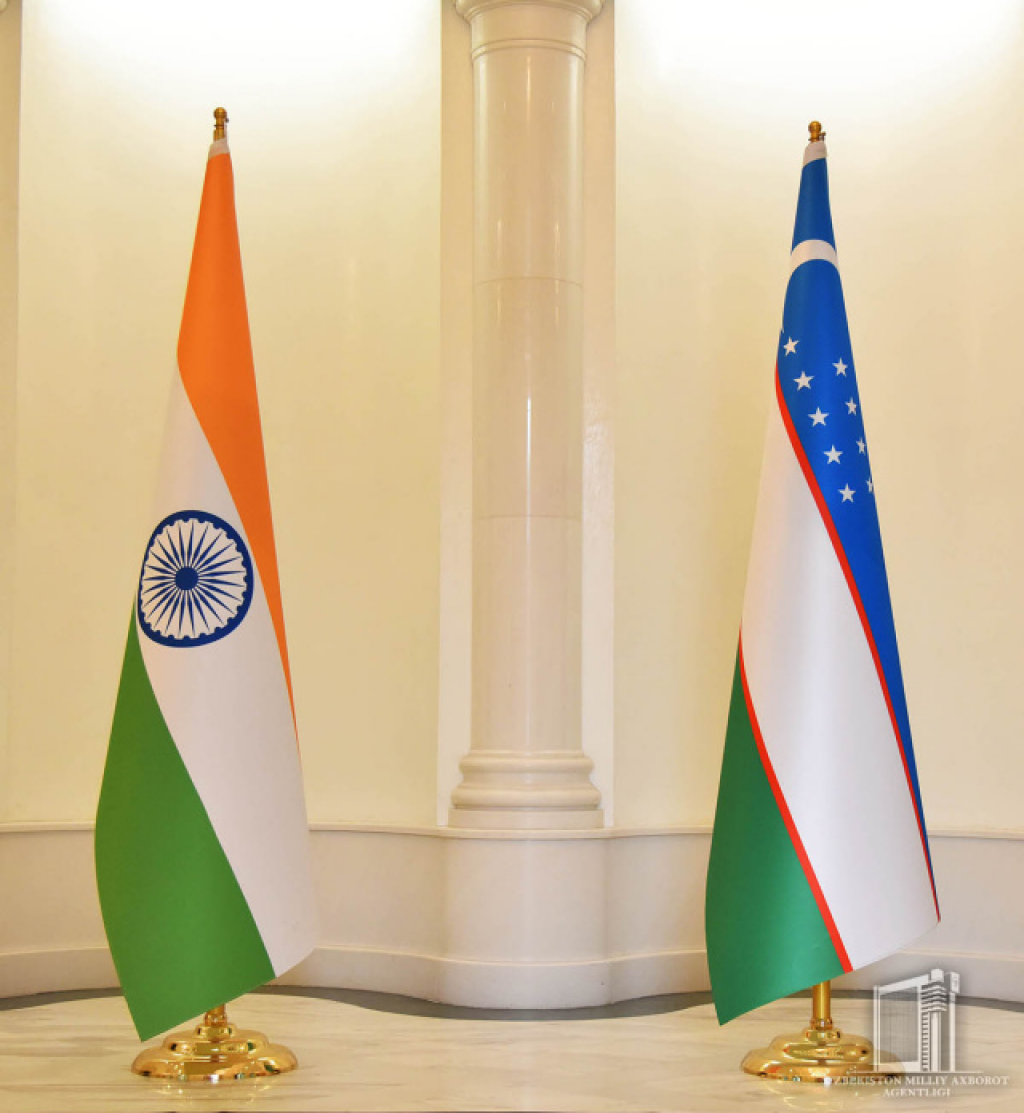
Exactly the day before Prime Minister of India Narendra Modi’s aircraft touches down at Tashkent-Humo International Airport, diplomatic circles in Tashkent and New Delhi echo the same message: this visit is not about protocol.
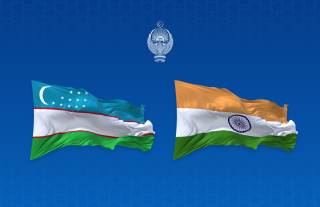
The two-day state visit, planned for 29-30 August 2026 at the invitation of President Shavkat Mirziyoyev of Uzbekistan, marks the Indian Prime Minister’s fourth trip to Uzbekistan. This visit is notable as the first since the bilateral strategic partnership gained a stronger legal foundation through the now-active investment treaty. The Indian delegation will hold high-level talks before heading to Bishkek for the SCO summit on 31 August-1 September, with the 26th meeting of the SCO Heads of State Council scheduled for 1 September.
A data-driven format
The format of a state visit itself signals its significance. In India’s diplomatic tradition, it typically occurs when bilateral talks have progressed beyond simple communications and are based on tangible results. While Tashkent and New Delhi formed a strategic partnership in 2011, the last five years have made that partnership more practical. According to the Embassy of India in Uzbekistan, bilateral trade increased by 30 percent in 2025, surpassing $1.3 billion for the first time, compared to almost $300 million in 2020. During the India – Uzbekistan Business Forum in New Delhi in August 2026, Uzbekistan’s Minister of Investment, Industry and Trade Laziz Kudratov and India’s Minister of Commerce and Industry Piyush Goyal confirmed their goal to boost trade to $2 billion, and to $3-5 billion in trade in the years ahead. These topics are among those the parties plan to address during their meeting in Tashkent.
According to the official Indian briefing, the negotiating agenda spans a broad range of bilateral relations – trade, direct investment, defense, digital connectivity, energy, critical minerals, education, and people-to-people exchanges. A central substantive theme will be aligning the two countries’ long-term development visions – Uzbekistan’s Strategy 2030 and India’s Viksit Bharat 2047, or “Developed India 2047”. Both frameworks view the next two decades as a window of opportunity to transform their national economies into resilient global players.
India today: a scale hard to ignore
Fifteen years ago, for many Uzbek readers, India was associated primarily with history and culture, maharajas, and Bollywood. Today, it is first and foremost an economic phenomenon. According to the International Monetary Fund, India’s nominal GDP was estimated at about $3.96 trillion in 2025 and around $4-4.15 trillion in 2026, keeping the country among the world’s six largest economies. In purchasing power parity terms, India ranks third globally, while the IMF’s latest forecast puts its real GDP growth at 6.5 percent in 2026 – a rate unmatched by any G7 economy.
India’s technology sector also deserves particular attention. According to industry association NASSCOM, revenue in India’s technology industry in the 2025-2026 financial year is estimated at $315 billion, including $246 billion in exports. The country accounts for more than half of the global IT outsourcing market and is rapidly expanding its presence in artificial intelligence, a segment already generating an estimated $10-12 billion in annual revenue. Equally significant is the success of India’s digital public infrastructure, known as India Stack. The Aadhaar biometric identification system has enrolled around 1.4 billion people, while the Unified Payments Interface (UPI) processes well over 10 billion transactions a month, becoming one of the world’s most prominent fintech platforms.
India’s space program has likewise moved from the ranks of those catching up to the club of technological leaders. On August 23, 2023, Chandrayaan-3 made a soft landing near the Moon’s south polar region, making India the fourth country to achieve a soft lunar landing and the first to do so in that region. By December 2025, the Indian Space Research Organization (ISRO) had carried out 104 launch missions, including the record deployment of 104 satellites aboard a single PSLV-C37 launch vehicle in February 2017. The Gaganyaan human spaceflight program is preparing for its first uncrewed test mission, while India aims to send a citizen to the Moon by 2040.
The significance of India for Uzbekistan
Within the architecture of Tashkent’s multi-vector foreign policy, the Indian dimension holds a special place. India is a major power outside rigid bloc logic, which Central Asia often perceives as a source of geopolitical pressure. At the same time, it has been a full member of the SCO since 2017, and the two countries share common positions on one of the organization’s core priorities – countering terrorism, extremism, and radicalization. Personal dialogue between the leaders is also important. President Shavkat Mirziyoyev and Prime Minister Narendra Modi most recently met briefly in September 2025 on the sidelines of the SCO Summit in Tianjin. Their virtual summit in December 2020 helped establish the framework for the current stage of cooperation. President Shavkat Mirziyoyev, for his part, paid a state visit to India in October 2018 and in January 2019 to participate in the Vibrant Gujarat Global Summit.
For Tashkent, relations with Delhi are not an alternative to strategic ties with Russia, China, the European Union, or the Gulf states, but rather an independent direction, free from the geopolitical competition often associated with the region’s larger neighbors. This is the strategic framework underlying Uzbekistan’s diplomatic course: engaging simultaneously with the world’s major centers of power while preserving sovereignty in economic decision-making.
Legal framework: BIT 2024 and related counterclaims
The partnership’s pragmatism rests on a legal framework. The Bilateral Investment Treaty (BIT), signed by the two countries on 27 September 2024 in Tashkent, entered into force on 15 May 2025. The treaty provides, among other things, national treatment, protection against expropriation, and access to international arbitration. Its most notable innovation, however, is Article 16, which explicitly allows counterclaims – a first in India’s BIT practice. The provision allows a host state facing an investor claim to bring a counterclaim against the investor or the investment for treaty-breach obligations. For Uzbekistan, this helps preserve the state’s regulatory authority. For India, it establishes a precedent that may influence the architecture of its future investment agreements in Central Asia.
Growth highlights: linking Chabahar Port with Uzbekistan’s pharmaceutical industry
Transport connectivity. One of the key structural constraints on Uzbekistan’s economy is its double landlocked status and lack of direct access to the world’s oceans. Iran’s Chabahar Port, the country’s only oceanic port with direct access to the Indian Ocean, and the International North – South Transport Corridor (INSTC) are viewed by Tashkent and Delhi as potential ways to address this challenge. India operates the Shahid Beheshti terminal at Chabahar under a ten-year agreement and has been working with Iran and Uzbekistan in a trilateral format to expand transport and logistics cooperation. In August 2024, Uztemiryulkonteyner launched a multimodal route from India to Uzbekistan via Iran’s Bandar Abbas, with delivery taking about 20 days. In March 2025, the route was extended to Kazakhstan, featuring a 1,585-kilometer sea leg and a 4,300-kilometer rail section. As a result, container traffic on Uzbekistan’s railways increased: in 2025, the volume rose by 21 percent to 355,752 TEU.
Pharmaceuticals. A major industrial collaboration is the Tashkent Pharma Park research and production cluster in Zangiata district, valued at $289.6 million and partially financed through concessional lending from the Export-Import Bank of Korea. Indian pharmaceutical companies are also implementing major projects elsewhere in Uzbekistan. Cadila Pharmaceuticals is investing $50 million in the Andijan-Pharm Free Economic Zone, with plans to create 400 jobs and manufacture 30 types of medicines and medical products. Shayana Pharm is investing $21 million in a new plant. The strategic goal is to increase pharmaceutical production in Uzbekistan from $620 million in 2025 to $10 billion by 2035, with India’s expertise in generic drug manufacturing as a key resource.
Energy. Uzbekistan remains a reliable supplier of nuclear fuel for India’s nuclear power industry. A long-term contract signed on January 18, 2019, between the Navoiuran State Enterprise and India’s Department of Atomic Energy provides for the supply of 1,100 metric tons of natural uranium concentrate from 2022 to 2026. In 2023, uranium oxide exports entered an active phase after the Indian side inspected production facilities. At the same time, cooperation in green energy is expanding. In 2021, the Indian Council of Ministers approved a Memorandum of Cooperation in solar energy between the National Institute of Solar Energy (NISE) and Uzbekistan’s International Solar Energy Institute within the framework of the International Solar Alliance. For Uzbekistan, this helps accelerate the implementation of its strategy to increase the share of renewable energy sources to 40 percent by 2030.
Investment portfolio. According to official data from the Ministry of Investment, Industry and Trade of the Republic of Uzbekistan, about 400 enterprises with Indian capital operate in the country, and the total portfolio of joint investment projects exceeds $5 billion. India has extended Uzbekistan a $448 million Exim Bank credit line for social and infrastructure modernization projects. Despite Uzbekistan’s foreign trade turnover reaching $81.2 billion in 2025, up 20.7 percent from 2024, India’s share remains modest. However, the two sides view this untapped potential as a key area for rapid growth. It is therefore no coincidence that, on the sidelines of the forum, Indian Commerce Minister Piyush Goyal publicly raised, for the first time, the possibility of exploring a Free Trade Agreement (FTA) between the two countries.
Human capital and education: the quiet infrastructure of trust
Managerial and engineering capacity cannot be measured in tons or megawatts, yet it determines the sustainability of technological integration. Since 1993, more than 2,500 Uzbek specialists have been trained in India through the Indian Technical and Economic Cooperation (ITEC) program, including about 1,100 in the past five years. The Indian government provides up to 200 fully funded scholarships each year, with priority areas including artificial intelligence, robotics, cybersecurity, and public health.
At the institutional level, the Indian academic presence has been strengthened through branches of Amity University in Tashkent, Sharda University in Andijan, and Sambhram University in Jizzakh. These institutions integrate India’s approach to training IT specialists and business analysts into Uzbekistan’s human resources system. At the intergovernmental level, the integration of India’s Unified Payments Interface (UPI) into Uzbekistan’s financial ecosystem is under consideration. This step would facilitate settlements for the growing tourist flow and reduce transaction costs for businesses.
Conclusion: a collaboration committed to the future, beyond mere declarations
Narendra Modi’s state visit to Tashkent is not merely a protocol milestone but a working stage in a partnership that both sides are building methodically, without rhetorical promises. These include trade turnover exceeding $1.3 billion, with a target of $2 billion set for 2026, a $5 billion portfolio of joint projects; an investment agreement in force containing a unique provision on counterclaims; an operational container route through Bandar Abbas; a long-term uranium supply contract; and an established human capital development system through ITEC and branches of Indian universities – all concrete, measurable elements of cooperation rather than general statements about friendship between peoples.
For Uzbekistan, expanding its partnership with India aligns with the Uzbekistan 2030 Strategy by diversifying foreign economic relations, gaining access to seaports, obtaining advanced digital and biotechnology solutions, and strengthening the region’s macroeconomic resilience. For India, Central Asia is a region where strengthening its position serves the interests of energy security, access to critical minerals, and market expansion. At the same time, cooperation with Tashkent is strategically important as the most stable pillar of India’s Central Asia Policy.
This also explains the symbolic precision of the Indian Prime Minister’s itinerary: from Tashkent to Bishkek for the 26th summit of the Shanghai Cooperation Organization, which marks the SCO’s 25th anniversary, where Uzbekistan and India will meet for the first time as partners with a fully developed bilateral architecture.
Strategic pragmatism is likely the most concise way to describe the upcoming visit, and its results will set the standard by which both capitals will measure their partnership’s progress in the next five years.
Abduaziz Khidirov,
Master’s Student,
Academy of Public Policy and Administration under the President of the Republic of Uzbekistan
UzA