New Uzbekistan’s initiatives are widely recognized internationally
On July 24, 2026, the UN General Assembly approved the resolution “On strengthening the role of parliaments in accelerating social development”, which was initiated by President Shavkat Mirziyoyev.
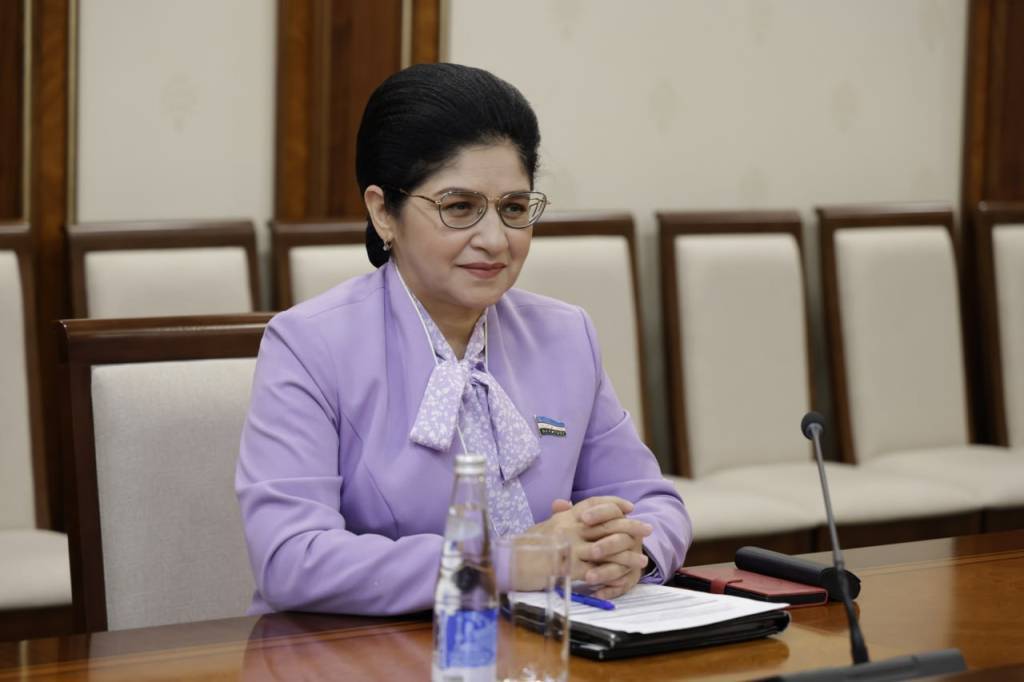
UzA correspondent interviewed Malika Qodirkhonova, a member of the Senate of the Oliy Majlis, about the document’s significance and Uzbekistan’s role in developing parliamentary diplomacy.
– The document was co‑authored by 61 UN member states, reflecting widespread international support for New Uzbekistan’s initiatives. The country has progressed from merely observing to actively shaping the global agenda.
The shared authorship by states from every continent shows that social development and stronger parliamentary oversight are top priorities for the international community.
Sixty-one countries acknowledged the outcomes of the multilateral negotiations led by Uzbek diplomats and expressed trust in the effectiveness of the finalized document.
– Which principles are embodied in the resolution, and how significant are they for the international community?
– The resolution is founded on the principle of “leaving no one behind” and also aims to reduce poverty and enhance social protection. It has become a key reference for countries working together towards a shared goal.
The resolution highlights the crucial role of parliaments in speeding up progress toward the Sustainable Development Goals by 2030. This includes enhancing national laws, strengthening social protection, reducing poverty, promoting decent employment, increasing access to quality education, and supporting social integration.
The focus is on boosting women’s and youth engagement in parliamentary work. To achieve this, mechanisms such as quotas or youth parliaments are suggested to raise the number of female and young deputies.
– What functions do women and young people serve in parliamentary activities?
– Increasing young people’s and women’s participation in decision-making enhances citizens’ trust in the state.
Countries with greater women’s participation in lawmaking generally experience faster poverty reduction and more effective distribution of social resources. This also helps lower demographic risks, particularly in areas like Central Asia, where a largely young population means neglecting their needs could lead to social instability.
Additionally, young leaders with parliamentary experience will be equipped to maintain continuity and uphold high standards of governance in the future. This resolution’s emphasis aligns with reforms in Uzbekistan, where gender quotas have been implemented in elections to the Oliy Majlis and a youth parliamentary commission has been created.
According to the latest parliamentary elections’ results, Uzbekistan ranked first in Central Asia in terms of the number of female deputies, achieving a high level of women’s and young people’s participation in public administration. These results correspond to the UN standards and recommendations enshrined in the adopted resolution.
Raising the mandatory gender quota for political parties to 40 percent has altered the composition of the Oliy Majlis. Notably, women now hold 38 percent of the seats in the Legislative Chamber, or 57 of 150 seats. In the Senate, women occupy 27 percent of the seats, with Tanzila Narbayeva leading the upper house.
Women make up 32.5 percent of regional local Councils. These accomplishments are receiving extensive international praise. Uzbekistan is ranked 38th in the Inter‑Parliamentary Union’s global “Women in Parliament” ranking, and its position on the Gender Equality and Governance Index has improved from 103rd to 52nd.
Uzbekistan has shifted from merely formal youth involvement to actively engaging young professionals in the legislative process.
According to the Inter‑Parliamentary Union’s official data, 42 percent of members of the national parliament are under 45 years old. Nearly 40 percent of the lower house is made up of young professionals aged 30 to 45, who actively engage in committees on information technology, innovation, economics, and social protection.
Establishing permanent Youth Parliaments under the Senate and Legislative Chamber has been a unique experience. Members focus on social issues affecting young people at the local level. Digital platforms have been introduced, enabling young citizens to submit legislative proposals directly to deputies. This approach is also recommended in the new UN resolution.
The UN resolution references the 150th IPU Assembly in Tashkent and the adoption of the Tashkent Declaration on Parliamentary Action for Social Development and Justice.
During the 150th IPU Assembly in Tashkent, the Head of State proposed hosting the 12th IPU Global Conference of Young Parliamentarians in Samarkand. The international community supported this proposal, and at the 151st Assembly, an agreement was reached to organize the conference from September 4 to 6, 2026.
The conference at the Silk Road Samarkand Complex is a practical step to implement the UN General Assembly’s resolution.
The resolution reflects the global agreement that social progress cannot be achieved without young people’s active participation in lawmaking. The Samarkand conference will serve as the inaugural major platform where young deputies from various countries will convene to develop specific strategies for implementing this resolution nationally.
The upcoming forum focuses on young parliamentarians’ roles in safeguarding rights, human dignity, and justice amid a complex and contentious era. It aligns with the resolution’s social priorities. Young leaders will address issues like defending peers’ economic rights, securing employment, broadening opportunities through digital transformation, preventing violence against women, and promoting their participation in decision-making.
The conference will host the 3rd Global Forum on Inter-Parliamentary Cooperation in Achieving the Sustainable Development Goals, aiming to connect young deputies’ practical initiatives with the UN’s Global Strategy implementation through 2030.
Interviewed by Norgul Abduraimova, UzA