A new targeted system for supporting families in need
Attitude
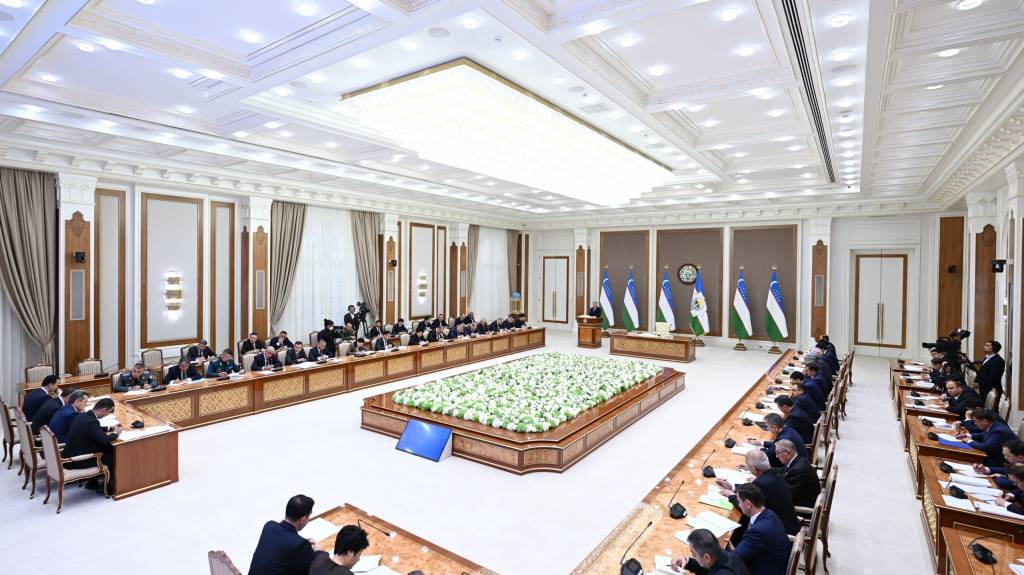
As you know, a video conference on poverty reduction and increasing public income was recently held under the chairmanship of President Shavkat Mirziyoyev.
At the meeting, the work carried out over the past period was thoroughly reviewed, and the next priority tasks for increasing public income were defined.
Every initiative and decision made was aimed at turning the allocated funds and created opportunities into tangible results at the mahalla and household levels. After all, the true value of reforms is demonstrated not in interdepartmental protocols, but in the daily lives of ordinary people, their sources of income, and their confidence in the future.
Specifically, in the past period of this year, the poverty level in our country decreased from 5.8 to 3.9 percent, and nearly 700,000 of our compatriots were lifted out of the category of neediness, which is undoubtedly the result of systematic work. However, the main issue is not merely the allocation of financial resources, but the ultimate effectiveness of these funds. Accumulated experience and analysis have shown that in some regions, the results obtained from the same allocated funds differ sharply.
Entrepreneurship cannot last long in a place where a market environment, a sales chain, and business skills have not been formed. Consequently, thousands of our compatriots who took out loans but were unable to establish their businesses are facing financial difficulties.
Therefore, the approach will fundamentally change. From now on, the population will be provided not just with money, but with ready-made business plans, professional skills, and comprehensive solutions with a guaranteed market.
The main advantage of the new system is that the authority to make decisions and manage resources is being devolved directly to the district and mahalla levels. Henceforth, headquarters led by district khokims will independently decide where, to whom, and how much credit to allocate, based on local conditions and the specifics of the project.
For this purpose, more than 3.2 trillion soums from family and youth entrepreneurship programs, as well as various funds, will be transferred directly to the disposal of district headquarters. Financing terms will be adapted to the type of business. Furthermore, a system will be established to provide unsecured loans of up to 5 billion soums to leading entrepreneurs who unite families in their mahalla and provide them with stable employment.
Meanwhile, assistants to the khokim and bank employees in the mahalla will become true partners and business consultants for the population on the path from an idea to a finished business.
Additionally, based on the experience of the Khorezm region, opportunities for parents caring for children to earn income at home or within their own mahalla will be expanded. The criteria for inclusion in the Social Register will also be radically revised; now, not only family income but also multidimensional factors such as chronic illness, disability, and having many children will be taken into account.
In particular, the expenses of children from families in need for preschool education, training centers, and transportation, as well as university dormitory fees, will be covered by 12-month vouchers. Even if a family is removed from the Social Register, these vouchers will remain valid until the end of the specified period.
Such a targeted approach serves not only to reduce poverty today but also to prevent the intergenerational transmission of neediness by giving children the opportunity to receive a quality education and acquire a solid profession.
In conclusion, the new mechanisms defined for poverty reduction are not simply about providing financial aid, but constitute a holistic system aimed at providing the population with a stable source of income. The devolution of authority and resources directly to the district and mahalla levels, a targeted approach to every family, and investment in education will serve to radically reduce poverty in the future. Most importantly, such opportunities create a solid foundation for our compatriots to realize their potential, earn a decent income through their labor, and lead a prosperous life.
Mavluda Adhamjonova,
Deputy of the Legislative Chamber of the Oliy Majlis.
UzA