Sanjar Valiyev: “Environmental diplomacy is becoming a key element of a new regional identity”
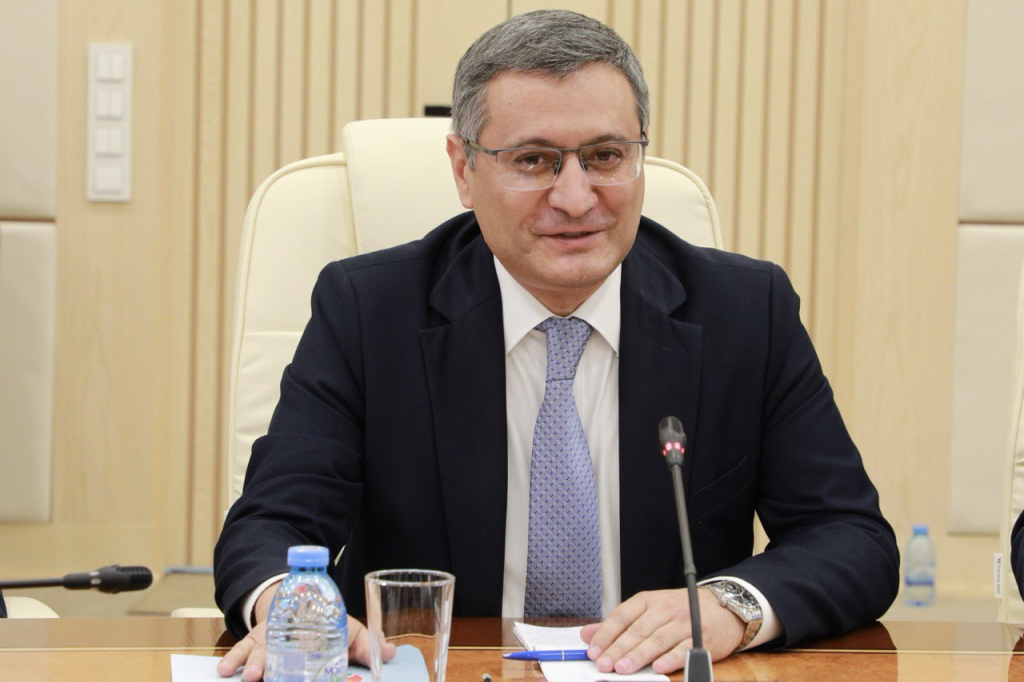
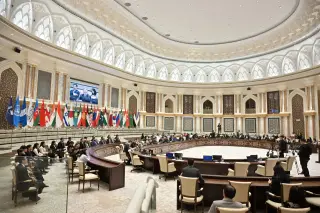
Against the backdrop of growing climate challenges and the need to develop coordinated approaches to managing transboundary resources, the Central Asian countries are stepping up environmental cooperation. The Regional Ecological Summit and the Meeting of the Council of Heads of State of the International Fund for Saving the Aral Sea, held in Astana, marked a significant step toward shaping a common agenda and advancing more practical mechanisms for interaction.
The initiatives announced by President Shavkat Mirziyoyev, aimed at deepening cooperation, developing climate technologies, and establishing common rules for water use, are drawing attention among event participants. UzA correspondent interviewed Sanjar Valiyev, Director of the Center for Foreign Policy Studies and International Initiatives, about the significance of these decisions and their potential effects in the near future.
– Sanjar Alimkhonovich, how do you assess the outcomes of the Regional Ecological Summit and the Meeting of the Council of Heads of State of the International Fund for Saving the Aral Sea in Astana?
– In my opinion, both summits have become significant for the regional dimension. In fact, key approaches to solving primary problems have been consolidated on these platforms. We can confidently say that Central Asia has begun a practical transition toward building a capital architecture for effective environmental management. Of course, important joint documents have been adopted that set out common policy approaches and practical action plans, as well as decisions to establish an institutional framework to deepen cooperation.
From the perspective of the historical moment, the leaders of Central Asia have clearly demonstrated the political will to care for the region’s environment together. The days when it was possible to afford the luxury of solving, for example, water issues bilaterally are long gone. Now it is absolutely clear that either we create a single framework for resource management, or we risk a general economic slowdown.
The commonality of interests in this issue is reinforced by the fact that the environmental agenda today is inextricably woven into the fabric of long-term economic development. Without consolidated management of cross-border resources, it is impossible to talk about sustainable GDP growth or the region’s overall economic security.
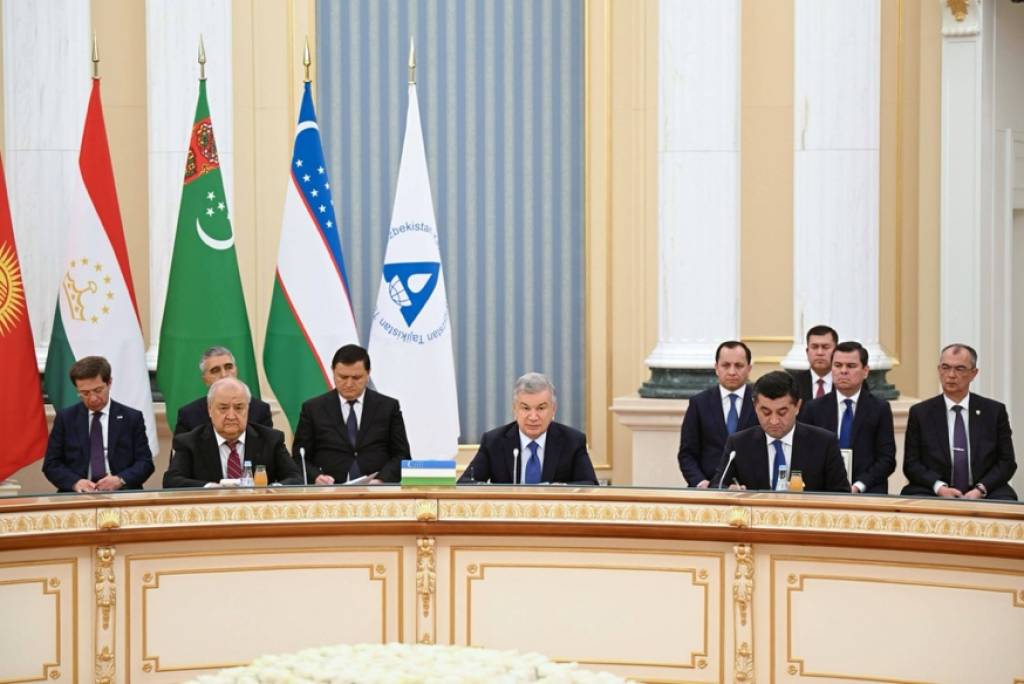
– In Astana, Uzbekistan’s President Shavkat Mirziyoyev announced a set of practical initiatives, ranging from the creation of a Regional Center for Climate Technology to the development of rules for the use of water resources. What effects will their implementation have in the near future?
– The Head of our State always offers partners the most optimal actions that take into account the interests of all parties. This is the secret of their success. The implementation of the President’s initiatives will also launch a process of deep structural transformation in regional cooperation. I would single out a few key vectors, where the effects will be most noticeable.
First, it is the creation of a common technological structure. Establishing a Regional Center for Climate Technology in Tashkent will be a significant step toward overcoming the technological fragmentation among our countries. Through this initiative, we will soon have a single platform for transferring innovations that will radically reduce the costs of adapting to climate change, including by pooling resources.
Second, it is the creation of a generally recognized legal regime. The initiative to develop rules for the use of water resources in the Aral Sea basin, grounded in international law, will help advance transparency in regulations. For example, for international financial institutions, the emergence of such clear rules will signal the opening of large-scale credit lines. In the short term, this will increase the region’s investment attractiveness as a single, predictable market.
Third, it is an institutional reset. The proposal to create the Interstate Consortium “Clean Air of Central Asia” and the launch of the Decade of Practical Actions for the Rational Use of Water until 2036 transform the environmental agenda into the realm of project management. We will see real socio-economic effects in the most vulnerable areas, such as the Aral Sea region. This will create green jobs and directly protect our food security.
Finally, the initiative to grant the Regional Center for Combating Desertification official international status is of great importance. This will allow us to present a united front on global platforms and attract grant funding for specific forestry projects on the drained bottom of the Aral Sea.
Ultimately, the proposals of the Leader of Uzbekistan are based on the vision of our region’s ecology as an integrated system, for which we are moving from the “elimination of consequences” model to the “proactive development” model. Implementing these proposals will make our environmental sustainability a new competitive advantage for the region on the global stage.
– How ready are the Central Asian countries today to coordinate efforts in climate policy and ecology? Are there any real mechanisms for joint action?
– I believe we are witnessing a qualitative evolution in regional consciousness. Today, the readiness of the Central Asian countries to coordinate efforts has shifted from the plane of declarative unity to the plane of pragmatic necessity.
In recent years, a healthy atmosphere of trust and cooperation has been firmly established in the region, where consultative meetings of heads of state serve as a powerful political catalyst for all integration processes.
At the same time, it is necessary to recognize the inertia of bureaucratic apparatuses in the field. Therefore, it is important to align national development agendas with regional environmental priorities. When countries’ interests are aligned, all processes proceed more efficiently and quickly.
As for the mechanisms, I would highlight several levels. First, strengthening institutions. We need not only to activate existing structures but also to fundamentally modernize them. Thus, IFAS is currently undergoing a deep internal reform, transforming from a “cash register” into a modern water and climate risk management center.
Next is the transparency of the processes. Without transparent data exchange on water use, glacial melting, and air pollution, any coordination will remain only an intention.
And finally, investment and technology. We are beginning to act as a single climate entity in the face of global financial institutions. This represents a fundamentally different level of opportunity, where the region offers not disparate local projects but comprehensive cross-border programs of critical importance to the whole of Eurasia. We need to take full advantage of this potential.
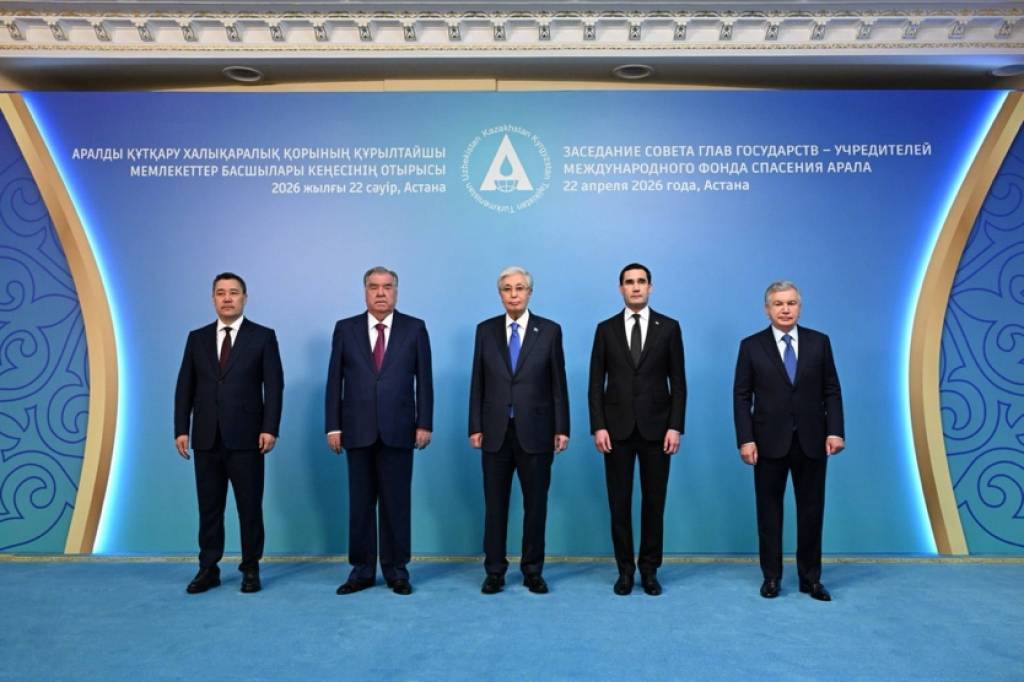
– How do you evaluate the transformation of the Aral Sea problem from a regional environmental disaster to an element of the international agenda? Can Uzbekistan’s new initiatives give this issue a practical dimension?
– We are witnessing a fundamental shift in how this problem is perceived. Previously, the Aral Sea crisis was seen by the world as a “local environmental impasse”, but today, thanks to the persistent diplomacy of the President of Uzbekistan, it has become a global laboratory for climate adaptation.
Today, at the United Nations and among leading international organizations, the Aral Sea is regarded as a model for risk management in the era of global climate change. This recognition is the success of our policy of ecosystem regeneration in extreme conditions.
The new initiatives announced in Astana by Uzbekistan eloquently reflect the transformation that has taken place. They are aimed at moving to a practical dimension, primarily through the formation of a regional portfolio of investment projects. We are moving away from the concept of survival toward the creation of priority development zones in the Aral Sea region, based on the introduction of closed-loop systems and biosphere technologies.
As a result, we are turning the tragedy of the Aral Sea into a resource for the future, where joint restoration of the region becomes the key to the long-term sustainability of all of Central Asia.
– Is it possible to discuss the formation of a new regional agenda in Central Asia, where environmental diplomacy is becoming a key area?
– Absolutely. We are witnessing environmental issues outgrowing the narrow framework of sectoral cooperation and becoming a central element of a new regional identity. Today, Central Asians are rethinking their life priorities, and issues of climate sustainability and water resources have moved from the category of environmental risks to the category of fundamental conditions for quality of life and stability.
Against this background, all countries in the region are saturating the cooperation agenda with issues that cannot be fully resolved without their neighbors’ participation. The fundamental shift is that common challenges are no longer seen as a factor of separation but as a powerful incentive for economic and technological integration.
There is a clear understanding that the climate agenda has become the driver of a new economic model. Today, ecology in Central Asia is inextricably linked to energy transformation, the modernization of the agricultural sector, and the introduction of sustainable development standards. This allows us to discuss the development of a unique Central Asian sustainability model that accounts for our geographical specifics and our historical responsibility for the fate of the Aral Sea basin.
Moreover, there is a sharp rise in external subjectivity. Through environmental diplomacy, Central Asia is beginning to engage with global players – the UN, the EU, and global financial institutions – not as a collection of problem areas but as a single consolidated participant in the global climate dialogue.
From now on, we offer the world not only our resources but also our solutions to global problems.
Interviewed by Aziza Alimova, UzA