Akramjon Nematov: Central Asia promotes a pragmatic approach to dialogue with Germany
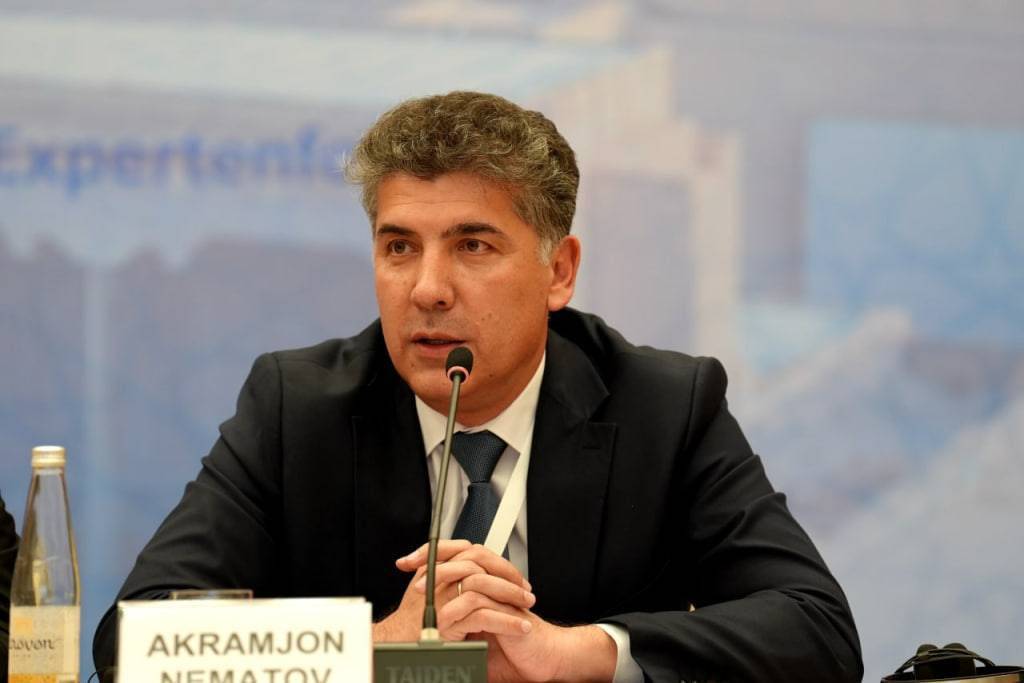
Commenting on the outcomes of the Central Asia – Germany Expert Forum held in Khiva on April 16-17 this year, First Deputy Director of the Institute for Strategic and Regional Studies Akramjon Nematov presented a vision for approaches to developing interregional cooperation, largely summarizing the assessments of both German and Central Asian experts.
According to him, the forum’s results indicate the emergence of a qualitatively new paradigm of cooperation, in which Central Asia is finally moving beyond its previous perception as a peripheral space and consolidating its status as an independent geo-economic and political actor. As the expert noted, this conclusion largely aligns with the position of German analysts, who point to a shift from the logic of a “transit region” to an understanding of Central Asia as one of the key nodes of the emerging Eurasian architecture.
Akramjon Nematov emphasized that the current stage of interaction is developing within the framework of an equal strategic partnership, whose institutional foundation was laid at the 2023 Berlin summit.
In this context, the “C5+1” format is seen not merely as a mechanism for foreign policy dialogue but as a tool for strengthening regional agency.
Highlighting this aspect, the speaker identified a key discursive shift: Central Asia is not seeking integration into external geopolitical frameworks but rather developing its own agenda. Within this logic, external partners, including Germany, act not as architects of processes but as equal participants in the joint formulation of decisions.
A significant place in the expert’s assessment was given to rethinking the economic model of interaction. Whereas previously the emphasis was mainly on transport connectivity and the region’s transit function, today, in his view, there is a shift toward a deeper form of integration – the inclusion of Central Asian countries in global value chains.
In this regard, the representative of the Institute for Strategic and Regional Studies proposes shifting the focus of cooperation from infrastructure to industrialization, technology localization, and joint production. This approach complements Germany’s strategy for diversification and risk reduction, giving it a more practical and long-term character. “In fact, this is about the formation of a new model of economic interaction, in which Central Asia acts not only as a transit space but also as a production and technological hub”, the expert emphasized.
Akramjon Nematov paid particular attention to the Afghan issue, which is viewed not as a peripheral security concern, but as a structural element of regional stability.
In contrast to the more restrained European approach, which retains a significant normative component, the expert consistently advocates a pragmatic model of engagement. He emphasized that isolating Afghanistan risks destabilization, whereas integrating it into infrastructure, energy, and trade can reduce threats and create conditions for gradual normalization.
In this context, Central Asia is positioned as an intermediary and a driver of a more flexible model of interaction, proposing that Germany use existing regional mechanisms and channels to build a pragmatic dialogue.
An important element of the proposed agenda was strengthening the institutional component of cooperation. In contrast to the project-based approach, which, as German experts themselves acknowledge, often faces implementation constraints, the representative of the Institute for Strategic and Regional Studies advocated creating sustainable mechanisms for cooperation.
This involves establishing joint educational platforms, investment funds, and technology centers. Such an approach aims to consolidate Germany’s long-term presence in the region not only as an economic partner but also as a source of standards, knowledge, and competencies.
In a broader analytical context, the expert believes that the forum participants’ overall position reflects an aspiration to align two strategic logics. On the one hand, the European approach is oriented toward managed interdependence and risk reduction; on the other, the Central Asian approach is aimed at strengthening autonomy and internal resilience.
This synchronization is reflected in the emphasis on complementarity: Germany is viewed as a technological and institutional partner, while Central Asia is seen as an emerging center of economic activity, connectivity, and regional coordination.
In conclusion, Akramjon Nematov emphasized that the Khiva Forum confirmed Central Asia’s maturity as a political and strategic space. In this regard, the dialogue with Germany is taking on a qualitatively new character – a partnership of equals, in which recognition of regional agency is not only a political principle but also a practical condition for effective cooperation.
Thus, according to the representative of the Institute for Strategic and Regional Studies, the proposed framework for cooperation provides a guideline for the transition from fragmented initiatives to a systemic model in which infrastructure, industry, education, and security are viewed as interconnected elements of a unified strategy for the development of Eurasia.
UzA