Uzbekistan and Russia deepen strategic cooperation
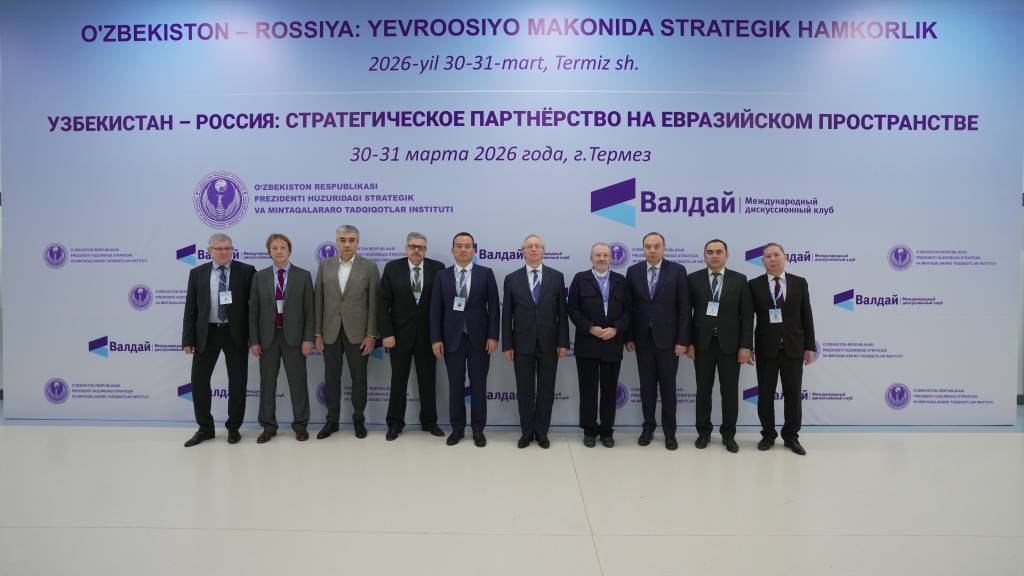
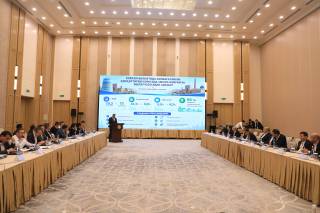
An expert meeting took place in Termez, organized by the Institute for Strategic and Regional Studies under the President of the Republic of Uzbekistan and the Valdai Discussion Club.
It was attended by Mikhail Galuzin, Deputy Minister of Foreign Affairs of the Russian Federation, Andrey Bystritskiy, Chair of the Board at the Foundation for Development and Support of the Valdai Discussion Club, Eldor Aripov, Director of the Institute for Strategic and Regional Studies under the President of Uzbekistan, Alexey Yerkhov and Botir Asadov, heads of diplomatic missions of Russia and Uzbekistan, Ulugbek Qosimov, Hokim of Surkhandarya region, and representatives of expert and analytical circles of both countries.
Mikhail Galuzin, Deputy Minister of Foreign Affairs of the Russian Federation, stressed the strategic importance of Termez for developing new formats of regional cooperation. He described Surkhandarya region as “an oasis embodying the rich ancient history, dynamic development, and bright prospects of the Uzbek land”. In his opinion, the International Trade Center in Termez is of great practical importance for a mutually beneficial partnership between entrepreneurs of the two countries.
At the meeting, special attention was paid to the current state and prospects of relations between Uzbekistan and Russia.
Director of the Institute for Strategic and Regional Studies, Eldor Aripov, noted that bilateral cooperation is consistently strengthening. Concrete results confirm this: the trade turnover has more than tripled, from $4.2 to almost $13 billion. The volume of Russian investments that have been mastered is approaching $5 billion. Hundreds of joint projects are underway, including more than 200 regional initiatives worth over $4 billion.
According to him, there is a transition from trade to integrated industrial cooperation, the formation of value chains, and the development of technological alliances. In this context, he identified three main elements of modern cooperation between Uzbekistan and Russia: stability – bilateral relations demonstrate steady growth and flexibility even in the face of global turbulence; structural maturity – transition to complex forms of interaction, including joint investment platforms and technology chains; predictability – a high level of trust and political dialogue, confirmed by the holding of five high-level meetings and more than a thousand mutual visits since 2017.
At the meeting, special attention was paid to the regional area of cooperation. Direct contacts between regions where projects in industry, agriculture, and innovation are being developed are becoming increasingly important. In this context, it was emphasized that the experience of the Republic of Tatarstan, Russia’s leading center of industry and innovation in petrochemistry, mechanical engineering, IT, and education, opens additional opportunities to deepen interregional cooperation.
Projects to create technoparks in Chirchiq and Jizzakh, with the participation of Himgrad, a branch of Kazan Federal University, and other initiatives, create a sustainable industrial, technological, and educational base for cooperation.
During the event, the development of transport and logistics routes was identified as a key area for further cooperation. Along with the modernization of the traditional northern routes, a southern route through Afghanistan to the ports of the Indian Ocean is being developed. This route is considered a strategic opportunity to diversify logistics, reduce transportation costs, and enter the multibillion-dollar markets of South Asia.
The special role of expert dialogue in developing bilateral cooperation was highlighted at the meeting.
Andrey Bystritskiy, Chair of the Board at the Foundation for Development and Support of the Valdai Discussion Club, noted that the relations between the two countries have a long history and are of particular importance in today’s rapidly changing world. To preserve and strengthen them, it is necessary to jointly analyze global and regional processes, develop coordinated approaches, and strengthen intellectual exchange.
The participants expressed confidence that the results of the expert meeting will become an important contribution not only to strengthening the partnership between Uzbekistan and Russia, but also to the formation of a broader, interconnected, and sustainable architecture in the Eurasian space.
Kholmumin Mamatrayimov, UzA