Razman Jaafar: “Cooperation between the parties is not only theoretical but also practical”
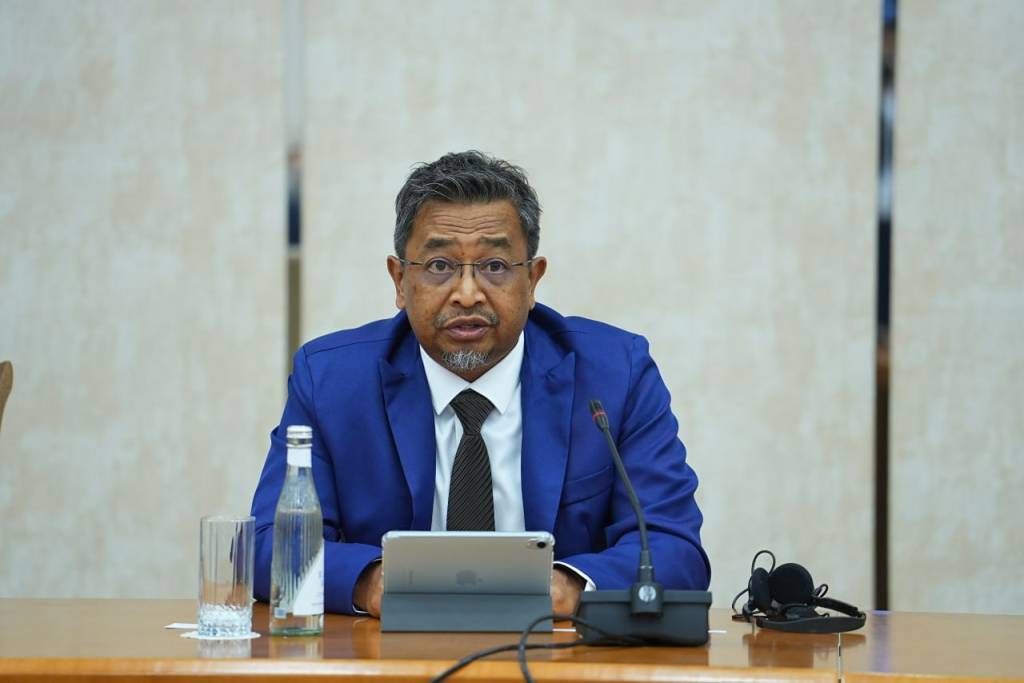
A Strategic Workshop Lab, dedicated to developing the “Strategy for the Development of Microelectronics and the Semiconductor Industry in the Republic of Uzbekistan for 2026-2035”, is taking place at the Academy of Public Policy and Administration under the President of the Republic of Uzbekistan.
Special attention is being given to strengthening cooperation between Uzbekistan and Malaysia. Razman Jaafar, Chief Executive Officer of MIMOS Holdings Sdn Bhd, shared his views.
– First of all, it is encouraging that relations between Malaysia and Uzbekistan continue to strengthen, – says Razman Jaafar. – This is clearly reflected in the areas of economy, trade, and tourism. Today’s dialogue is a logical continuation of these ties. This cooperation shows our strong commitment to economic transformation, industrial investment, and global competitiveness. The electrical and electronics industry is not just about manufacturing but also forms the foundation of the digital economy, high-performance semiconductors, artificial intelligence, and smart infrastructure. Over the past five years, Malaysia has made significant progress in this area. The country has shifted from merely participating in assembly operations to becoming a key player in the global value chain of semiconductors and electronics. Malaysia boasts a resilient ecosystem that includes design, testing, manufacturing, and innovation, making a substantial contribution to global semiconductor exports.
Uzbekistan also possesses significant potential in this sector. Located at the heart of Central Asia, the country relies on infrastructure development, active government backing, and a young, skilled workforce. With the right strategy and strong partnerships, Uzbekistan can evolve into a regional hub for microelectronics and semiconductors.
Malaysia is ready to support Uzbekistan in this effort across three key areas. The first is ecosystem development, including industrial growth, investment attraction, and the implementation of effective public policy mechanisms. The second is capacity building, which involves skill development ranging from technical training to advanced design and engineering. The third is technology and commercialization, focused on turning innovation into real economic results and expanding them to the global market. It is important to highlight that this approach involves not only theoretical cooperation but also practical partnership. Malaysia is ready for close collaboration with the ministries of economy and finance, higher education, science and innovation, as well as with representatives of local industry and startups.
This workshop not only acts as a platform for dialogue but also as an essential foundation for shaping strategic perspectives, identifying priority areas, and developing concrete, practical steps.
I am confident that cooperation between Malaysia and Uzbekistan in developing a sustainable and modern microelectronics ecosystem will continue to grow. This will help drive innovation, create jobs, and further boost Uzbekistan’s technological capabilities in the region.
Interviewed by Nasiba Ziyodullayeva, UzA