Progress of major transport and logistics projects reviewed
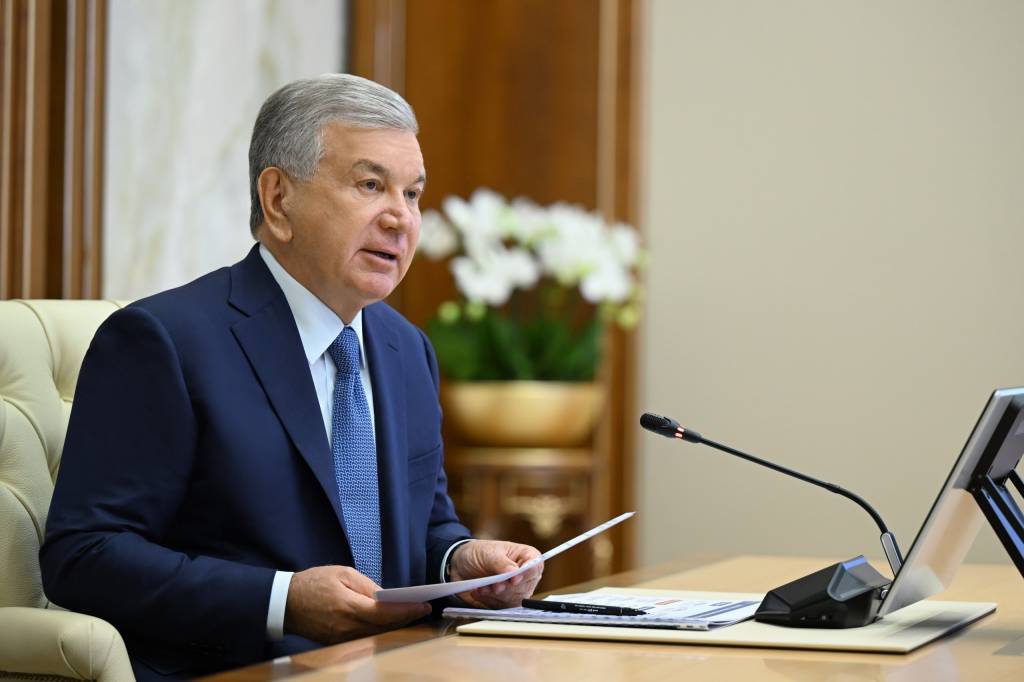
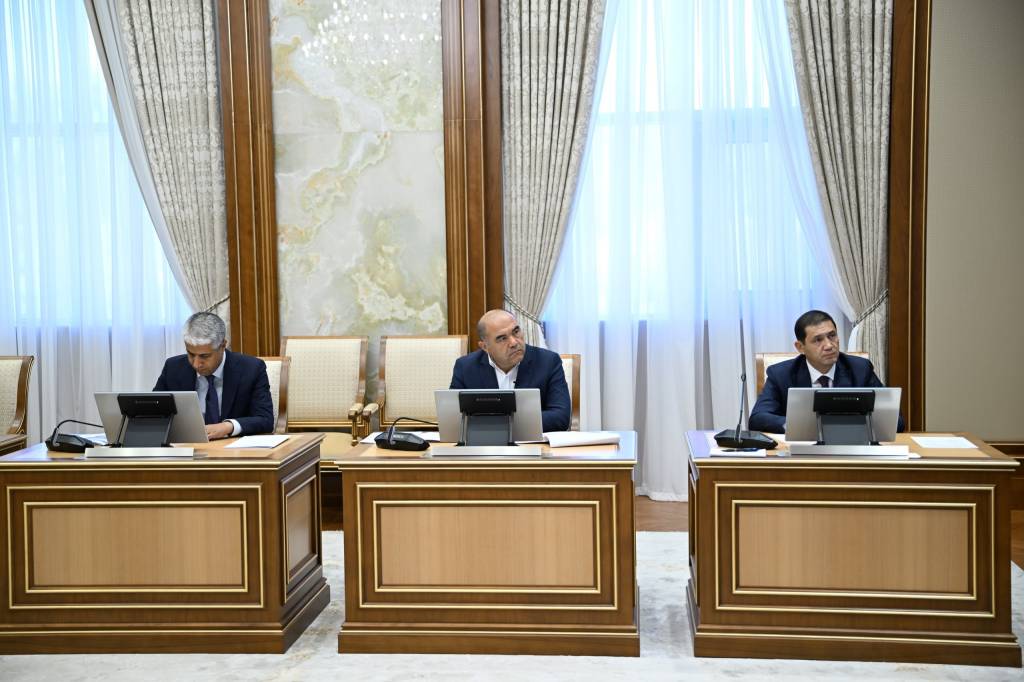
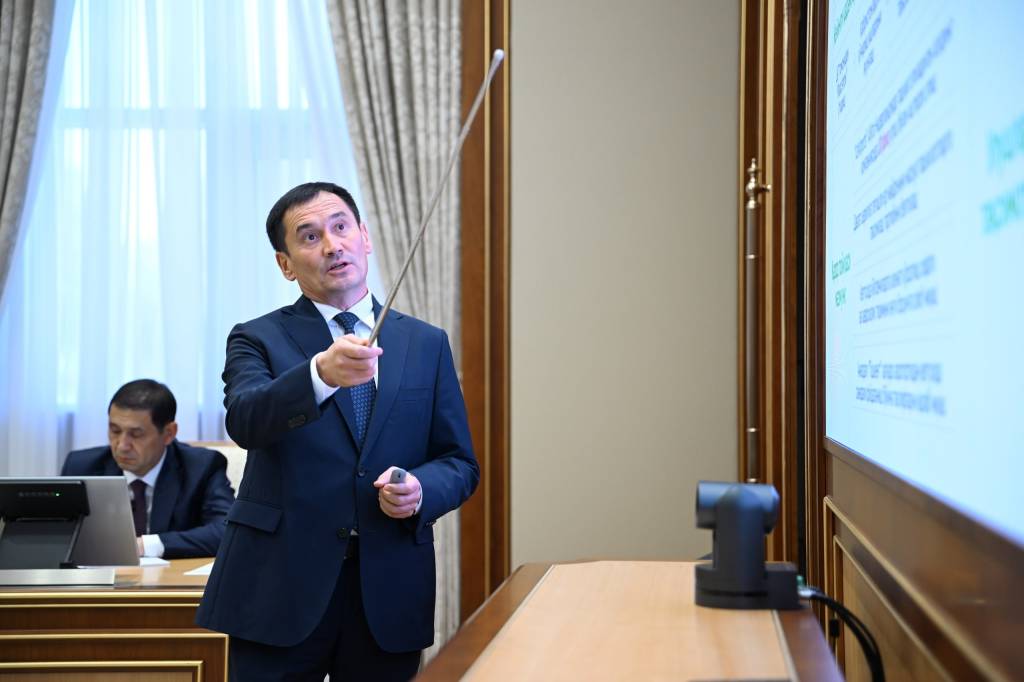
President Shavkat Mirziyoyev reviewed a presentation on the progress of major transport and logistics projects.
The country’s rapid economic growth and rising volumes of industrial production and foreign trade require the ongoing development of transport infrastructure. One priority is to transform Uzbekistan into a key hub on the shortest overland route from the Pacific Ocean to Europe and expand access to international markets.
By 2030, it is planned to double the volume of transport services, attract $9.1 billion in investment to the sector, and increase service exports to $5.7 billion. The infrastructure projects required to achieve these goals, their implementation timelines, and the issues that need to be addressed were reviewed at the presentation.
The presentation covered the construction and modernization of airports.
New airport complexes valued at nearly $3 billion are under construction in Tashkent and Bukhara. In the first phase, the new Tashkent International Airport will be designed to handle 20 million passengers annually. Public-private partnership agreements have been signed for the project, and work is underway to prepare the construction site and relocate utility networks.
Airfield infrastructure is under construction at the new Bukhara International Airport. An international tender is underway to attract a private partner to construct and manage the passenger terminal.
The progress of projects to modernize Urgench and Namangan airports on the basis of public-private partnerships, as well as Andijan Airport with the involvement of a private operator, was also reviewed. Upon completion of these projects, airport capacity will increase, and passenger service capabilities will be expanded in line with international standards.
Particular attention was also paid to the development of road infrastructure.
Last month, construction began on the $2.2 billion Tashkent – Samarkand toll road. The first toll road connecting Urgench and Khiva has also been commissioned.
The presentation covered financing for the subsequent stages of the Tashkent – Samarkand project, the selection of investors for the Tashkent – Andijan and Tashkent – Bostanlyk toll road projects, and tasks related to launching practical work.
Proposals were presented to expand the capacity of the railway network.
Currently, several railway sections on major transit routes are operating at high capacity. Rising volumes of industrial freight and the launch of new high-speed trains will place even greater pressure on the existing infrastructure.
In this regard, measures to modernize the Maktaaral – Syrdarya, Angren – Pap, Tashguzar – Baysun – Kumkurgan, Tashkent – Samarkand, and Tuqimachi – Angren routes were reviewed. It was noted that allocating $200 million to these projects would increase the capacity of these sections by 25-30 percent.
Reports were presented on the construction of the China – Kyrgyzstan – Uzbekistan railway, the creation of a dedicated high-speed line on the Tashkent – Samarkand route, and projects to expand and electrify the railway network in the regions. Proposals to renew the freight wagon fleet and to involve the private sector more actively in this process were also discussed.
The development of international transport corridors and the expansion of access to global markets via seaports were considered separately.
Information was presented on ongoing efforts to develop logistics infrastructure, with Uzbekistan’s participation, at the Caspian Sea ports of Aktau, Turkmenbashi, and Baku, as well as the Black Sea ports of Poti and Anaklia. In particular, an agreement has been signed to establish a logistics center at the Port of Poti, and a feasibility study for the project is underway. Opportunities to participate in the development of Anaklia Port, as well as in the construction of the Nakhchivan railway, which will provide access to the Turkish ports of Samsun and Istanbul, are also being explored.
These projects will help diversify routes for supplying textile, chemical, agricultural, and mining and metallurgical products to foreign markets.
The need to expand the network of logistics centers within the country to ensure efficient use of international transport corridors was also emphasized.
Information was presented on implementing instructions to specialize the cities of Khanabad and Angren, as well as Yangiyul, Akhangaran, Olot and Termez districts, in transport and logistics activities. 17 projects to establish logistics centers and terminals are planned in Tashkent, as well as Tashkent, Andijan, Surkhandarya and Bukhara regions. Their locations, investor engagement, financing, and provision of the necessary infrastructure were discussed.
Particular attention during the presentation was paid to the digitalization of freight transportation and reducing the shadow economy in the sector.
It was noted that the share of the shadow economy in freight transportation still exceeds 42 percent. Among the main challenges in this area are the lack of a unified registry of domestic freight vehicles and a single electronic system that integrates electronic order placement with all transport services.
In this regard, it was proposed to create a unified digital transport system, establish a registry of carriers, and introduce an aggregator to receive electronic transport documents and orders. Measures were also considered to expand the exchange of electronic permits and to introduce real-time cargo tracking in international transportation.
These measures are expected to create greater convenience for carriers, bring informal services into the formal economy and enhance transparency in the sector.
The Head of State emphasized the importance of clearly defining the implementation timelines, funding sources, and expected outcomes of the presented projects, as well as ensuring their coordinated implementation. The President issued relevant instructions to responsible officials on the issues discussed.
UzA