Annegret Kramp-Karrenbauer: Central Asia is increasingly defining its regional development priorities and developing practical frameworks for cooperation
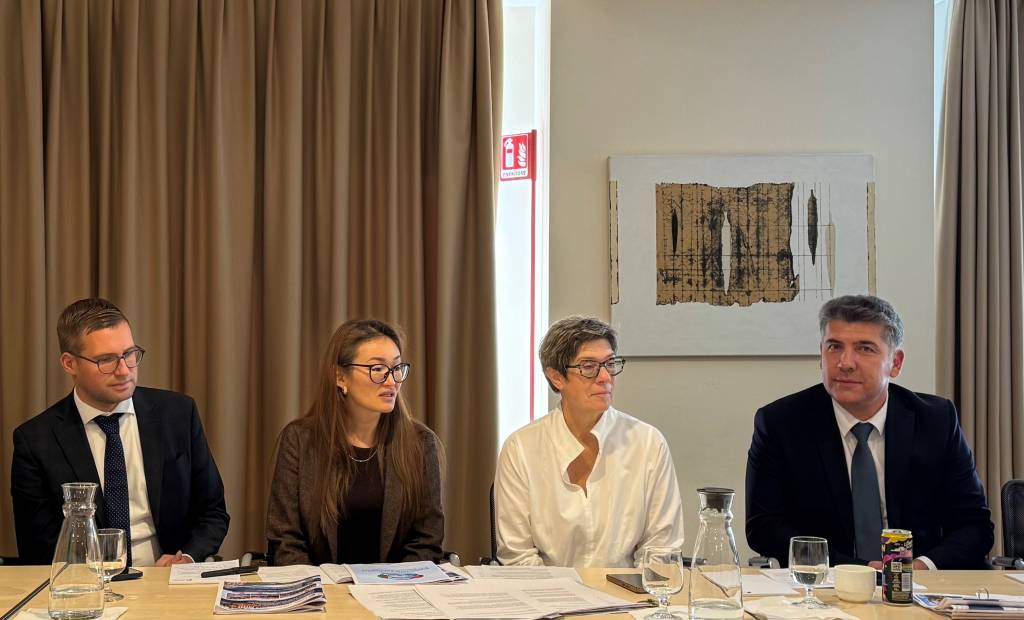
A delegation from Central Asian countries met with Annegret Kramp-Karrenbauer, Chairwoman of the Konrad Adenauer Foundation.
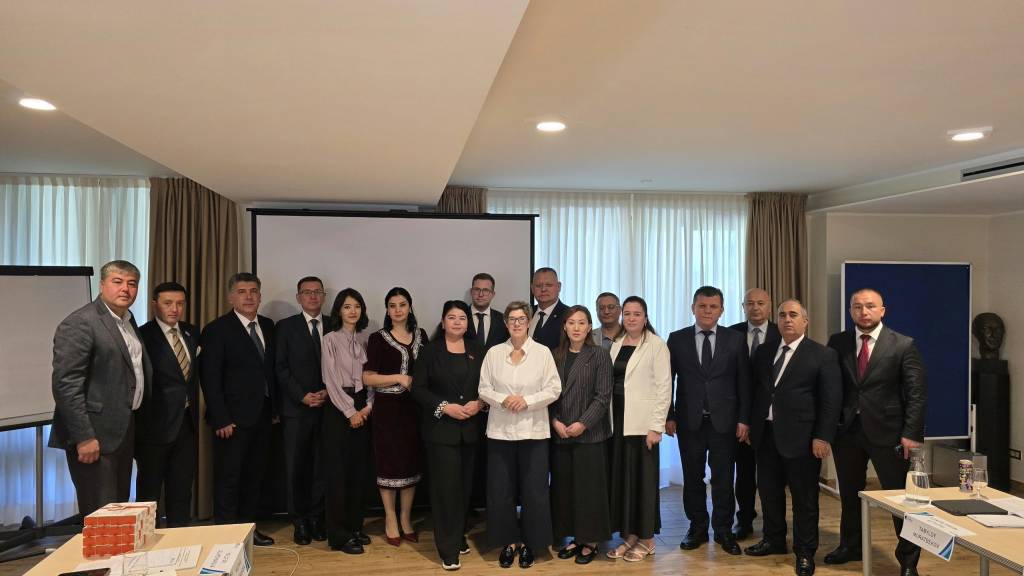
The meeting took place as part of the international expert conference “Central Asia amid global shifts: national strategies, regional security and building new cooperation”, held in Cadenabbia, Italy, from 17 to 19 September. It brought together representatives of Uzbekistan, Kyrgyzstan and Tajikistan, including parliamentarians, foreign ministry officials, experts and members of the media.
Addressing the participants, Annegret Kramp-Karrenbauer emphasized Central Asia’s strategic importance and its considerable potential for further consolidation.
“I am well aware of how important your region is, of its strategic significance, and of how much stronger it can become”, she stressed.
According to the Foundation’s Chairwoman, Central Asia’s further consolidation is directly linked to the continued expansion and deepening of cooperation among the region’s countries and the establishment of sustainable mechanisms for interaction. She noted that the Central Asian states were increasingly setting their own regional development priorities and establishing practical forms of cooperation that strengthen connectivity and mutual trust and promote the region’s steady development.
In this context, A.Kramp-Karrenbauer expressed the Konrad Adenauer Foundation’s readiness to support the development of regional dialogue, including through similar political and expert meetings.
“I would be very pleased if, for our part, we could also contribute to this process, including through today’s exchange of views. It is a great pleasure and a source of pride for me”, she said.
A. Kramp-Karrenbauer drew particular attention to the symbolic significance of holding the meeting in Cadenabbia, a place inextricably linked to the name of Germany’s first Federal Chancellor, Konrad Adenauer.
She recalled that K. Adenauer spent much of his summers there, though his stays in Cadenabbia were never ordinary holidays. While in Italy, he continued to conduct affairs of state, received numerous guests – including foreign visitors – daily, and discussed domestic and international policy.
During K. Adenauer’s stays there, Villa La Collina served as a temporary Federal Chancellery. It hosted meetings with senior political and business figures and discussions on major issues in Germany’s domestic and foreign policy. Today, the Konrad Adenauer Foundation continues to preserve Cadenabbia as a venue for international political and expert dialogue.
“I hope this special atmosphere and the spirit of this place will inspire and support you in your work”, A. Kramp-Karrenbauer noted.
For his part, Akramjon Nematov, First Deputy Director of the Institute for Strategic and Regional Studies under the President of the Republic of Uzbekistan (ISRS), thanked A. Kramp-Karrenbauer for participating in the meeting, supporting regional dialogue, and providing an opportunity to host such events at the Foundation’s venue.
He drew particular attention to the high-level and diverse composition of the participants, including politicians, parliamentarians, foreign ministry officials, and experts from Central Asian countries.
“This meeting has indeed brought together politicians, parliamentarians, foreign ministry officials, experts, and public figures from across the region – people working to strengthen regional cooperation. Many of them have been engaged in this work for years”, Mr. Nematov noted.
According to him, the opportunity to bring together representatives of different professional communities directly involved in advancing regional rapprochement and strengthening cooperation in Central Asia is especially valuable. Mr. Nematov also expressed appreciation to the Konrad Adenauer Foundation for its long-standing support for this dialogue and for creating an environment conducive to open exchange of views.
The meeting formed part of a broader dialogue on Central Asia’s place in the changing global order. Discussions focused on strengthening regional security and resilience, promoting good-neighborly relations and mutual trust, expanding trade, economic, transport, water and energy connectivity, and enhancing Central Asia’s agency as a region and its strategic autonomy.
Annegret Kramp-Karrenbauer has chaired the Konrad Adenauer Foundation since 1 January 2026. She was elected Chairwoman of the Foundation on 19 December 2025, succeeding former President of the Bundestag Norbert Lammert.
A. Kramp-Karrenbauer is one of Germany’s most prominent political figures of recent decades. She served as Minister-President of Saarland from 2011 to 2018, led the Christian Democratic Union of Germany (CDU) from December 2018 to January 2021, and served as Germany’s Federal Minister of Defence from 2019 to 2021. She has been a member of the CDU since 1981.
UzA