Central Asia signed a Joint Statement in Tashkent to strengthen earthquake resilience
Central Asia is a region prone to disasters, and earthquakes remain among its greatest risks. They strike without warning, causing loss of life and long-term economic, infrastructural, and psychological damage.
In April 1966, Tashkent was struck by a devastating earthquake that left more than 300,000 people displaced. Although the city was rebuilt and transformed into the modern Tashkent we know today, the remnants of that tragedy continue to endure. Other Central Asian cities and territories, too, have faced such shocks: Almaty was hit in 1911, the Chatkal region in 1946, Karatag in 1907, and Ashgabat in 1948. It is safe to say that seismic events have shaped the entire region’s history. Last year, the United Nations General Assembly designated 29 April as the International Day in Memory of the Victims of Earthquakes, and today, Tashkent hosted an event to honor those affected by earthquakes and strengthen global dialogue on disaster resilience.
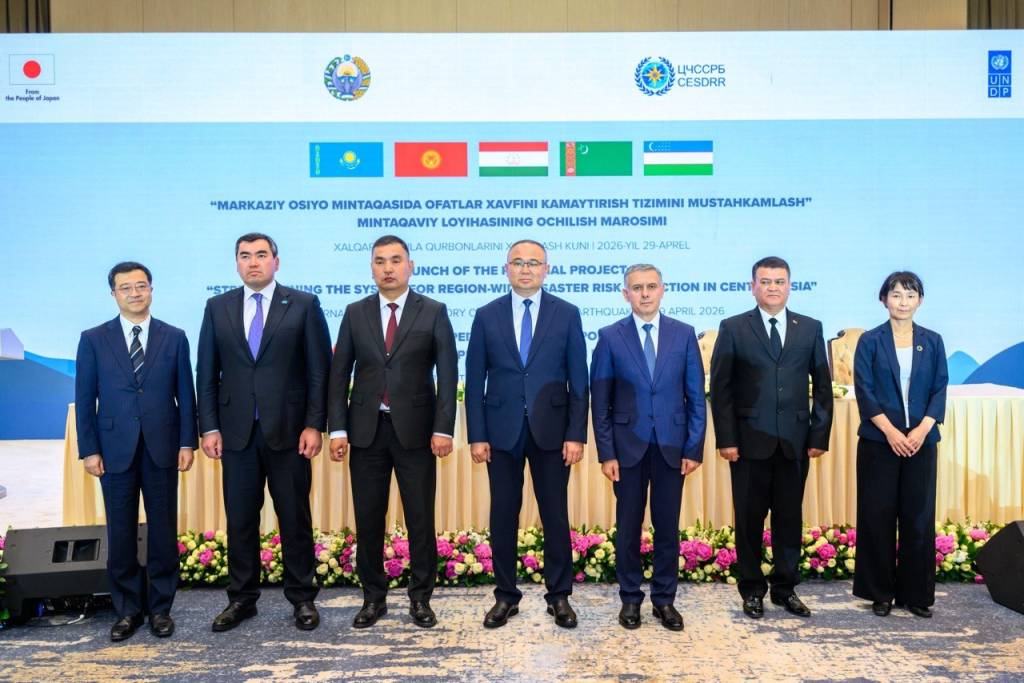
The event brought together more than 300 participants from 22 countries, including government officials, representatives of international organizations, and disaster management experts. Discussions focused on earthquake awareness, preparedness, and recovery, as well as cooperation to reduce future risks. Welcoming remarks were delivered by senior representatives of the Government of Uzbekistan, the United Nations, and the Embassy of Japan in Uzbekistan.
“This International Day is a global moment for remembrance and solidarity. But we should not stop there. We should ensure that remembrance becomes a turning point. One that drives decisive action to build disaster resilience and protect lives, livelihoods, and sustainable development”, said Kamal Kishore, Special Representative of the UN Secretary-General for Disaster Risk Reduction, Head of the United Nations Office for Disaster Risk Reduction.
“This is a valuable opportunity for us to remember those who lost their lives by earthquakes and other natural disasters and to renew our commitment to fostering disaster risk reduction and resilience building”, reflected His Excellency Kenji Hirata, Ambassador Extraordinary and Plenipotentiary of Japan to the Republic of Uzbekistan.
The second session marked the launch of UNDP’s new regional project, “Strengthening the System for Region-Wide Disaster Risk Reduction in Central Asia”, funded by the Government of Japan. Implemented in partnership with the Center for Emergency Situations and Disaster Risk Reduction (CESDRR), the project aims to strengthen regional coordination, ensuring effective preparedness, response, and recovery during large-scale cross-border disasters. It will focus on raising awareness of earthquake risks, improving readiness to reduce impacts, and introducing innovative earthquake monitoring and alarm systems, drawing on the practical experience of Japan and other countries. Pilot cities include Almaty, Osh, Dushanbe, Ashgabat, and Namangan.
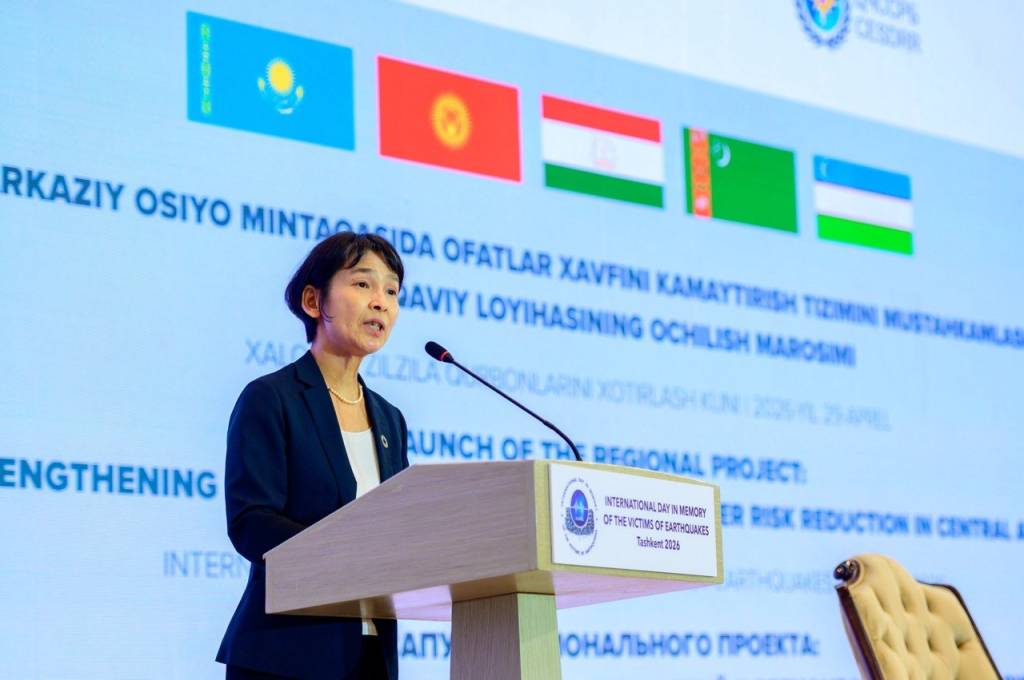
“With thanks to the Governments of the Central Asian countries for their trust, UNDP is proud to serve as the implementing partner for this flagship project. We will work with all key stakeholders at the regional and national levels, including mobilizing know-how and expertise from Japan, to ensure achievement of project objectives”, stated Akiko Fujii, UNDP Resident Representative in Uzbekistan.
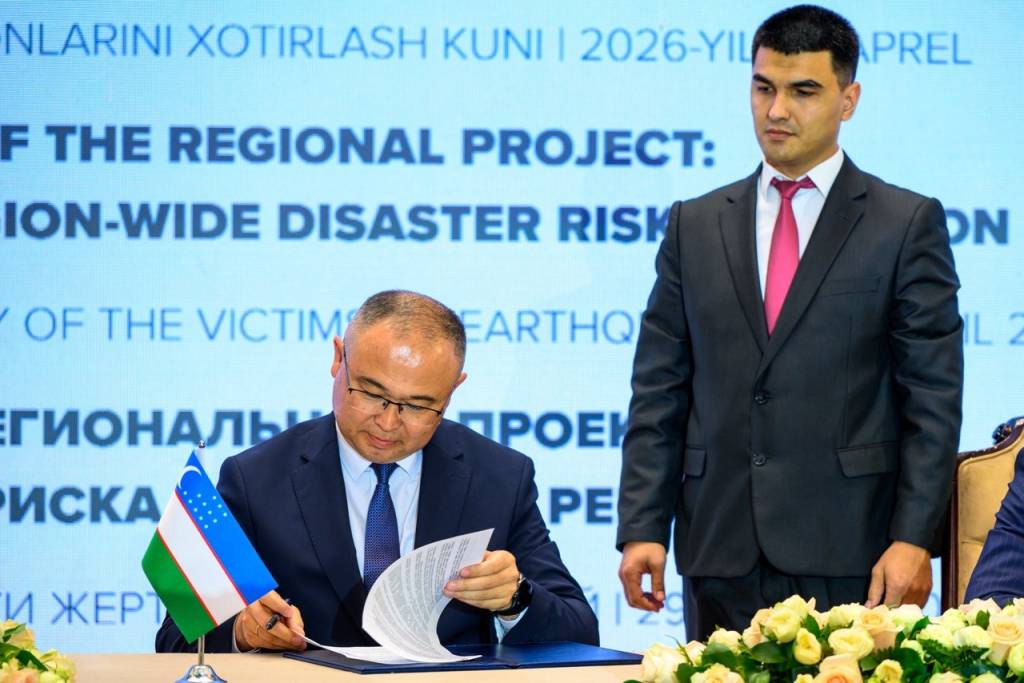
As part of the launch, heads of national disaster management authorities from all five Central Asian countries signed a Joint Statement to strengthen earthquake resilience, enhance response readiness, and ensure recovery. This statement reflects a shared commitment to coordinated regional action to protect people and territories from emergencies and to support resilience and sustainable development of Central Asia. The event continued with a technical session on seismic safety measures and best practices. Presenters included institutes of seismology from across Central Asia, Japanese companies such as OYO Corporation, and other international experts working on disaster risk reduction and urban resilience.
As Central Asia continues to face growing disaster- and climate-related risks, strengthening regional cooperation is essential. Such dialogues help preserve and translate the memory of past tragedies into practical action to build more resilient cities for the generations to come.
UzA