


Every day, thousands of our fellow citizens rush to pharmacies to purchase the medicines they need. Yet few know the journey these medications take before reaching consumers, where and how they are produced, and who ensures their quality, which patients in Uzbekistan particularly value.
We had the opportunity to take a closer look behind the scenes of European pharmaceutical production by visiting one of Europe’s largest pharmaceutical factories, located in the Serbian city of Vršac.
It is here, in this small, environmentally clean town, that millions of medicine packages are produced and then exported to countries around the world, including the Republic of Uzbekistan.
At the Hemofarm plant, we observed the entire production process – from the development of pharmaceutical forms to the packaging of finished products. Here, automated lines operate with split-second precision, packaging medicines destined for dozens of countries. The first thing that catches one’s attention is the impeccable cleanliness. Upon entering the production area, journalists are required to change into special clothing and are reminded that from that moment on, they are entering a sterile zone.
The technological equipment in the production hall gleams as it releases solid tablets and capsules along the conveyor. Manager SEE Cluster Operations Svetlana Kalinic explained that the unified quality system is the foundation of the company’s entire operation and that there is no difference whether the product is intended for Serbia, Germany, or Uzbekistan – quality control is identical at every stage, from development to market release.
“Each year, we produce around 300 million packages, which is equivalent to 7 billion tablets and capsules. The company’s portfolio includes over 2,800 finished pharmaceutical products, and the Hemofarm production network, in addition to the Vršac facility, also comprises sites in Šabac, Banja Luka, and Podgorica. Today, 80 percent of our products are exported, while 20 percent are distributed in the domestic market”, Ms. Kalinic said.
Representatives of the pharmaceutical manufacturer also provided detailed information about the company’s overall activities, global strategy, and the role of the Eurasian region within its business structure. The Hemofarm plant in Serbia was established in 1960. Since 2006, it has been part of the international pharmaceutical group STADA – a company with over 130 years of history and a leader in the global pharmaceutical market. STADA’s mission is to care for people’s health and to build trust-based relationships with partners and consumers. Today, the company’s products are represented in more than 120 countries worldwide. In 2024, STADA’s sales volume reached 4.059 billion euros, and by the end of that year, the company employed around 12,000 people globally.
More than 450 million euros have been invested in developing the Serbian enterprise, which is now one of the most extensive pharmaceutical facilities in the STADA network. The Vršac site serves as a key production hub, supplying not only the domestic Serbian market but also exporting medicines to over 30 countries.
According to Nemanja Brkovic, Public Relations Manager at Hemofarm, the company holds a leading position in the Serbian pharmaceutical market with a 9.7 percent share, making it the largest exporter of medicines in the country. The company’s product range covers three main areas – over-the-counter (OTC) medicines, generic drugs, and specialized pharmaceuticals, including biosimilars – high-tech equivalents of modern biological medicines with comparable efficacy, safety, and quality. The primary goal of biosimilar production is to increase patient access to advanced, high-tech drug therapies.
“All our products are certified and undergo rigorous testing in European laboratories. The 5,500-square-meter packaging center produces various types of packaging, and new lines for glass and plastic containers are expected to be launched soon. Quality control is carried out in full compliance with GMP and ISO standards, while employee safety remains one of the company’s top priorities”, she said.
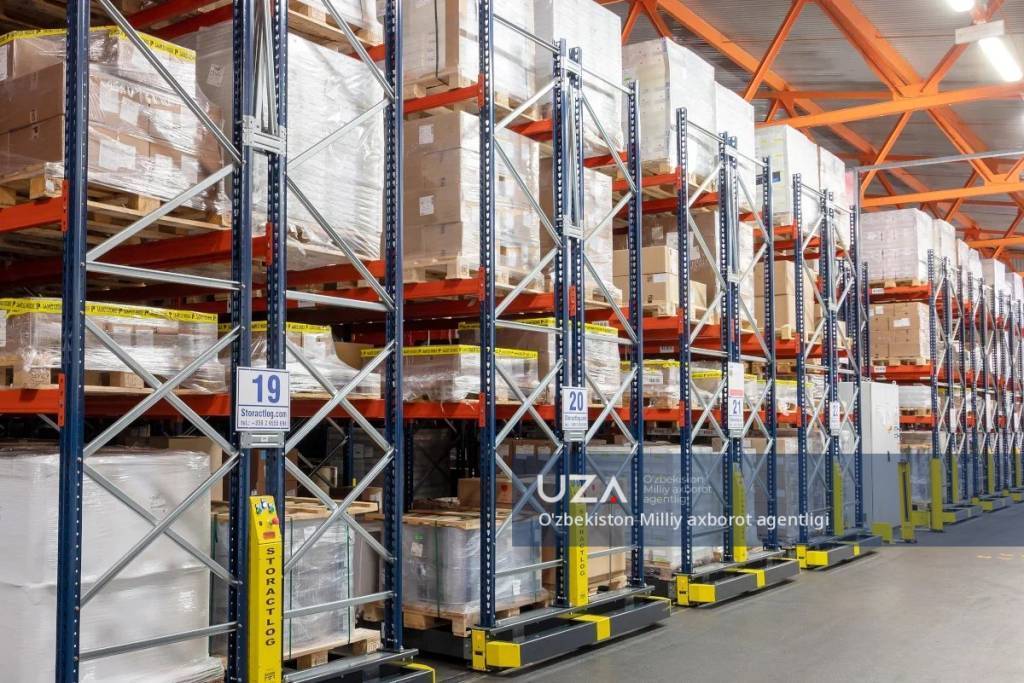
The warehouse complex at the Hemofarm production site gives the impression of having stepped into the future, thanks to its exceptional level of automation. Zoran Curcic, Head of the Warehouse Department, explained that his team is responsible for receiving and distributing raw materials, packaging materials, and finished products. Each year, the warehouses handle over 130,000 pallets, which are shipped both to the domestic market and to Western European countries.
“We ensure storage conditions that fully comply with GMP standards. The main temperature regime, 15 to 25 degrees, is monitored 24 hours a day, while cooling chambers maintaining 2 to 8 degrees are used for products requiring special conditions. Control is carried out using sensors and a real-time monitoring system. Our warehouses are equipped with automated lines featuring robots and shuttle carts, as well as mobile racking systems that double storage capacity. This system was first introduced in 2004, has since been modernized, and today meets the highest standards of quality and efficiency”, Zoran Curcic emphasized.
The company is also actively expanding its research activities, currently developing more than 50 medicines. Over the course of more than four decades, Hemofarm has created over 325 pharmaceutical products, largely thanks to the implementation of innovative technologies and advanced analytical methods.
From its plant in Serbia, the company supplies medicines for the treatment of cardiovascular, respiratory, proctological, and other diseases to Uzbekistan and the broader Eurasian market. Uzbekistan occupies a strategically important position in the company’s Eurasian development strategy. The opening of STADA’s regional office in Almaty, Kazakhstan, in 2022 reaffirmed the special significance of both Uzbekistan and Kazakhstan for the entire group.
Currently, Kazakhstan remains the largest pharmaceutical market in the region, where the state plays an active role in ensuring public access to medicines. In Uzbekistan, despite a smaller market volume, the rapid modernization of the pharmaceutical supply system is making the country an increasingly attractive and promising destination for global pharmaceutical industry leaders.
There are notable differences in consumer demand between the two countries – while cardiovascular drugs are more popular in Kazakhstan, probiotics and mineral supplements are more popular in Uzbekistan. At the same time, both markets show strong interest in medications for respiratory and gastrointestinal diseases. Several years ago, Uzbekistan registered its first ophthalmologic biosimilar, marking the beginning of a promising new direction in which STADA is now recognized as one of the regional leaders in Eurasia.
Supplies to Uzbekistan and Kazakhstan are carried out from the company’s European production facilities, primarily from the Hemofarm plant in Vršac, Serbia, which serves as a key export hub for the group. The company guarantees a uniform quality standard for all markets, strengthening trust in the brand as a reliable partner committed to innovation and improving human health.
[gallery-25881]
Ziyodbek Jumayev, UzA