Uzbekistan boosts its economic potential while using water more efficiently
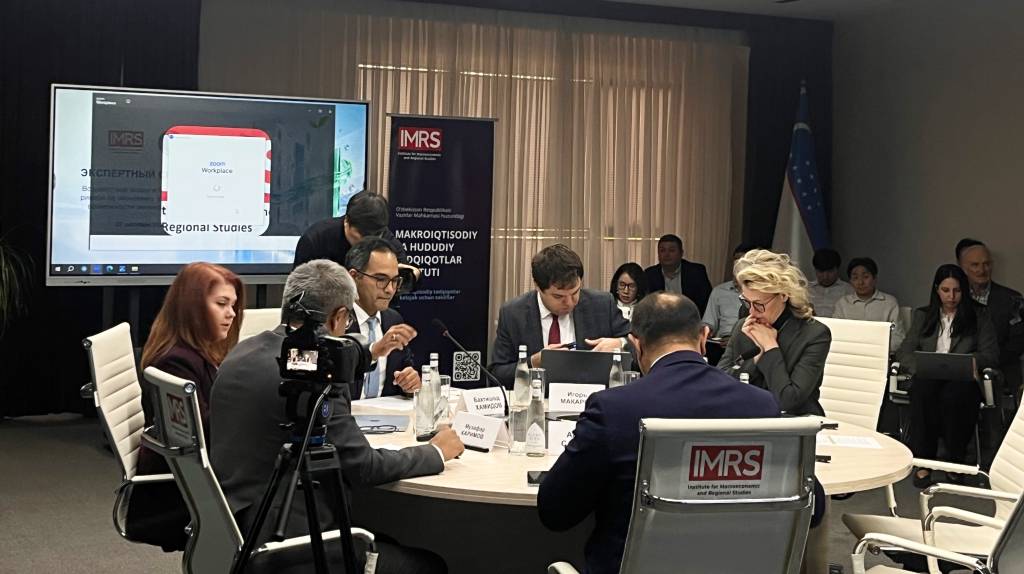
At the international scientific and practical seminar “The impact of water and climate risks on Uzbekistan’s economy and opportunities for green development”, Anastasia Likhacheva, Dean of the Faculty of World Economy and International Affairs at HSE University, outlined the main areas of a joint study on how water and climate challenges affect Uzbekistan’s economy and the country’s prospects for future development.

– We have gathered at the Institute for Macroeconomic and Regional Studies (IMRS) for the second time to present the findings of our major joint research project. The study examines how water and climate challenges affect Uzbekistan’s economy. It is especially gratifying to share our findings just weeks before the Conference of the Parties to the United Nations Framework Convention on Climate Change in Antalya, and a month ahead of the UN Water Conference. The Republic of Uzbekistan is setting an example that deserves the international community’s attention, – Likhacheva noted.
She says Uzbekistan faces considerable challenges in managing its water and energy sectors. However, decisions made by President Shavkat Mirziyoyev nearly a decade ago and consistently implemented since then have laid the foundation for the country’s current efforts to adapt to water and climate challenges.
What has Uzbekistan accomplished in less than a decade? It has significantly strengthened its economic potential and grown its gross domestic product without using more water, and in some cases, while using less. This is one of the world’s most impressive examples of this kind of transformation.
– At the same time, we must continue to examine how the situation may develop over the next 10 to 15 years. External challenges are intensifying, including global economic trends, shifts in neighboring countries’ economies, and regional and global developments in water and climate conditions. Our task, therefore, is not simply to identify and organize existing risks and threats, but also to develop economically sound recommendations and determine the most effective measures for Uzbekistan as a whole and for its individual regions. We need to understand which measures can sustain strong economic growth and provide employment for the younger generation, not only today, while the economy is gaining momentum, but throughout the next 10 to 15 years. These are the very issues addressed by the project whose findings we are presenting and discussing today, – the expert concluded.
Interviewed by Aziza Alimova, UzA