Uzbekistan and the Republic of Korea: from investment partnership to technological cooperation
Relations between Uzbekistan and Korea are entering a new stage of development. While trade, investment and equipment supplies previously formed the foundation of bilateral ties, the emphasis is now shifting towards deeper industrial and technological cooperation.
Joint production and technology chains, the localization of high-tech manufacturing, the advanced processing of critical mineral resources, and human capital development are emerging as key areas of bilateral cooperation. This trajectory is aligned with the long-term priorities of both countries.
The Republic of Korea seeks to diversify its raw material sources and enhance supply reliability. Uzbekistan, in turn, is interested in expanding domestic resource processing, adopting advanced technologies, and increasing the value added generated within the country. The complementarity of these objectives provides a basis for moving from predominantly investment-based cooperation towards a comprehensive industrial and technological partnership.
In 2025, bilateral trade amounted to approximately $1.8 billion. In August 2026, the two governments established a joint working group to increase annual trade turnover to $4 billion in the near term.
Investment cooperation has grown even further. The cumulative volume of Korean investment attracted to Uzbekistan’s economy has exceeded $10 billion, including approximately $8 billion in foreign direct investment. Korean businesses are also expanding. Today, around 1,000 enterprises with Korean capital operate in the country, compared with 359 in 2019.
The investment base accumulated over the years has been channeled into several major projects. The most significant is the Uz-Kor Gas Chemical joint venture, valued at approximately $4 billion – the largest investment project in the history of bilateral relations. The enterprise produces polyethylene, polypropylene, and commercial gas for the domestic market and export.
The automotive industry occupies a prominent place in bilateral cooperation. In partnership with Kia Corporation, the ADM Jizzakh plant manufactures a broad range of vehicles using semi-knock-down assembly. Enterprises within the UzAuto Components network manufacture components for UzAuto Motors vehicles, including air-conditioning systems, seats, stamped parts and plastic components.
Industrial cooperation also extends to the textile sector. Posco International Group enterprises in Fergana and Bukhara regions process cotton fibre and export high-quality yarn and fabrics to European and Asian markets.
Cooperation is also developing in the pharmaceutical industry. At the Tashkent Pharma Park cluster, Korean companies are participating as investors and technology providers in the manufacture of pharmaceutical products in accordance with international Good Manufacturing Practice standards.
The broadening sectoral scope of cooperation is creating the conditions for a transition from individual investment projects to sustainable production linkages between enterprises in the two countries.
Why cooperation is gaining a new significance
Deeper industrial and technological cooperation is being driven by changes in the global economy. Geopolitical uncertainty, trade restrictions and the restructuring of global supply chains have increased the importance of economic security.
This issue is particularly relevant for the Republic of Korea. Its leading industries – electronics, semiconductors, automotive manufacturing and battery production – depend on stable supplies of raw materials, materials and components.
The country ranks third globally in electronics manufacturing and leads the memory-chip segment. It accounts for approximately 13-15 percent of the global semiconductor market. The Republic of Korea is also among the world’s seven largest automobile manufacturers and the three global leaders in battery technology.
The reliance of its key industries on imports is prompting Seoul to broaden its economic partnerships and diversify its supply base for raw materials, processed materials and components. Against this backdrop, Central Asia is gaining importance as a resource-rich region seeking to advance industrial modernization.
At the same time, Uzbekistan is placing greater emphasis on the quality of incoming investment. At the present stage, not only the volume of investment but also its technological impact is becoming increasingly important. The principal focus is on establishing new production facilities, expanding domestic processing, strengthening export capacity and training qualified personnel.
The convergence of the Republic of Korea’s need for reliable raw-material sources and Uzbekistan’s aspiration to develop advanced processing makes cooperation in critical minerals particularly important.
From raw-material trade to value chains
Uzbekistan possesses reserves of copper, tungsten, lithium, molybdenum, zinc and other strategically important resources. For the Republic of Korea, these resources are important components of the raw-material base for high-tech industries.
For Tashkent, the priority is not simply to expand raw-material exports, but to progressively deepen their processing within the country. In this regard, a promising model would integrate resource extraction, processing, the manufacture of intermediate products and their subsequent industrial use into a single value chain.
This approach serves both sides’ interests. It would enable the Republic of Korea to diversify its sources of strategic raw materials and enhance supply-chain resilience. Uzbekistan, meanwhile, would be able to expand processing, master new technological processes and increase the share of high-value-added products.
Localizing individual stages of the technological cycle in Uzbekistan is becoming particularly important. The more production operations carried out within the country, the greater the benefits for industry, employment, and the training of national specialists.
Thus, the traditional model of cooperation, based primarily on supplies of raw materials and equipment, is gradually being complemented by a model centered on the joint creation of added value.
Technology, financing and human capital
Developing production chains requires not only investment, but also technology, long-term financing, and qualified personnel. Together, these elements could become a principal strength of the partnership between Uzbekistan and Korea.
The financial and institutional framework required to deepen cooperation is already taking shape. Under the partnership with the Republic of Korea’s Economic Development Cooperation Fund (EDCF), the ceiling for concessional financing available to Uzbekistan has been raised to $2 billion. The funds are being channeled into projects in digitalization, healthcare, education, and infrastructure.
Additional opportunities are provided by the Export-Import Bank of Korea. It helps finance the acquisition of Korean industrial equipment through credit lines extended to Uzbek banks. Export credit insurance mechanisms also help mobilize bank financing for joint initiatives.
These financial instruments are complemented by expanding technological cooperation. In August 2026, the two sides intensified their engagement in artificial intelligence and digital transformation. With support from the National Information Society Agency of the Republic of Korea (NIA), cooperation is developing in digital government, data standardization, and the introduction of AI solutions.
For Uzbekistan, this work matters not only for the digitalization of individual sectors. Standardizing production data, automation, and the application of artificial intelligence can increase productivity and lay the groundwork for modern smart manufacturing.
Human capital development remains an equally important component. Branches of four South Korean universities operating in Uzbekistan – Yeoju, Inha, Bucheon and Kimyo International University – train engineers, IT specialists and technologists for emerging sectors of the economy.
This educational dimension is complemented by the organized employment of Uzbek specialists in the Republic of Korea under the Employment Permit System (EPS). Employment at Korean industrial and shipbuilding enterprises enables them to acquire practical skills and become familiar with modern manufacturing practices.
The significance of this mechanism is gradually extending beyond labor mobility. If the acquired competencies are used effectively, it could become an important channel for transferring industrial expertise and professional knowledge.
The combination of financial instruments, technology and human capital development is creating the foundation required for deeper industrial cooperation.
From bilateral partnership to a regional dimension
Integrating cooperation between Uzbekistan and Korea into the broader agenda between the Republic of Korea and Central Asia opens up additional opportunities.
The first summit between the Republic of Korea and the five Central Asian states is scheduled to take place in Seoul on 16-17 September 2026. The new format reflects Seoul’s growing interest in the region as a promising area for industrial, technological and resource cooperation.
This creates additional opportunities for Uzbekistan. The country possesses a sizeable domestic market, considerable demographic potential, a substantial resource base and a developing industrial sector. Its accumulated experience of cooperation with Korean businesses and financial institutions constitutes another significant advantage.
Taken together, these factors enable Uzbekistan to position itself as one of the leading platforms for the Republic of Korea’s industrial and technological cooperation with Central Asia.
The consistent development of production chains, the localization of technologies, and the training of qualified personnel could make cooperation between Uzbekistan and Korea a notable example of the transition from an investment partnership to industrial and technological cooperation in Central Asia.
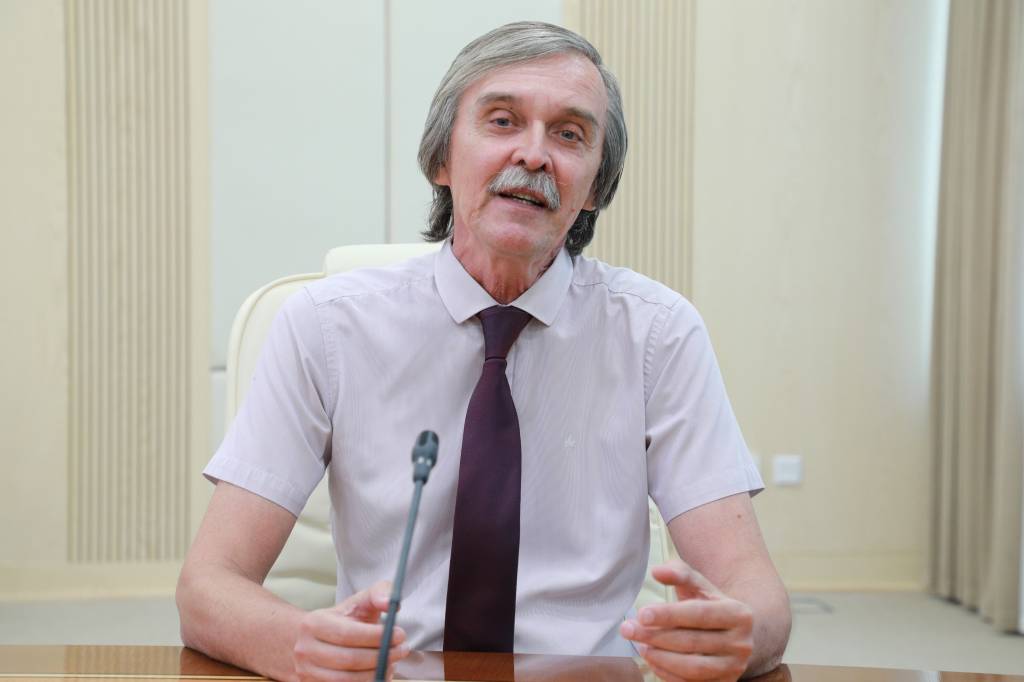
Dmitry Trostyansky,
Chief Research Fellow,
Institute for Strategic and Regional Studies (ISRS) under the President of the Republic of Uzbekistan (ISRS),
Doctor of Economics