Uzbekistan and the Republic of Korea: advancing bilateral cooperation and the Central Asia – Republic of Korea multilateral framework
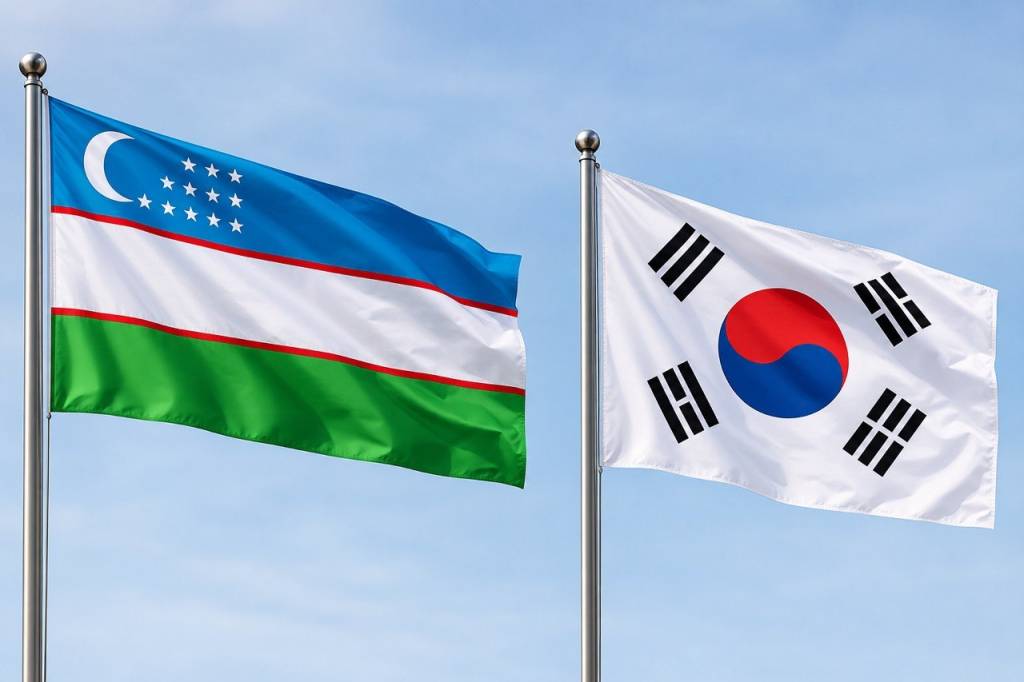
The international environment is changing rapidly. Geopolitical alignments are shifting, tensions in global trade are intensifying, competition among major powers is growing, and instability is affecting more regions.
Against the backdrop of increasing fragmentation in international relations, cooperation between the Republic of Korea and Central Asian countries is becoming more important. As the global economy transforms and new production and logistics chains emerge, the region is becoming one of the most promising areas for international economic cooperation. This interest reflects Central Asia’s advantageous geographic position, significant resource potential, and opportunities to develop new manufacturing, transportation, and logistics links.
The Republic of Korea views Central Asia not only as a promising market and a source of strategic mineral resources, but also as an important avenue for diversifying its external economic ties, developing new production chains, and advancing high-technology cooperation.
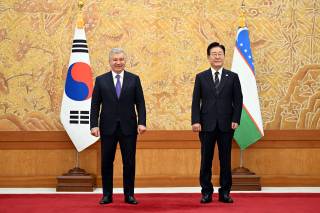
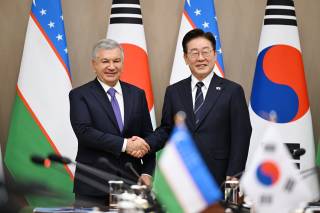
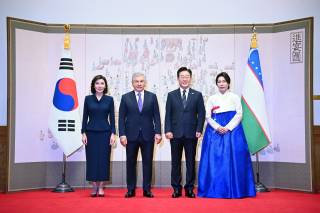
Uzbekistan occupies a distinct place in Seoul’s Central Asia policy. Over more than three decades of diplomatic relations, cooperation between the two countries has evolved from a predominantly trade and investment relationship into a special strategic partnership encompassing industrial cooperation, digital transformation, education, energy, and advanced technologies.
Political and institutional foundations of cooperation
Since forming diplomatic ties on January 29, 1992, Uzbekistan and the Republic of Korea have built a solid institutional base for mutually beneficial collaboration. Currently, their partnership is supported by high-level political discussions, the Intergovernmental Committee on Trade and Economic Cooperation, financial support from the Export-Import Bank of Korea and the Economic Development Cooperation Fund (EDCF), initiatives by the Korea International Cooperation Agency (KOICA), and an extensive network of educational and humanitarian projects.
This institutional architecture encompasses interparliamentary ties, cooperation between the two foreign ministries, contacts among business communities and business councils, linkages among educational institutions and civil society organizations, and expert exchanges between think tanks.
Following the establishment of the strategic partnership in 2006, cooperation expanded significantly through major projects in automotive manufacturing, the gas-chemical industry, health care, education, and finance.
A qualitatively new phase began in 2019, when the relationship was elevated to a special strategic partnership and digitalization, innovation, and high-technology industries moved to the center of the bilateral agenda. A Strategic Dialogue between the foreign ministers was launched in 2023, and in 2024 the two sides agreed on a three-year cooperation program covering critical minerals, semiconductor materials, machinery manufacturing, green energy, pharmaceuticals, and the digital economy.
People-to-people diplomacy is an important factor in strengthening the two countries’ strategic partnership. Approximately 200,000 ethnic Koreans currently live in Uzbekistan, more than 300 of whom have received high state honors.
As with all other ethnic groups, Uzbekistan provides ethnic Korean citizens with the conditions necessary to preserve and develop their cultural heritage, language, traditions, and customs. More than 20 Korean cultural centers operate in Uzbekistan. Korean philology is taught at 12 higher education institutions, and the Korean language is studied in 48 schools and academic lyceums.
The Association of Korean Cultural Centers of Uzbekistan plays a major role in this work. Books and newspapers are published in Korean; exhibitions, concerts, festivals, tours by performing arts groups in Uzbekistan and abroad, and youth sporting events are regularly organized.
Opened in 2019 with the support of the Government of the Republic of Korea, the House of Korean Culture and Art in Tashkent has become a symbol of the strong friendship between the two countries, an important venue for cultural dialogue, and a center of attraction for young people and members of the intellectual community.
Economic cooperation: from trade to industrial cooperation
Economic ties remain the foundation of the partnership between Uzbekistan and the Republic of Korea. Bilateral trade is a key indicator and has followed a positive trajectory over the past 15 years.
From 2009 to 2025, bilateral trade increased from $1.23 billion to $1.78 billion, a rise of about 45%. In January–May 2026, trade totaled $747.8 million, slightly above the same period the previous year.
Another pillar of the economic partnership is investment and financial and technical assistance. As of 2026, cumulative Korean investment exceeded $8 billion, while projects implemented jointly with the Export-Import Bank of Korea and its funds reached $2 billion.
According to the National Statistics Committee, 714 enterprises with Korean capital were operating in Uzbekistan as of April 1, 2026. Seventeen EDCF projects, with a combined value of $2.6 billion, have been implemented or are under preparation, while KOICA grants totaled $210 million from 1995 through 2024. More than 2,000 Uzbek specialists have completed training and internships in the Republic of Korea.
Trade ties, investment resources, and the extensive network
of enterprises with Korean capital have established a foundation for deeper industrial cooperation. At the current stage, the emphasis is gradually shifting from financing individual projects and supplying equipment to localizing technologies, expanding joint production, and establishing durable production linkages.
Industrial and technological cooperation
Industrial cooperation is becoming a central element of the next phase of the partnership between Uzbekistan and the Republic of Korea. Its future development will depend less on the number of agreements signed than on the depth of technological collaboration, the degree of production localization, and joint ventures’ ability to manufacture competitive products for domestic and export markets.
In recent years, cooperation between Uzbekistan and the Republic of Korea has shifted increasingly toward high-technology industries. While earlier engagement centered on equipment supplies and establishing individual production facilities, current priorities include technology localization, expanded joint production, and integrating Uzbek enterprises into international production chains.
The initiative to establish a semiconductor research and manufacturing cluster in Tashkent region is particularly important. For the first time, cooperation is oriented not only toward using existing technologies, but also toward building a domestic research and production base in one of the most knowledge-intensive sectors of modern industry.
Practical results have already been achieved in machinery manufacturing and the transportation sector. KIA vehicle production in Uzbekistan, rail projects involving Hyundai Rotem, and the expansion of service infrastructure demonstrate a shift from simple equipment imports toward the gradual localization of production and maintenance. At the same time, the long-term effectiveness of such projects will depend on increasing the share of locally produced components, training engineering personnel, and transferring technological capabilities to Uzbek enterprises.
A new model of cooperation: energy, critical minerals, and human capital
Contemporary cooperation between Uzbekistan and the Republic of Korea is increasingly focused on sectors that will shape the long-term competitiveness of their national economies. Whereas investment attraction and individual production projects defined earlier decades of engagement, the emphasis is gradually shifting toward technological modernization, the energy transition, the development of critical mineral resources, and the training of skilled personnel.
In recent years, Uzbekistan has attracted significant foreign investment in its energy sector, enabling a substantial expansion of generation capacity and large-scale infrastructure modernization. Electricity generation increased from 60 billion kilowatt-hours in 2017 to 86.7 billion kilowatt-hours in 2025. Approximately 9,000 megawatts of new capacity were commissioned, and nearly 69,000 kilometers of power grids were modernized. Renewable energy has also expanded rapidly. In 2025, electricity generation from solar and wind power plants exceeded 10.5 billion kilowatt-hours, while total green generation, including hydropower, reached 16.8 billion kilowatt-hours.
These developments create favorable conditions for deeper cooperation with the Republic of Korea. The most promising areas include deploying energy storage systems, power grid digitalization, power electronics, heat supply modernization, and localized manufacturing of energy equipment. This approach would allow the two sides to move beyond supplying finished equipment toward jointly developing technological solutions and strengthening domestic industrial capacity.
Critical mineral resources occupy an equally important place on the bilateral agenda. For the Republic of Korea, they are strategically important as raw materials for semiconductors, batteries, electric vehicles, and advanced electronics. For Uzbekistan, cooperation in this area offers an opportunity to move from raw-material exports to deeper processing and the production of higher-value-added goods.
In this context, establishing a complete value chain – from geological exploration and extraction to the production of materials, components, and finished industrial goods – is especially important. This model delivers the greatest economic benefit, supports the development of national industry, and enables Uzbek enterprises to integrate into global production chains being developed with the participation of the Republic of Korea.
Expanding industrial cooperation is not possible without developing human capital. Education, science, and professional training are evolving from a stand-alone area of humanitarian cooperation into a key driver of economic development.
Over the course of bilateral engagement, Uzbekistan has developed an extensive system of educational cooperation with the Republic of Korea. Branch campuses of four South Korean universities operate in the country, alongside vocational training centers, academic exchange programs, and specialist training in engineering, information technology, medicine, and technical fields. This infrastructure supports workforce development for projects in machinery manufacturing, energy, the chemical industry, information technology, and biotechnology.
Healthcare remains another important component of cooperation. With support from the Republic of Korea, projects are being implemented to develop modern medical infrastructure, pharmaceutical manufacturing, and biotechnology research.
Future cooperation, however, should focus not only on building new facilities but also on localizing the production of pharmaceuticals, medical equipment, and medical devices. This approach would strengthen the resilience of the national health care system while creating new high-technology industries.
Notable results have also been achieved in digital transformation. The Republic of Korea has made a substantial contribution to e-government, digital public services, innovation infrastructure, and Uzbekistan’s information technology sector. The next phase could include joint projects in artificial intelligence, industrial automation, big-data analytics, and the digital management of production processes. However, the effectiveness of these initiatives will depend primarily on training specialists who can independently implement, maintain, and improve advanced digital technologies.
Central Asia – Republic of Korea framework: advancing regional partnership
Alongside stronger bilateral relations, a regional framework is also developing. Established in 2007, the Central Asia – Republic of Korea Cooperation Forum became one of the first standing mechanisms for dialogue between the region and an external partner. The Forum has convened 17 times. The framework also includes the Central Asia – Republic of Korea Business Council.
Central Asian countries and the Republic of Korea have identified six priority areas for cooperation: industrial modernization, transport and logistics, energy, climate change and the environment, healthcare and medical services, and education and culture. These areas constitute the substantive foundation of multilateral engagement.
The establishment of a permanent Secretariat in 2017, the adoption of the “K-Silk Road” Initiative in 2024, and preparations for the first summit of heads of state, scheduled for September 2026, reflect the framework’s gradual elevation to a higher political level. The shift from predominantly ministerial engagement to dialogue among heads of state creates conditions to coordinate long-term regional initiatives and develop more durable cooperation mechanisms.
The framework has generated tangible economic results. The Republic of Korea’s total trade with Central Asian countries increased from $200 million in the 1990s to $9 billion in recent years – a 45-fold increase over three decades. Total Korean investment in the region exceeded $4.08 billion. In 2023, the Republic of Korea was the fourth-largest source of imports for Kazakhstan and Uzbekistan.
Regional cooperation prospects center on developing critical minerals, establishing distributed production chains, digitizing transport and logistics infrastructure, expanding renewable energy, and training engineers. Unlike the traditional model, which is based largely on separate bilateral projects, the regional framework enables initiatives that span several Central Asian states and combine their raw-material, manufacturing, transportation, and workforce capabilities.
Under these conditions, Uzbekistan’s role could expand considerably. Its sizable domestic market, accumulated experience working with Korean companies, well-developed educational infrastructure, and industrial base create the conditions for the country to strengthen its position as a principal manufacturing and educational platform for the Republic of Korea’s cooperation with Central Asia.
Practical areas of cooperation could include establishing regional critical-mineral processing capacity, developing specialized industrial zones, creating joint engineering and education centers, and improving mechanisms for monitoring the implementation of regional projects.
Conclusion
Over more than 30 years of cooperation, Uzbekistan and the Republic of Korea have established a durable system of political, economic, and humanitarian engagement. The current phase of bilateral relations is defined less by the quantitative expansion of cooperation than by a change in its substance. A model based primarily on equipment supplies and investment attraction is gradually giving way to a partnership focused on technological cooperation, production localization, human capital development, and manufacturing higher-value-added products.
At the Seventh Consultative Meeting of the Heads of State of Central Asia in November 2025, President of the Republic of Uzbekistan Shavkat Mirziyoyev proposed establishing a Central Asian Community. Implementing this initiative would significantly strengthen the region’s collective voice in international affairs and create new opportunities for engagement with partners, including the Republic of Korea, through a more structured Central Asian framework.
Additional opportunities are emerging through the development of the Central Asia – Republic of Korea framework. Elevating it to a heads-of-state summit creates conditions to build new regional production chains, implement infrastructure projects, and expand cooperation on critical minerals, energy, and the digital economy. In this context, Uzbekistan, with the region’s most developed industrial, educational, and institutional base, is positioned to strengthen its role as one of the Republic of Korea’s key partners in Central Asia and become a principal platform for implementing long-term regional initiatives.
Azamat Toshev,
Head of Department,
International Institute for Central Asia,
UzA