Uzbekistan and Bulgaria: A Long-Standing Friendship and Strategic Partnership
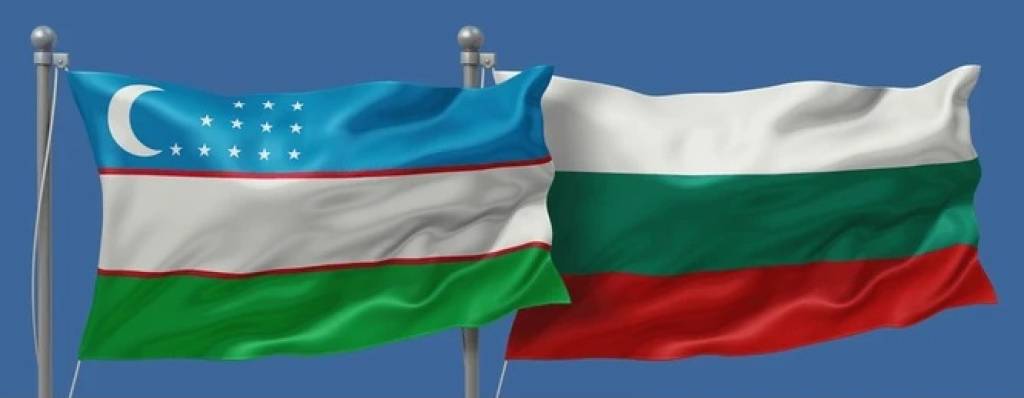
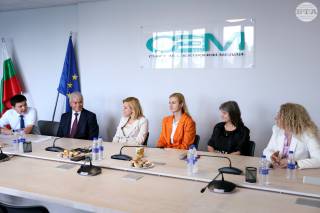
On June 2, the Uzbekistan National News Agency – UzA, recognized as Central Asia’s leading state news agency, signed a Cooperation Agreement with the Bulgarian News Agency – BTA, based in southeastern Europe.
Although our countries are geographically distant, the cultural and historical bonds connecting our peoples, along with mutual respect and a desire for cooperation, bring us closer. This move towards shared goals reduces distances and creates new opportunities.
This document serves not just as a formal agreement but as a strong foundation for an information link between the two regions. In the future, key news, cultural, and economic events in Uzbekistan and Bulgaria will be communicated directly, accurately, and promptly to audiences in both countries, without intermediaries. Additionally, in today’s globalized world, with the proliferation of fake news, collaboration between the two main national agencies will ensure the distribution of only official and trustworthy information.
The words by the famous Bulgarian poet and writer Ivan Vazov on friendship and human connections are very appropriate for strengthening the friendly relations between our nations:
“Friendship is such a sacred feeling that it overcomes distances, unites hearts, and brightens even the most difficult paths. Where true friendship exists, there are no strangers”.
For centuries, the Great Silk Road served as a unique historical bridge linking the civilizations of East and West. Through this ancient route of trade and cultural exchange, peoples shared not only goods but also knowledge, culture, traditions, and ideas. Relations between Uzbekistan, located in the heart of Central Asia, and Bulgaria, one of Europe’s important countries, are a modern continuation of the spirit of that historical dialogue.
In today’s complex and rapidly changing international environment, the strength of relations between countries is determined not only by economic interests but also by mutual trust, political dialogue, and spiritual closeness. Relations between Uzbekistan and Bulgaria stand out for these qualities.
From the earliest years of independence, Uzbekistan and Bulgaria have paid particular attention to building a strong partnership across the political, economic, cultural, and humanitarian spheres. Over the past more than thirty years, high-level visits, numerous bilateral agreements, interparliamentary dialogue, business forums, and cultural events have contributed to the steady development of their relations.
In particular, in recent years, large-scale reforms underway in Uzbekistan and the country’s open and pragmatic foreign policy have created new opportunities for cooperation with European countries. Bulgaria, as a member of the European Union, is placing particular importance on consistently expanding relations with Central Asia.
Looking at the history of cooperation between Uzbekistan and Bulgaria, we can see that these relations are based not only on official diplomatic ties between the states but also on important factors such as sincere friendship, cultural closeness, and mutual understanding between the peoples.
A Strong Political and Diplomatic Foundation
Relations between Uzbekistan and Bulgaria have deep historical roots. According to experts, ties between the ancient ancestors of the Bulgarians and our forebears in the territory of modern Uzbekistan date back to the era of the Great Silk Road. This closeness, combined with migration, trade, and cultural ties, was based on mutual interest and respect.
Modern relations began when the Republic of Bulgaria recognized Uzbekistan’s independence on January 6, 1992. Soon afterward, on September 12 of the same year, official diplomatic relations were established between our states. To ensure that relations develop systematically and continuously, the Embassy of Bulgaria has been operating in Tashkent since April 1999. The residence of the Ambassador of Uzbekistan to Bulgaria is located in Ankara and serves as an important bridge in the development of bilateral relations.
It should be emphasized that the comprehensive treaty and legal framework established between the two countries comprises 38 important documents. This international legal framework serves as the legal foundation for cooperation in the political, economic, trade, cultural, and humanitarian spheres.
High- and Top-Level Visits: Maintaining a Robust Pace of Political Dialogue
An important feature of relations between Uzbekistan and Bulgaria is the strengthening of political dialogue through regular high- and top-level meetings.
In recent years, dialogue between the leaders of our states has continued consistently on the international stage. In particular, on September 20, 2017, in New York, on the sidelines of the 72nd session of the UN General Assembly, President of the Republic of Uzbekistan Shavkat Mirziyoyev met with the leader of Bulgaria to discuss ways to fundamentally intensify bilateral relations.
Intergovernmental contacts are also developing rapidly. On April 6-9, 2014, during his visit to Vietnam, Bulgarian Prime Minister Plamen Oresharski made a technical stopover at Samarkand Airport, where he was accorded high-level protocol honors, equivalent to those afforded to the First Deputy Prime Minister.
During the Bulgarian leader’s visit to our country on June 9-11, 2025, documents were exchanged to expand bilateral cooperation, including a cooperation program between the Ministries of Foreign Affairs for 2026-2027 and an agreement establishing partnership relations between the cities of Tashkent and Sofia.
Bulgaria has been supporting Uzbekistan’s initiatives within the UN and the OSCE to promote sustainable development and regional security in Central Asia. It also highly appreciates the reforms underway under the New Uzbekistan 2030 Strategy, including efforts to support civil society institutions and the media.
Interparliamentary and Interagency Collaboration
Interparliamentary ties are also steadily developing. The Bulgaria – Uzbekistan Friendship Group is active in the Bulgarian Parliament. Based on a joint resolution of the chambers of the Oliy Majlis, the Uzbekistan – Bulgaria Interparliamentary Group for Cooperation with the National Assembly has been established.
Mutual visits are being conducted under this cooperation. Direct meetings have become even more frequent in recent years. In July 2018, a delegation led by Adlen Shevked, Chairman of the Bulgaria-Uzbekistan Friendship Group, visited our country. In November, during the Uzbekistan – Bulgaria Interparliamentary Group’s return visit, meetings were held with the leadership of the National Assembly, representatives of the Ministries of Foreign Affairs, Economy, and Tourism, and the mayors of Plovdiv and Kardzhali.
In December 2021, Tanzila Narbayeva, Chairperson of the Senate of the Oliy Majlis, delivered a video address to participants in the high-level ministerial conference titled “Shaping Europe’s Demographic Future: Pathways for Societies to Thrive in a World of Rapid Demographic Change”, held in Sofia.
The foreign policy agencies of the two countries are maintaining regular contact. In particular, during mutual consultations, not only bilateral issues but also pressing items on the international agenda, including climate change, digital transformation, combating disinformation, and human rights, are discussed.
On October 23, 2023, at the 19th European Union – Central Asia ministerial meeting in Luxembourg, the Minister of Foreign Affairs Bakhtiyor Saidov met with Mariya Gabriel, Deputy Prime Minister and Minister of Foreign Affairs of Bulgaria.
Speaking of cooperation on international platforms, it should be noted that Uzbekistan actively supported the candidacy of Bulgaria’s representative, Irina Bokova, twice for the post of UNESCO Director-General, for the periods 2009-2013 and 2013-2017.
Economic Partnership: Investment and Trade Perspectives
The investment potential of our countries is increasingly attractive from a partnership perspective. The liberalization of the economy, the development of free economic zones, and active support for small and medium-sized businesses in Uzbekistan are creating a solid foundation for this.
Both countries are interested in strengthening ties in the transport and logistics sector, particularly regarding the Trans-Caspian International Transport Route, which connects Uzbekistan to Black Sea ports via the Caucasus. Bulgaria, with its developed infrastructure and logistics centers, can serve as a transit corridor between Central Asia and the EU.
The 5th meeting of the Intergovernmental Joint Commission on Trade, Economic, Scientific and Technical Cooperation was held in Tashkent on September 11-12, 2019. As a result of active efforts, mutual trade turnover has grown steadily, reaching $94 million by the end of 2025. However, this figure does not fully reflect the economic potential of the two countries. In other words, there are broad opportunities to expand cooperation in transport and logistics, pharmaceuticals, the food industry, textiles, the chemical industry, and the digital economy.
It should be noted that nearly 30 enterprises, with participation from Bulgarian investors, are successfully operating in Uzbekistan today. In particular, companies such as Prista Oil, Bultex, Prima Textile, Bulgaria-Sharob, and Rossi have established a presence in the Uzbek market and are making a significant contribution to strengthening industrial and cooperative ties between our countries. Moreover, Bulgaria’s experience as a member state of the European Union is important for Uzbekistan in terms of entering European markets and adopting technical standards and innovative management models.
Cultural and Humanitarian Ties: A Bridge Between Peoples
The spiritual bonds that connect our peoples are the most beautiful chapter in bilateral relations. Today, nearly 1,000 members of the Bulgarian ethnic community live peacefully and harmoniously in Uzbekistan as part of one united, close-knit family. In February 1998, the Uzbekistan – Bulgaria Friendship Society was established in our country, and in May 1999, the Bulgarian Cultural Center opened its doors. N. Todorov, head of this complex, was awarded the Shuhrat Medal of the Republic of Uzbekistan in 2002 for his major contribution to the development of friendship between the two peoples.
Direct ties between the two countries’ regions are also developing. In particular, sister-city relations have been established between the ancient yet ever-young cities of Bukhara and Varna, as well as the legendary cities of Samarkand and Plovdiv, which have already become centers for cultural and tourism exchanges.
Cooperation in the field of culture also deserves special recognition at the international level. Uzbekistan’s Maqom Ensemble’s win of the highest award – the Grand Prix, the Golden Orpheus – among 98 prestigious groups from 72 countries at the international folklore festival held in six Bulgarian cities on August 23-September 3, 2018, is a major achievement for Uzbek national art in the Balkan region.
In recent years, screenings of Bulgarian films and exhibitions of artists have been held in Tashkent and Samarkand. Through the opening of language courses, musical evenings, and roundtable discussions dedicated to the cultural heritage of our peoples, embassies and diaspora organizations are widely promoting the cultures of the two countries.
In the field of education, cooperation agreements have been approved between the Tashkent Institute of Chemical Technology and the University of Chemical Technology and Metallurgy in Sofia, the Tashkent State University of Law and Sofia University, and the Samarkand State Medical Institute and the Medical University of Sofia. In addition, memoranda of cooperation have been signed between Namangan State University and the Technical University of Varna, and between the University of World Economy and Diplomacy and the Diplomatic Institute under the Ministry of Foreign Affairs of Bulgaria. These efforts deepen humanitarian ties, improve the quality of personnel training, and strengthen mutual solidarity between the youth of the two countries. Under the Erasmus+ program, Uzbek students have been given opportunities to undertake advanced training and internships at Bulgarian universities and the Academy of Sciences.
Notably, literary ties constitute the deepest and most enduring aspect of cultural cooperation between Uzbekistan and Bulgaria. Although our languages belong to different language families, the ideas of humanism and the glorification of national values in the literature of the two peoples are very similar.
Relations in the art of the written word began to develop systematically in the second half of the 20th century, enabling Uzbek and Bulgarian readers to become acquainted with each other’s literary masterpieces. In particular, the poems of Hristo Botev, the national hero of the Bulgarian people and a fiery poet imbued with the spirit of freedom, were translated into Uzbek and published several times. The famous novel “Under the Yoke” by another classic representative of Bulgarian literature, Ivan Vazov, which reflects the country’s history and the people’s struggle for liberation, was skillfully translated into Uzbek. This work gives Uzbek readers a vivid and comprehensive understanding of the past and the spirit of the Balkan peoples. Moreover, the stories and novellas of major representatives of Bulgarian prose, Elin Pelin and Emilian Stanev, rich in beautiful depictions of nature, human emotions, and philosophical reflections, were presented to readers in Uzbek periodicals and as separate collections.
Alongside the work of Eastern scholars and thinkers, the work of the great Uzbek poet and thinker Alisher Navoi has been studied in depth in Bulgaria from both scholarly and artistic perspectives. Translations of the poet’s ghazals into Bulgarian have strengthened the spiritual closeness between our peoples. In addition, poems and epics by prominent Uzbek writers such as Gafur Gulom, Oybek, and Zulfiya, as well as stories by Abdulla Qodiriy, Chulpon, and later writers, have been included in Bulgarian literary exchange collections.
Conclusion
Generally, Uzbekistan and Bulgaria maintain a solid relationship built on mutual trust and respect. Situated at key geostrategic crossroads of Central Asia and the Balkan Peninsula, these nations have continually supported each other both bilaterally and within international organizations.
Further strengthening the partnership between Tashkent and Sofia closely aligns with the long-term national interests of both countries. The shared goal of utilizing existing opportunities wisely and the political determination of both parties suggest that a new, more productive phase in relations between Uzbekistan and Bulgaria is likely to begin soon.
Abdusaid Kuchimov,
Director General of the Uzbekistan National News Agency, Senator
Kiril Valchev,
Director General of the Bulgarian News Agency