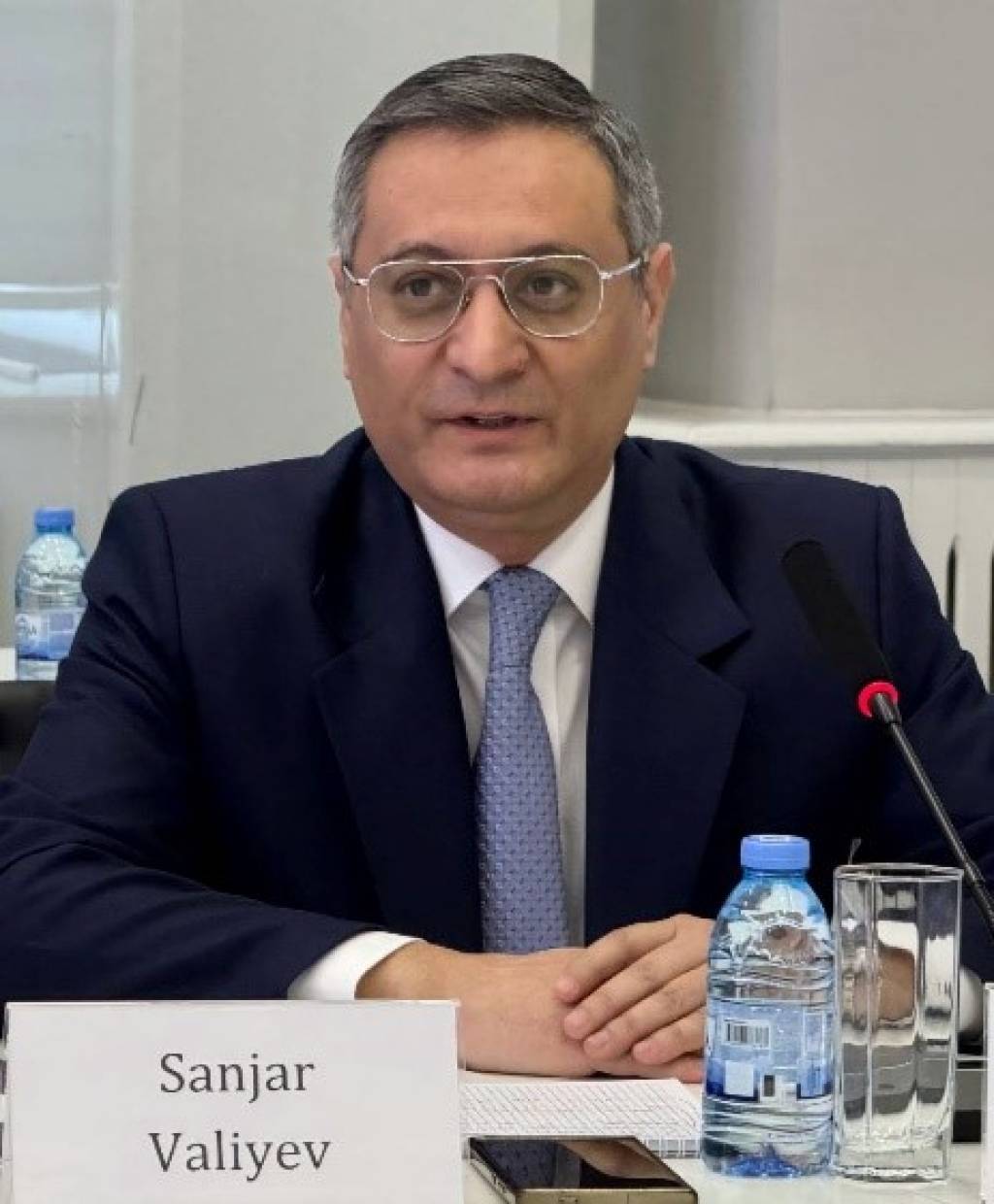
The visit of the President of the Republic of Uzbekistan, Shavkat Mirziyoyev, to the United States and his participation in the first Board of Peace summit in Washington are viewed as an important stage in strengthening the country’s international standing and expanding its diplomatic dialogue with key global centers. On the strategic significance of the visit, the outcomes of the negotiations, and the impact of Uzbekistan’s participation in new international formats, UzA correspondent spoke with Sanjar Valiyev, Director of the Center for Foreign Policy Studies and International Initiatives.

– Against the backdrop of intensifying geopolitical competition and the emergence of new centers of power, high-level visits are acquiring special significance. In your opinion, what strategic importance does the visit of the President of Uzbekistan to the United States hold in the context of the current international environment and the transformation of global politics?

 First of all, I would like to remind you that the United States remains a global superpower and continues to exert decisive influence on all global processes, whether in the military-political, economic, cultural, or humanitarian spheres. Without any doubt, this position of the country will remain in the foreseeable future. And regardless of how complex the changes on the international stage may be, Washington’s participation largely determines the future outcome of events. Nevertheless, under the new geopolitical conditions, medium and small countries bear responsibility for the stability and development of their regions. Therefore, direct contacts with the White House administration at various levels represent a valuable diplomatic asset for addressing a wide range of issues in Uzbekistan’s foreign and domestic policy. At present, we have channels for maintaining close contact and the opportunity to put forward pressing proposals based on the reforms and transformations underway in Central Asia.

In fact, Uzbekistan now has three tracks for cooperation with the United States. The first is rapidly developing bilateral relations, which already have a rich history and have proven their effectiveness. The second is the C5+1 format – a model of multilateral regional cooperation that has been gaining momentum in recent years. The third is an entirely new track, namely the recently established Board of Peace, for participation in addressing global-level challenges. Under these new conditions, our country can pursue various objectives in partnership with the United States, using specific diplomatic platforms to achieve them. We have not had such a situation before. This is, of course, a strategic advantage for New Uzbekistan’s foreign policy. The Head of our State is using this combination of opportunities very farsightedly in the national interest, and this is reflected in the improving quality of life of our citizens, stability, and sustainable development.

– The complex humanitarian situation in Gaza requires coordinated efforts by the international community to restore infrastructure and provide assistance to the civilian population. How effective do you think the first Board of Peace summit can be in mobilizing resources and international support for the recovery of the war-torn territory?

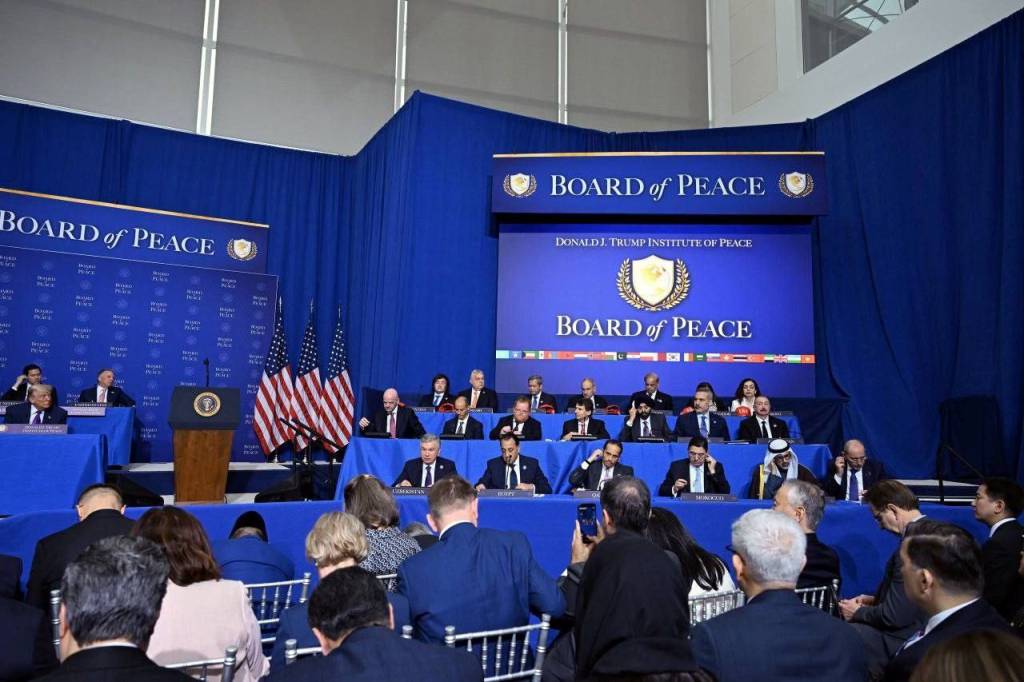
 Indeed, the first Board of Peace summit, held in Washington on February 19, is, without exaggeration, a milestone event in contemporary history. This is because a new type of organization has emerged in international practice and has immediately begun practical activities.

I would like to immediately express my view that this structure should not, and most likely will not, replace traditional international institutions – the UN and other organizations. Many participants of the summit voiced the same idea. A distinctive feature of the Board of Peace is its focus on rapid, effective, practical actions aimed at crisis resolution, post-conflict recovery, and the creation of long-term foundations for peaceful coexistence among countries and peoples in conflict zones. This should be facilitated by a flexible structure for adopting and implementing optimal decisions. Such intentions and efforts by the Board of Peace are of strategic importance for global politics and the resolution of long-standing conflicts.

Specifically, the situation in Gaza became the main topic of the first meeting of the heads of state, founding members of the Board of Peace. The importance of this summit is underscored by the fact that delegations from 47 countries participated – nearly twice as many as three weeks earlier in Davos, during the inauguration of the Board’s establishment.

At this meeting, specific decisions were taken on demilitarization, troop withdrawal, and the formation of an international stabilization coalition. Most importantly, concrete funds were mobilized for the Gaza reconstruction fund. All key points were recorded in a 20-point final declaration containing not vague statements, but clearly defined actions.

It can be confidently said that this reflects the political will and responsibility of the leaders who gathered. Without this, the deterioration of the situation in Gaza would have reached an even more alarming scale. There are high expectations that, on the first day of the holy month of Ramadan, a highly significant step was taken toward the creation of a New Gaza with an emphasis on economic prosperity.

President of Uzbekistan Shavkat Mirziyoyev, as the leader of a founding country of the Board of Peace, responded to the White House’s invitation. The Head of State arrived with concrete proposals to support a number of urgently needed socio-economic projects in Gaza. These include the construction of residential housing, kindergartens, schools, and hospitals – everything that people in distress urgently need. We already have solid experience in Türkiye, Azerbaijan, and Afghanistan, and we will once again demonstrate the high humanism of our people here.

Negotiations between state leaders often form the foundation for long-term partnerships, setting the direction for political and economic interaction. In your view, what key political and economic agreements could become the main outcome of the high-level talks?

– Unfortunately, the format of the current summit in Washington does not allow sufficient time to fully devote to lengthy discussions of the bilateral cooperation agenda at the highest level. However, our Leader was able to hold important talks in Washington with key figures from the U.S. administration’s economic bloc and the American business community.

For example, during a meeting with Secretary of Commerce Howard Lutnick, a review was conducted on the implementation of the three-year $35 billion Program of Economic Cooperation between the two countries.

As part of the business program of the visit, a productive discussion was held with representatives of the U.S. government and financial institutions, as well as executives of leading American companies. Documents were signed on the construction of a network of gas stations, the introduction of sprinkler irrigation technologies, the extraction and supply of critical minerals, the creation of a poultry cluster, the development of the agro-industrial sector, the development of the financial market, and the improvement of the investment climate.

Priority areas identified include critical raw materials, petrochemicals, energy, transport, the IT sector, agriculture, and finance. Further steps were outlined for the Business and Investment Council’s joint work.

Of course, communication with the President of the United States and key members of his team creates a foundation for the continued intensive development of Uzbek-American cooperation. We see that every foreign visit by the head of Uzbekistan is highly practical in nature. It is always crowned with the achievement of new agreements, the initiation of important projects, and the attraction of additional funds, resources, and advanced expertise to Uzbekistan.

– How does Uzbekistan’s participation in this summit reflect the country’s foreign policy priorities and its role in promoting international dialogue?

– Returning to the Board of Peace summit, I would like to note that what immediately stands out is the increased recognition and respect for Uzbekistan. It would not be an exaggeration to say that, in recent years, we have achieved our initial strategic foreign policy goal – to become one of the responsible, fully sovereign states and a full-fledged member of the international community. Such a position – the transition to the status of a subject of international relations – turns us into a state whose voice is heard, whose borders are inviolable, and whose commitments inspire trust. It is precisely in this image that New Uzbekistan is represented at the Board of Peace summit, offering its contribution to the joint efforts to resolve a sensitive issue. Our diplomacy consistently promotes effective international dialogue, resulting in real decisions followed by concrete actions. I sincerely hope that the experience Uzbekistan is currently gaining will increase the level of our political influence and resilience in the challenging conditions of a rapidly changing world. Moreover, our country is increasingly becoming a venue for important international meetings, and the atmosphere created by our diplomacy is already recognized as highly favorable for finding compromises and mutually beneficial solutions. Concepts such as “Tashkent Solutions”, the “Spirit of Samarkand”, the “Termez Dialogue”, and many others have firmly entered political science discourse. Based on this, it is not impossible that one of the future Board of Peace summits could be held in Uzbekistan to consider crucial paths toward resolving issues in our region.

– If we compare it with the diplomatic strategies of countries seeking to strengthen their international standing, can it be said that Uzbekistan is moving from a policy of regional balance toward a more ambitious role in global politics?

– It seems to me that we are moving at the same pace along two tracks of one path. It is impossible to separate one from the other. At the same time, I would like to say right away that Uzbekistan has no aspiration for ambitious roles in global affairs. This is reflected neither in our conceptual documents nor in political discourse. At the same time, our country cannot ignore global processes, most of which in one way or another affect Central Asia. Therefore, Uzbekistan does not accept the role of an outside observer. Over the past decade, the Leader of our country has consistently promoted initiatives to address global issues in education, religious tolerance, and the protection of the rights of youth and women. Our regional policy aims to transform Central Asia into a global hub for socio-economic development, transport, energy, innovation, and advanced technologies. In this regard, Uzbekistan’s participation in the Board of Peace is important for strengthening the country’s international standing, contributing to the stabilization of the international situation, and serving as a platform for broad dialogue and the restoration of trust. Of course, behind this also stand pragmatic objectives related to creating new economic ties and participating in major international logistics and infrastructure projects. Returning to the first Board of Peace summit, I would like to conclude by saying that this format seeks to become not just a diplomatic forum, but an effective body that combines the functions of peacebuilding, an investment platform, and administrative coordination to help resolve a conflict previously considered deadlocked. The success of this organization will bring tangible benefits to other participants and to us, but above all to ordinary people most in need of international assistance. In such a noble mission, any risk is justified. Action is always better than inaction. As we say among our people, “Blessings come through action”.

Interviewed by Aziza Alimova, UzA

English
Chinese
Turkish
Tajik
Kyrgyz
Turkmen
Japanese
Arabic
English
French
Spanish
Русский
German
Ўзбек
Oʻzbek
Қазақ
The voice of Uzbekistan is heard: On the country’s role in global dialogue and participation in the Board of Peace
The visit of the President of the Republic of Uzbekistan, Shavkat Mirziyoyev, to the United States and his participation in the first Board of Peace summit in Washington are viewed as an important stage in strengthening the country’s international standing and expanding its diplomatic dialogue with key global centers. On the strategic significance of the visit, the outcomes of the negotiations, and the impact of Uzbekistan’s participation in new international formats, UzA correspondent spoke with Sanjar Valiyev, Director of the Center for Foreign Policy Studies and International Initiatives.
– Against the backdrop of intensifying geopolitical competition and the emergence of new centers of power, high-level visits are acquiring special significance. In your opinion, what strategic importance does the visit of the President of Uzbekistan to the United States hold in the context of the current international environment and the transformation of global politics?

 First of all, I would like to remind you that the United States remains a global superpower and continues to exert decisive influence on all global processes, whether in the military-political, economic, cultural, or humanitarian spheres. Without any doubt, this position of the country will remain in the foreseeable future. And regardless of how complex the changes on the international stage may be, Washington’s participation largely determines the future outcome of events. Nevertheless, under the new geopolitical conditions, medium and small countries bear responsibility for the stability and development of their regions. Therefore, direct contacts with the White House administration at various levels represent a valuable diplomatic asset for addressing a wide range of issues in Uzbekistan’s foreign and domestic policy. At present, we have channels for maintaining close contact and the opportunity to put forward pressing proposals based on the reforms and transformations underway in Central Asia.

In fact, Uzbekistan now has three tracks for cooperation with the United States. The first is rapidly developing bilateral relations, which already have a rich history and have proven their effectiveness. The second is the C5+1 format – a model of multilateral regional cooperation that has been gaining momentum in recent years. The third is an entirely new track, namely the recently established Board of Peace, for participation in addressing global-level challenges. Under these new conditions, our country can pursue various objectives in partnership with the United States, using specific diplomatic platforms to achieve them. We have not had such a situation before. This is, of course, a strategic advantage for New Uzbekistan’s foreign policy. The Head of our State is using this combination of opportunities very farsightedly in the national interest, and this is reflected in the improving quality of life of our citizens, stability, and sustainable development.

– The complex humanitarian situation in Gaza requires coordinated efforts by the international community to restore infrastructure and provide assistance to the civilian population. How effective do you think the first Board of Peace summit can be in mobilizing resources and international support for the recovery of the war-torn territory?

 Indeed, the first Board of Peace summit, held in Washington on February 19, is, without exaggeration, a milestone event in contemporary history. This is because a new type of organization has emerged in international practice and has immediately begun practical activities.

I would like to immediately express my view that this structure should not, and most likely will not, replace traditional international institutions – the UN and other organizations. Many participants of the summit voiced the same idea. A distinctive feature of the Board of Peace is its focus on rapid, effective, practical actions aimed at crisis resolution, post-conflict recovery, and the creation of long-term foundations for peaceful coexistence among countries and peoples in conflict zones. This should be facilitated by a flexible structure for adopting and implementing optimal decisions. Such intentions and efforts by the Board of Peace are of strategic importance for global politics and the resolution of long-standing conflicts.

Specifically, the situation in Gaza became the main topic of the first meeting of the heads of state, founding members of the Board of Peace. The importance of this summit is underscored by the fact that delegations from 47 countries participated – nearly twice as many as three weeks earlier in Davos, during the inauguration of the Board’s establishment.

At this meeting, specific decisions were taken on demilitarization, troop withdrawal, and the formation of an international stabilization coalition. Most importantly, concrete funds were mobilized for the Gaza reconstruction fund. All key points were recorded in a 20-point final declaration containing not vague statements, but clearly defined actions.

It can be confidently said that this reflects the political will and responsibility of the leaders who gathered. Without this, the deterioration of the situation in Gaza would have reached an even more alarming scale. There are high expectations that, on the first day of the holy month of Ramadan, a highly significant step was taken toward the creation of a New Gaza with an emphasis on economic prosperity.

President of Uzbekistan Shavkat Mirziyoyev, as the leader of a founding country of the Board of Peace, responded to the White House’s invitation. The Head of State arrived with concrete proposals to support a number of urgently needed socio-economic projects in Gaza. These include the construction of residential housing, kindergartens, schools, and hospitals – everything that people in distress urgently need. We already have solid experience in Türkiye, Azerbaijan, and Afghanistan, and we will once again demonstrate the high humanism of our people here.

Negotiations between state leaders often form the foundation for long-term partnerships, setting the direction for political and economic interaction. In your view, what key political and economic agreements could become the main outcome of the high-level talks?

– Unfortunately, the format of the current summit in Washington does not allow sufficient time to fully devote to lengthy discussions of the bilateral cooperation agenda at the highest level. However, our Leader was able to hold important talks in Washington with key figures from the U.S. administration’s economic bloc and the American business community.

For example, during a meeting with Secretary of Commerce Howard Lutnick, a review was conducted on the implementation of the three-year $35 billion Program of Economic Cooperation between the two countries.

As part of the business program of the visit, a productive discussion was held with representatives of the U.S. government and financial institutions, as well as executives of leading American companies. Documents were signed on the construction of a network of gas stations, the introduction of sprinkler irrigation technologies, the extraction and supply of critical minerals, the creation of a poultry cluster, the development of the agro-industrial sector, the development of the financial market, and the improvement of the investment climate.

Priority areas identified include critical raw materials, petrochemicals, energy, transport, the IT sector, agriculture, and finance. Further steps were outlined for the Business and Investment Council’s joint work.

Of course, communication with the President of the United States and key members of his team creates a foundation for the continued intensive development of Uzbek-American cooperation. We see that every foreign visit by the head of Uzbekistan is highly practical in nature. It is always crowned with the achievement of new agreements, the initiation of important projects, and the attraction of additional funds, resources, and advanced expertise to Uzbekistan.

– How does Uzbekistan’s participation in this summit reflect the country’s foreign policy priorities and its role in promoting international dialogue?

– Returning to the Board of Peace summit, I would like to note that what immediately stands out is the increased recognition and respect for Uzbekistan. It would not be an exaggeration to say that, in recent years, we have achieved our initial strategic foreign policy goal – to become one of the responsible, fully sovereign states and a full-fledged member of the international community. Such a position – the transition to the status of a subject of international relations – turns us into a state whose voice is heard, whose borders are inviolable, and whose commitments inspire trust. It is precisely in this image that New Uzbekistan is represented at the Board of Peace summit, offering its contribution to the joint efforts to resolve a sensitive issue. Our diplomacy consistently promotes effective international dialogue, resulting in real decisions followed by concrete actions. I sincerely hope that the experience Uzbekistan is currently gaining will increase the level of our political influence and resilience in the challenging conditions of a rapidly changing world. Moreover, our country is increasingly becoming a venue for important international meetings, and the atmosphere created by our diplomacy is already recognized as highly favorable for finding compromises and mutually beneficial solutions. Concepts such as “Tashkent Solutions”, the “Spirit of Samarkand”, the “Termez Dialogue”, and many others have firmly entered political science discourse. Based on this, it is not impossible that one of the future Board of Peace summits could be held in Uzbekistan to consider crucial paths toward resolving issues in our region.

– If we compare it with the diplomatic strategies of countries seeking to strengthen their international standing, can it be said that Uzbekistan is moving from a policy of regional balance toward a more ambitious role in global politics?

– It seems to me that we are moving at the same pace along two tracks of one path. It is impossible to separate one from the other. At the same time, I would like to say right away that Uzbekistan has no aspiration for ambitious roles in global affairs. This is reflected neither in our conceptual documents nor in political discourse. At the same time, our country cannot ignore global processes, most of which in one way or another affect Central Asia. Therefore, Uzbekistan does not accept the role of an outside observer. Over the past decade, the Leader of our country has consistently promoted initiatives to address global issues in education, religious tolerance, and the protection of the rights of youth and women. Our regional policy aims to transform Central Asia into a global hub for socio-economic development, transport, energy, innovation, and advanced technologies. In this regard, Uzbekistan’s participation in the Board of Peace is important for strengthening the country’s international standing, contributing to the stabilization of the international situation, and serving as a platform for broad dialogue and the restoration of trust. Of course, behind this also stand pragmatic objectives related to creating new economic ties and participating in major international logistics and infrastructure projects. Returning to the first Board of Peace summit, I would like to conclude by saying that this format seeks to become not just a diplomatic forum, but an effective body that combines the functions of peacebuilding, an investment platform, and administrative coordination to help resolve a conflict previously considered deadlocked. The success of this organization will bring tangible benefits to other participants and to us, but above all to ordinary people most in need of international assistance. In such a noble mission, any risk is justified. Action is always better than inaction. As we say among our people, “Blessings come through action”.

Interviewed by Aziza Alimova, UzA