The Choices of the Eldest Son: A Profile of Ganisher Karshiev
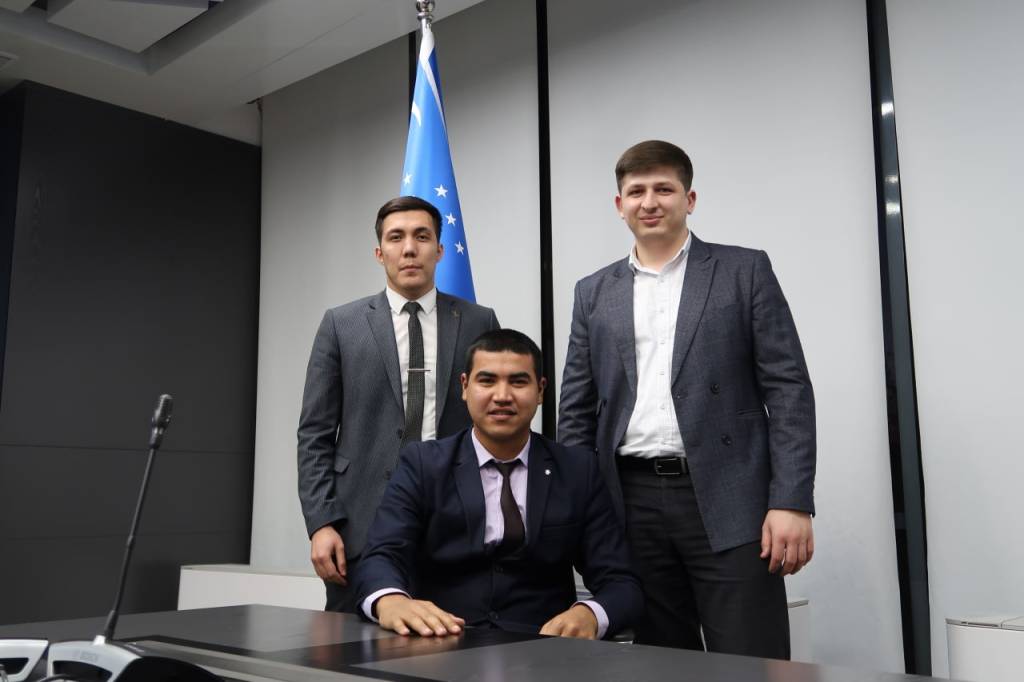
In the regional towns of Uzbekistan, the role of the eldest son (katta farzand) comes with a distinct set of unwritten obligations. It is less about privilege and more about a quiet, early introduction to accountability. For Ganisher Karshiev, growing up in Beshkent, a small administrative center in the Kashkadarya region, this structure defined his early years. Being the eldest grandchild and son meant that his actions were closely watched within the family, setting a precedent for those who followed.
"Being the eldest child, the eldest grandson, and even the eldest great-grandson meant growing up under a constant lens of responsibility," Karshiev reflects.
"From a young age, you realize your actions don't just belong to you; they set the baseline for everyone else in the family. My mother always reminded me to know my boundaries and put family accountability first, while my father, who traveled often for work, told me: 'Whatever you do, do it from the heart, not just for the appearance. The rest will follow.' That friction between heavy domestic expectations and quiet advice shaped how I approach every commitment today."
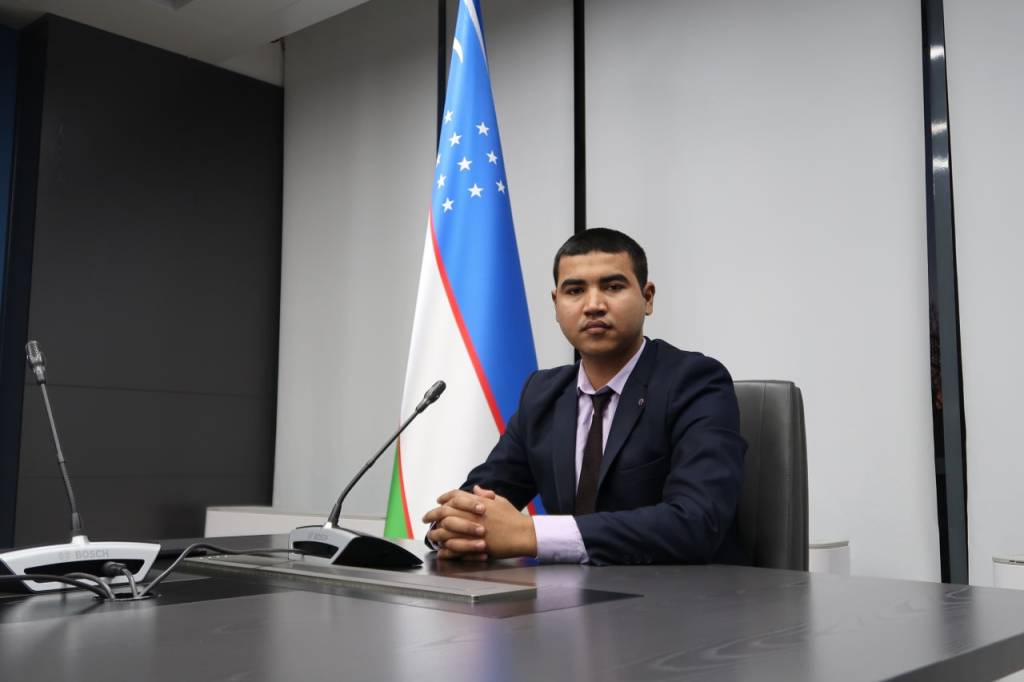
Today, Karshiev’s path includes milestones that draw attention: a degree from the University of World Economy and Diplomacy (UWED), a stint in public administration at the Ministry of Innovative Development, and recent academic pursuits in public policy and business administration in the United States. However, looking past the institutional titles reveals a narrative that is less about an effortless ascent and more about the practical friction of adapting to wildly different environments.
The Logic of the Workshop
Before entering the competitive academic environment of Tashkent, Karshiev’s education took an intensely practical turn at the Beshkent Agricultural Vocational College, where he qualified as a motor vehicle maintenance technician. It is an unconventional foundation for someone who would later analyze innovation grants or attend seminars in Washington D.C. Yet, the mechanical discipline of diagnosing why an engine fails leaves little room for theoretical pretense. A system either functions or it stalls based on the coordination of its moving parts.

This early exposure to structural logic ran parallel to a demanding domestic routine. Discipline was divided between schoolwork and a heavy rotation of local sports clubs, ranging from chess to boxing. Boxing provided an early lesson in absorbing physical pressure without losing one's footing, while chess emphasized the long-term consequences of a single, impulsive move.
The Practical Value of Failure
The momentum of early achievements ran into a major obstacle in 2016 when Karshiev failed the entrance exams for the State University of Oriental Studies. For a young man accustomed to meeting family expectations, the public nature of the rejection was a sharp correction.
Instead of abandoning his plans, Karshiev spent the following year restructuring his approach to preparation, recognizing that early academic successes had led to a degree of complacency. When he sat for the national exams again in 2017, he secured a spot at UWED, focusing on international relations.
His university years in Tashkent were characterized by a demanding schedule. He added Russian, English, and Spanish to his native Uzbek and Tajik tongues, and spent his evenings teaching English at local centers to manage his personal expenses. His involvement culminated in his election as the President of the Student Union, a role that required bridging the gap between an intense student body and a traditional administration.
"Becoming the student union president at an institution like UWED wasn't a matter of simple popularity; it required consistent tactical execution and long hours when nobody was watching," says Karshiev.
"I had to prove myself through tangible initiatives—running debate and research clubs, leading the university debate team to national finals, and maintaining a 3.8 GPA while working evening shifts as an English teacher to stay self-sufficient. It took a willingness to step into the middle of difficult administrative deadlocks and stay until 85 percent of student grievances were actually resolved. True leadership in that environment meant absorbing systemic pressure without compromising on the promised results."
From State Bureaucracy to Global Capitals
Entering the Ministry of Innovative Development placed Karshiev in rooms where most colleagues possessed significantly more administrative experience. Rather than retreating from the intellectual pressure, he used the environment to observe how policy moves from a written directive to actual execution. During his time there, he worked on initiatives to establish youth innovation centers across the regions and setting up business hubs within nearly thirty universities—projects aimed at narrowing the resource gap for regional students who faced the same limitations he had encountered in Beshkent.
Later, after transitioning to private sector logistics at "Paxlavon Trans," where he focused on operational budgets and process optimization, Karshiev chose to disrupt his career trajectory by moving to the United States. Academic stints at Georgetown University’s McCourt School of Public Policy and the University of New Haven offered a stark shift in perspective.
Living and studying in Washington D.C. and Connecticut provided an objective look at global standards of competition. Surrounded by international peers navigating elite public policy programs, the experience stripped away any localized illusions of success. It forced an understanding that academic credentials are merely tools, and the real challenge lies in identifying and solving specific, systemic inefficiencies.
A Measured Approach
When analyzing operational risks or personal career choices, Karshiev relies on a calculated threshold: if a complex venture carries at least a 46 percent probability of success, he commits to it completely; if it falls below that mark, he walks away. It is a pragmatic calculation that treats risk as a measurable variable rather than an emotional gamble.
His perspective remains tied to the core values of modesty, hard work, and family accountability that he carried out of Kashkadarya. In the highly transactional environments of international business and logistics, these values act as a necessary counterweight to professional ambition.
Ganisher Karshiev’s trajectory is still developing within American academic and professional circles, but its foundations remain fixed. He represents a specific segment of Uzbekistan’s younger generation abroad—specialists who view international education not as a permanent departure, but as a temporary gathering of tools and perspectives intended for practical application back home.
Markhabo Madaminova