State Budget for 2027 to maintain social focus
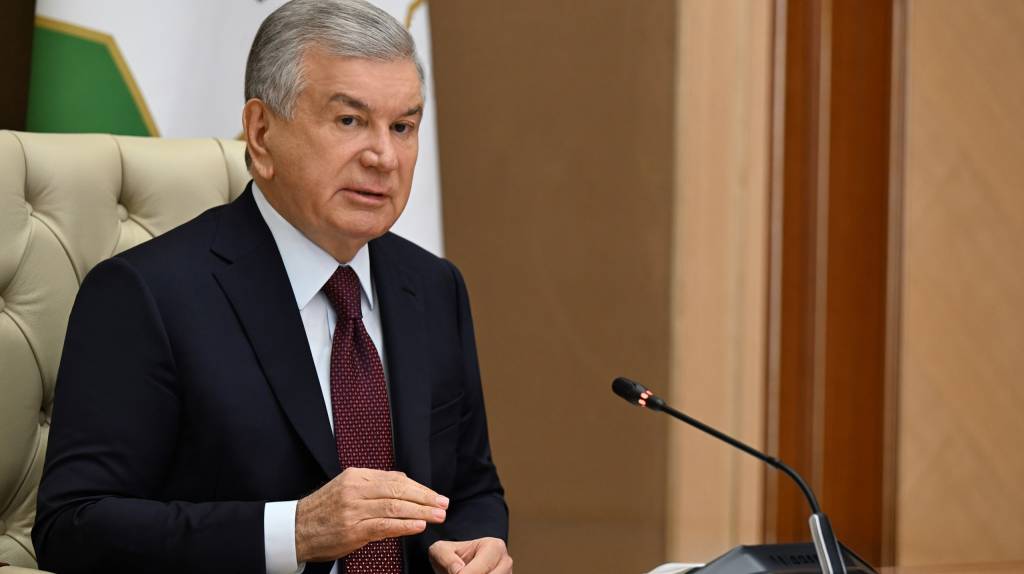
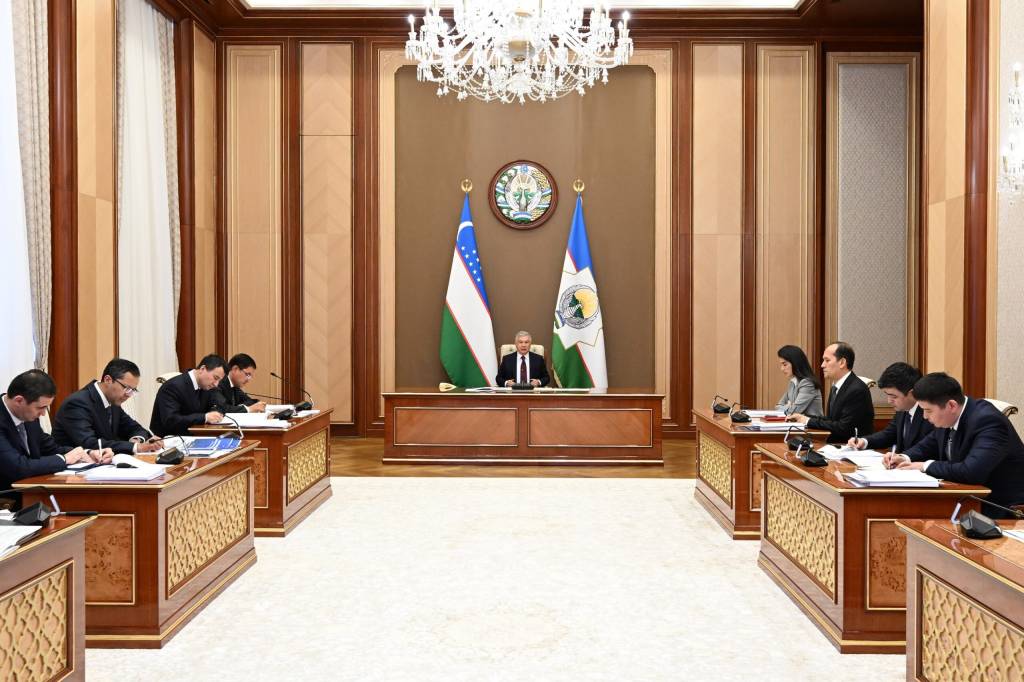
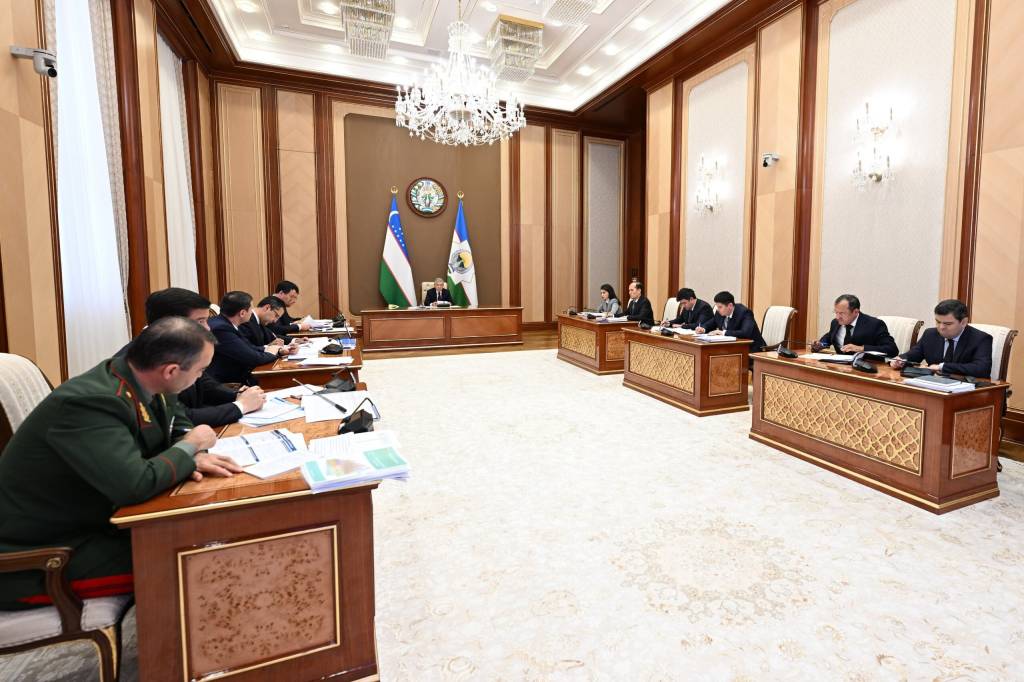
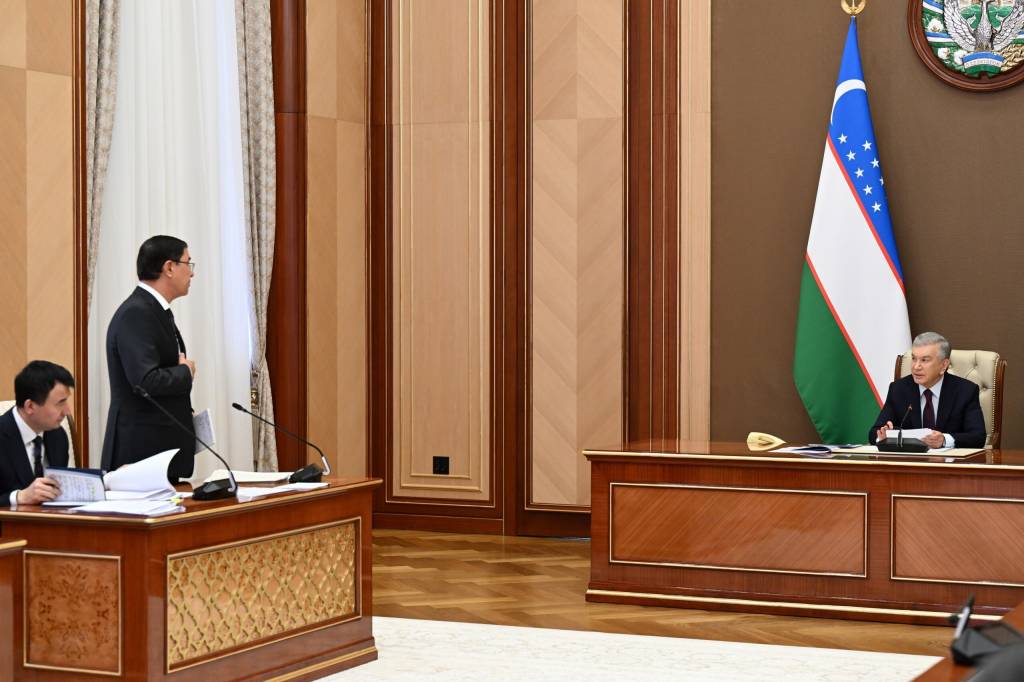
President Shavkat Mirziyoyev chaired a meeting to discuss the targets for the 2027 State Budget, key macroeconomic forecasts, and priorities for budget and tax policy.
The country’s economy is expected to grow by at least 8 percent this year. Gross domestic product (GDP) is projected to exceed $200 billion, while per capita income is expected to surpass $5,200.
These achievements provide a solid foundation for advancing to a new stage of economic development. In particular, the country aims to increase GDP to $300 billion by 2030 and raise per capita income to $10,000 over the next ten years.
The Constitution of Uzbekistan establishes the country as a social state and recognizes every individual, their life, honor, and dignity as the highest values. The noble principle of “For Human Honor and Dignity” has become the guiding principle of all reforms undertaken in New Uzbekistan. After all, the true purpose of economic development is, above all, to ensure that its benefits are felt in the lives of every individual and every family, contribute to improving people’s well-being, expand access to quality education and healthcare services, and create decent living conditions.

The State Budget’s social focus, which will be maintained next year, is designed to achieve precisely these priority objectives.
In particular, approximately 176 trillion UZS is planned to finance reforms in education and healthcare. Of this amount, 114.3 trillion UZS will be allocated to education (14 trillion more than in the previous year) and 61.4 trillion UZS to healthcare (12 trillion more).
In addition, 70 trillion UZS is envisaged for improving infrastructure in regions and mahallas, increasing employment and household incomes, developing human capital, and strengthening social protection.
To ensure sustainable financing of social commitments, the need to maintain annual economic growth of at least 7 percent by using existing reserves and new technological drivers of growth was emphasized.
In this regard, the key priorities for next year include transitioning to a new model of economic growth, creating high added value across all sectors, increasing labor productivity, expanding export potential, and creating more high-paying jobs.
The meeting also examined new approaches to sustaining high rates of economic growth over the long term. International experience shows that the main drivers of sustainable development are competitive, export-oriented production, technology transfer, investment efficiency, macroeconomic stability, and the ability of economic policy to adapt to changing conditions.
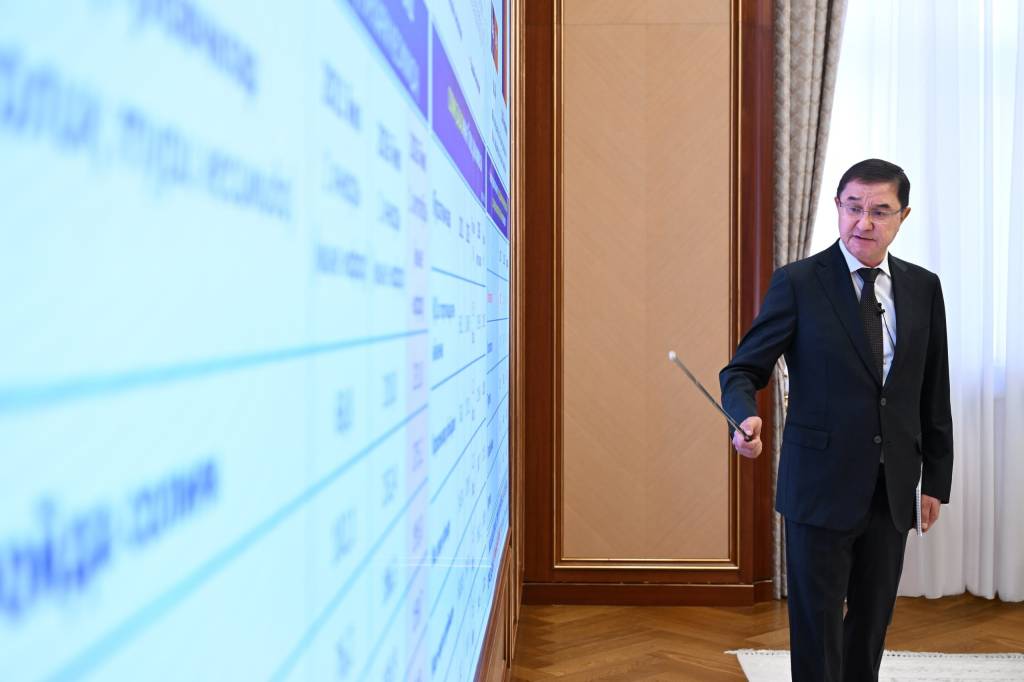
Against this backdrop, a modern industrial policy is to form the foundation of the new economic growth model. It will focus on shifting towards the production of high-value-added goods, attracting advanced technologies, integrating domestic enterprises more closely into international production chains, and diversifying exports.
In particular, a new strategy is being developed to accelerate the growth of the chemical and petrochemical industries, mechanical engineering, electrical engineering, textiles, pharmaceuticals, and other promising sectors.
Under the new industrial policy, plans include attracting major international companies and investors representing well-known brands to each priority sector, establishing modern industrial zones, increasing production localization, and strengthening enterprises’ technological capabilities. In 2027, at least two to three major investors are expected to be attracted to each promising sector.
Particular attention is also being paid to developing new industries, including semiconductor technologies, robotics, biotechnology, and the production of high-tech components and batteries for electric vehicles.
To achieve these objectives, new mechanisms are planned to encourage the entry of international brands, support research and development, and promote the growth of competitive domestic manufacturers.
The consistent implementation of structural reforms is also essential to maintaining sustainable economic growth. Priority tasks include transforming state-owned enterprises and banks, accelerating privatization, improving energy and transport infrastructure, developing human capital, and completing the process of accession to the World Trade Organization.
Particular attention will be paid to directing public investment towards creating favorable conditions for private capital, establishing modern mechanisms for financing economic growth, and improving the economic efficiency of investments.
The key macroeconomic forecasts for 2027 were also reviewed at the meeting.
According to projections, gross domestic product is expected to reach $232 billion in 2027.
At the same time, plans call for reducing inflation to 6 percent in 2027 and 5 percent in 2028-2029, while increasing exports excluding gold to nearly $40 billion in 2027.
During the presentation, it was noted that State Budget revenues for 2027 are planned at 416 trillion UZS, with expenditures set at 464 trillion UZS. The draft budget is being prepared based on a projected economic growth rate of 7 percent.
Particular attention was paid to ensuring macroeconomic stability amid global geopolitical and economic uncertainty. In particular, keeping inflation at no more than 6 percent and maintaining the overall fiscal deficit within 3 percent of gross domestic product were identified as key priorities for next year.
The main tax rates are also expected to remain unchanged in 2027. It was emphasized that, under these conditions, the primary sources of growth in budget revenues should be stimulating economic activity, broadening the tax base, reducing the share of the shadow economy, and improving tax and customs administration.
In this regard, specific tasks have been set to further increase tax and customs revenues through the widespread adoption of digital solutions and artificial intelligence technologies, while creating a favorable and transparent environment for entrepreneurs.
The President emphasized that every soum of budget funds must deliver tangible results. Accordingly, particular attention was paid to ensuring the targeted use of funds, reducing inefficient spending, improving the effectiveness of public investments and subsidies, and strengthening fiscal discipline.
In particular, a task was set to introduce, on a pilot basis, a digital monitoring system that will enable comprehensive tracking of budget expenditures on construction projects implemented under the investment program.
The new mechanisms for financing economic growth were also discussed at the meeting. The need to expand private capital participation in the banking system, increase the availability of credit resources, leverage public-private partnerships to finance investment projects, and intensify cooperation with international financial institutions was emphasized.
The officials responsible were instructed to develop concrete plans for attracting $65 billion in foreign investment in 2027, broken down by sector and region.
Based on the views and proposals presented during the meeting, the main priorities of the draft State Budget for 2027 were determined.
In accordance with the legislation, the draft budget and measures to ensure its implementation will be discussed by local Councils, after which the draft will be submitted to the Legislative Chamber of the Oliy Majlis.
UzA