Priorities discussed for fully unlocking tourism potential and preserving cultural heritage sites
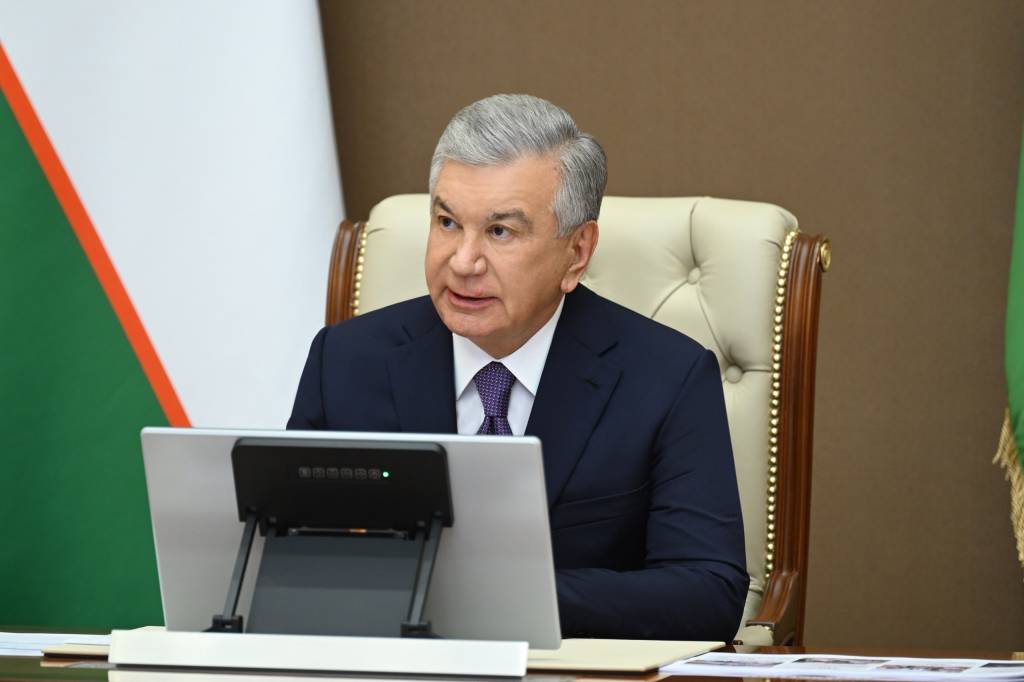
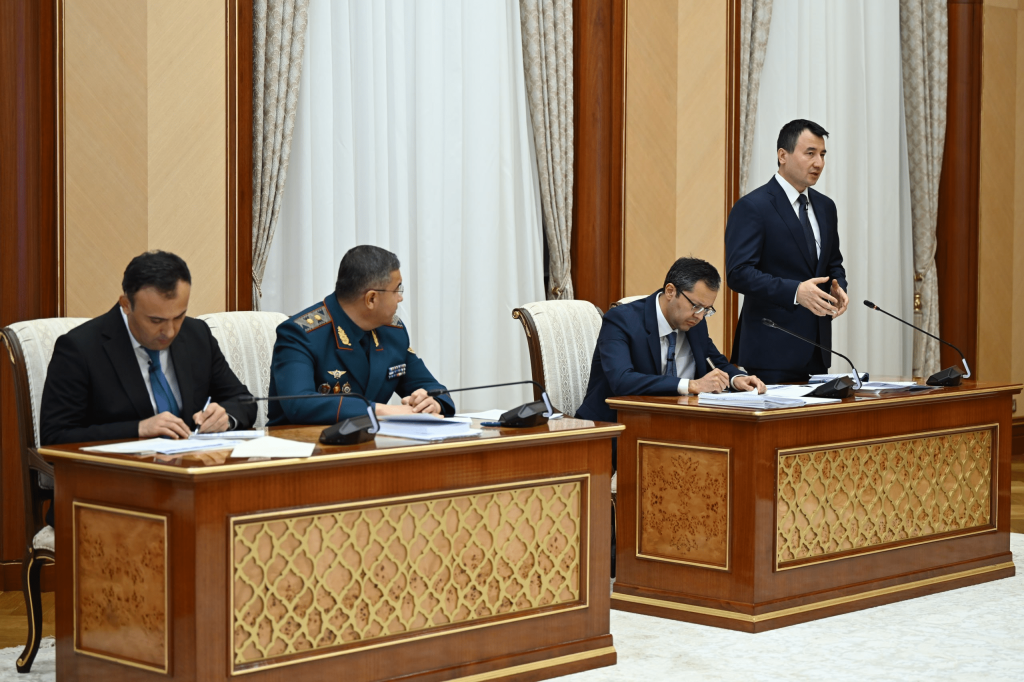
President Shavkat Mirziyoyev was briefed on ongoing work in the tourism sector, priority tasks for the future, as well as major projects in Bukhara region.
During the President’s visit to the Bukhara region, several tasks were identified to restore cultural heritage sites, preserve the historic city’s original appearance, and enhance its appeal to tourists.
The presentation covered the master plan for developing Bukhara’s historic center, projects to preserve and make effective use of architectural monuments, and the development of modern cultural and tourism infrastructure.
In particular, officials presented proposals to carry out restoration work at the Ark Museum-Reserve and organize museum exhibitions in line with modern requirements, restore the Kosh Madrasah architectural ensemble, reconstruct the Bukhara Musical and Drama Theater, and landscape Samanid Park.
Plans were also presented to establish the State Museum of Jadid Heritage and the Bukhara State Art Museum, with modern exhibition spaces that blend harmoniously into the historic surroundings.
In Bukhara’s historic center, it is planned to bring retail and service facilities into a unified architectural style and create a pedestrian-friendly environment. All work will be carried out in accordance with UNESCO requirements.
The concept for hosting the second Bukhara International Biennale in 2027 was also discussed. As part of the event, it is planned to create a continuous 2.3-kilometer pedestrian cultural route connecting historic monuments, exhibition spaces, and public spaces from Samanid Park through the Ark Fortress and the Poi-Kalon complex to the Lyabi-Khauz ensemble.
Officials also reported on joint projects with organizations from the United States and the Republic of Korea to digitize cultural heritage sites, create three-dimensional models of these sites, safeguard archaeological artifacts, and enhance the professional skills of sector specialists.
The presentation also included a detailed discussion of the progress made in developing tourism in Uzbekistan and the tasks ahead.
In the first ten months of this year, Uzbekistan welcomed 11.6 million foreign tourists, a 20 percent increase compared with the same period last year and nearly equal to the total for the entire previous year. Tourism service exports grew 1.5-fold, reaching $6.1 billion. Average spending by foreign tourists in Uzbekistan rose by 26 percent.
By 2030, Uzbekistan aims to increase annual foreign tourist arrivals to 20 million, tourism service exports to $10 billion, employment in the sector to 2 million people, and tourism’s share of gross domestic product to 7 percent.
Following the President’s instructions, responsible officials held meetings across the regions with more than 2,000 entrepreneurs working in the tourism sector and examined their concerns and proposals.
In particular, entrepreneurs raised concerns about insufficient electricity supply in tourist areas, high advance payments for electricity and gas, limited access to currency exchange services at hotels, and the organization of tourist transportation by buses and minibusses in mountainous areas.
Entrepreneurs proposed introducing incentives for using alternative energy sources, providing loan guarantees, allowing installment payments for land plots, and introducing additional incentives to develop the hotel and entertainment industries.
The President instructed responsible officials to examine each issue raised by entrepreneurs in detail and develop specific solutions.
The concentration of tourist flows predominantly in traditional tourist destinations places excessive pressure on existing infrastructure. In this regard, efforts are underway to expand the range of tourist destinations and develop new tourism products tailored to each region’s characteristics and potential.
The presentation covered proposals to develop promising areas, including ecotourism, ethnographic tourism, agritourism, gastronomic tourism, extreme tourism, medical tourism, business tourism, and film tourism, as well as to develop the necessary infrastructure and train qualified specialists.
Under the “One Mahalla – One Tourism Product” principle, it is planned to incorporate mahallas and villages into tourist itineraries. Introducing tourists to local ways of life, national customs, traditional crafts, and cuisine will create additional sources of income for residents.
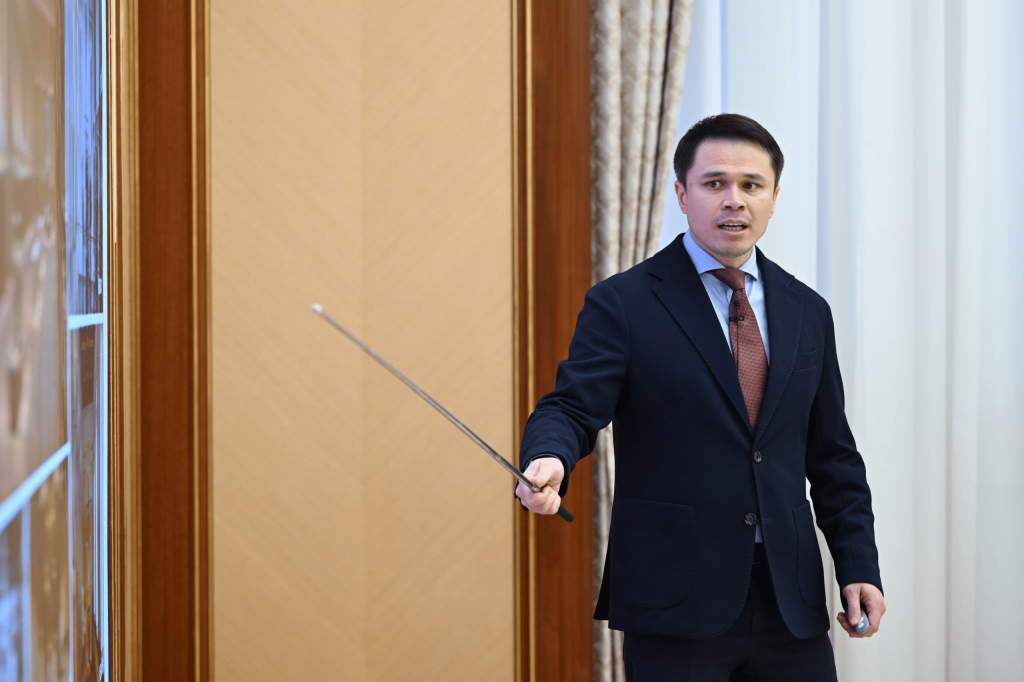
Officials also reported on progress in developing the tourism potential of the regions based on master plans. A total of 34 master plans are scheduled for development in 2026-2027, of which 13 have already been prepared.
In particular, officials presented projects to create an open-air museum and a recreation area around the ancient Koryz water system in Nurata district, develop flower tourism in Namangan, and comprehensively improve sanatorium and resort areas.
The presentation also covered the development concept for the Tudakul tourism and recreation zone. It envisages developing hotels, recreation and wellness facilities, ecotourism sites, and modern tourism infrastructure along the reservoir’s shoreline, in harmony with the surrounding natural landscape.
To implement new tourism projects, it is planned to offer 5,000 hectares of land at auction and allocate 3.1 trillion UZS by 2030 to develop tourism infrastructure.
In addition, it is planned to establish a Tourism Project Support Fund, with an allocation of 100 billion UZS next year.
It was proposed to use the fund’s resources to create new tourist attractions, provide concessional loans to entrepreneurs, cover part of the interest payments on loans, and subsidize the introduction of modern entertainment services.
Measures will be taken to promote Uzbekistan’s tourism potential internationally, conduct targeted marketing campaigns in priority foreign markets, and expand cooperation with leading foreign tour operators and digital platforms.
The importance of expanding the international flight network, improving transportation connectivity between regions, and enhancing the quality of hotel, food service, and guided tour services in line with international standards was emphasized.
The need to consider tourist seasons when scheduling major international conferences and forums was also emphasized. The Tourism Committee, together with ministries and agencies, was tasked with adjusting the schedule of these events by moving them to periods of relatively low tourist activity.
UzA