Measures to improve the quality and expand the coverage of security services reviewed
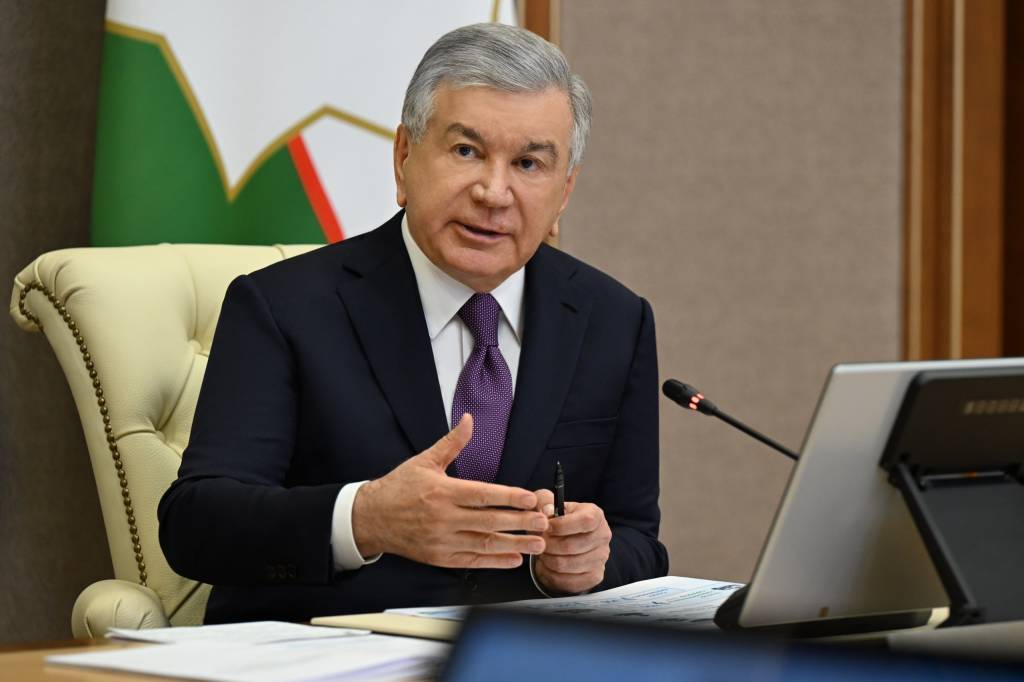
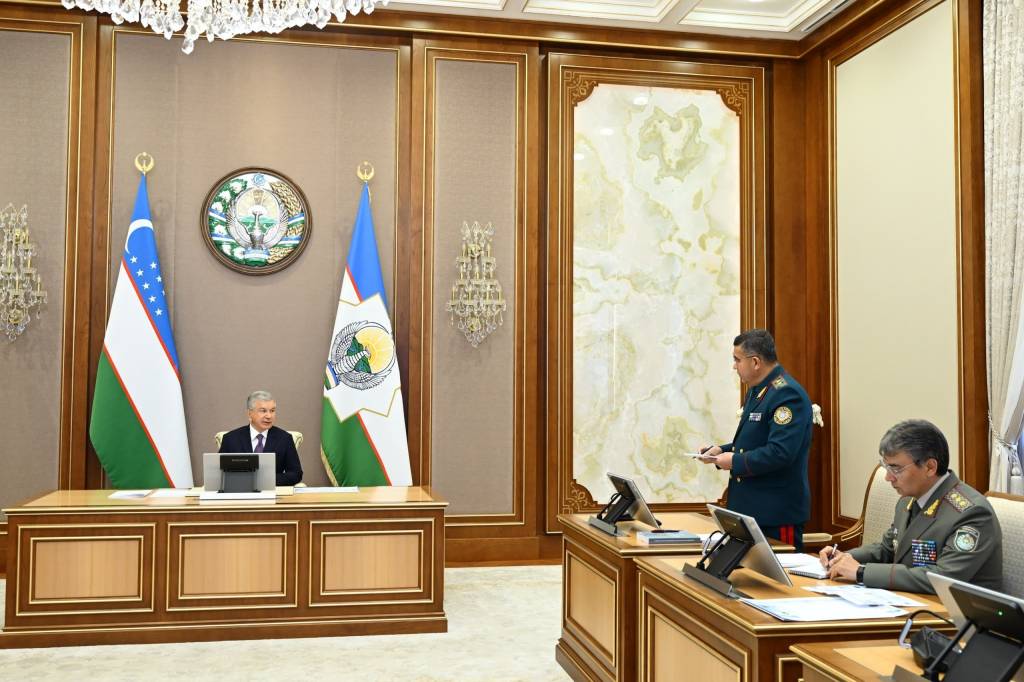
President Shavkat Mirziyoyev reviewed a presentation on improving the quality and expanding the coverage of security services.
Over the past ten years, the number of social and commercial facilities in Uzbekistan has increased from 150,000 to 500,000, while the number of residential properties has risen from 1.5 million to 8 million. The number of streets with round-the-clock retail and service establishments has reached 255.
Considerable work has been carried out under the “Safe City”, “Safe Capital”, “Well-Maintained and Safe Mahalla”, and “Safe Home” programs to ensure public safety and prevent crime and other offenses at an early stage.
In particular, the number of premises under protection has increased from 194,000 to 337,000, while the number of mobile response teams has risen from 533 to 630. Patrols have been introduced in 6,500 mahallas, and 58,000 security guards have received further professional training.
However, the current coverage and range of security services do not fully meet the growing needs of residents and businesses.
It was noted that security services remain largely limited to protecting government facilities, and that there is a need to foster healthy competition in the sector and promote the widespread adoption of modern technologies.
In this regard, the presentation covered measures aimed at improving the legal framework for security services, ensuring the safety of residents, entrepreneurs, investors, and tourists, and providing reliable protection for their property.
The first proposal was to fully digitalize the security services sector by integrating five existing information systems into a unified platform, “Digital Security”.
The new system will enable users to conclude security service contracts electronically, access payment information online, and track the movements of mobile response teams in real time.
Artificial intelligence technologies will also be used to detect and prevent potential threats in advance and ensure the effective management of security units.
In addition to the six existing types of security services, eight new ones were proposed.
In particular, the “Smart and Safe Home” concept envisages installing and maintaining modern surveillance equipment at residential properties, as well as using a virtual SOS system that enables users to call for emergency assistance from mobile devices.
Plans include providing personal protection services to investors, tourists, and entrepreneurs, maintaining public order during family gatherings and other events, conducting drone-based surveillance, and protecting facilities that operate on a seasonal basis.
It was proposed to establish uniform requirements for equipping buildings under construction with technical security systems and to amend urban planning regulations accordingly.
To protect citizens’ property, plans call for introducing electronic security services in apartment buildings, including installing intercom systems and panic buttons.
Proposals were also presented to establish the necessary legal and organizational conditions for making greater use of the private sector’s potential in the security services industry.
In particular, plans envisage establishing uniform procedures and requirements for the installation, configuration, and maintenance of technical security equipment by private organizations.
Plans were presented to localize the production of modern security equipment, expand domestic software development, and increase equipment manufacturing capacity.
It was noted that increasing the localization rate from 30 to 60 percent and expanding production capacity from 10,000 to 30,000 units per month would reduce production costs by approximately 1.7 times.
To foster healthy competition in the sector, consideration was also given to expanding the National Guard’s powers in providing security services.
In particular, it was proposed to increase the number of categories of facilities eligible for protection by the National Guard from 13 to 24, expand its capacity to provide physical, technical, and personal protection services, and maintain public order during various events.
At the same time, plans envisage establishing by law the categories of facilities subject to mandatory protection and improving coordination between departmental security units and law enforcement agencies.
As a result of the proposed measures, targets for 2027 include increasing the number of protected facilities to 600,000 and mobile response teams to 800, as well as expanding security service personnel by 8,000 to organize patrols in an additional 1,500 mahallas.
The Head of State emphasized that improving the security system must prioritize the interests of individuals, ensure peace and security for the population, and safeguard their property.
Responsible officials were instructed to ensure the provision of high-quality and affordable services to the population and effective coordination among relevant agencies in the interests of the people and the state.
UzA