ISRS Director presents Central Asia’s experience in building trust and regional cooperation in Seoul
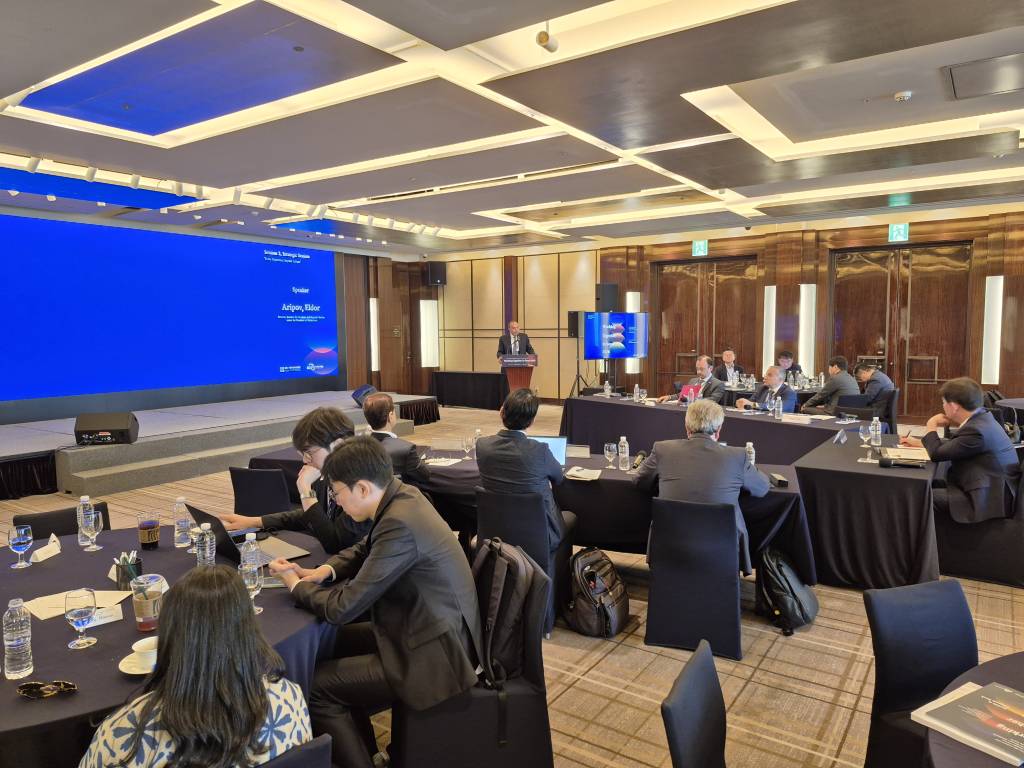
Director of the Institute for Strategic and Regional Studies (ISRS) under the President of the Republic of Uzbekistan Eldor Aripov participated in the 6th Culture and Strategies Forum for the Korean Peninsula and the North, held in Seoul on 15-16 June.
This year’s forum is convened under the theme “For Peace and Prosperity: Overcoming Conflicts through Supranational Solidarity Amid the Return of Global Power Competition”.
The event, organized by the Center for International Area Studies (CIAS) of Hankuk University of Foreign Studies, brought together representatives of leading think tanks and academic institutions from Central Asia, the Commonwealth of Independent States (CIS), the European Union, the United States, Türkiye, as well as countries across the Asia-Pacific and South Asia.
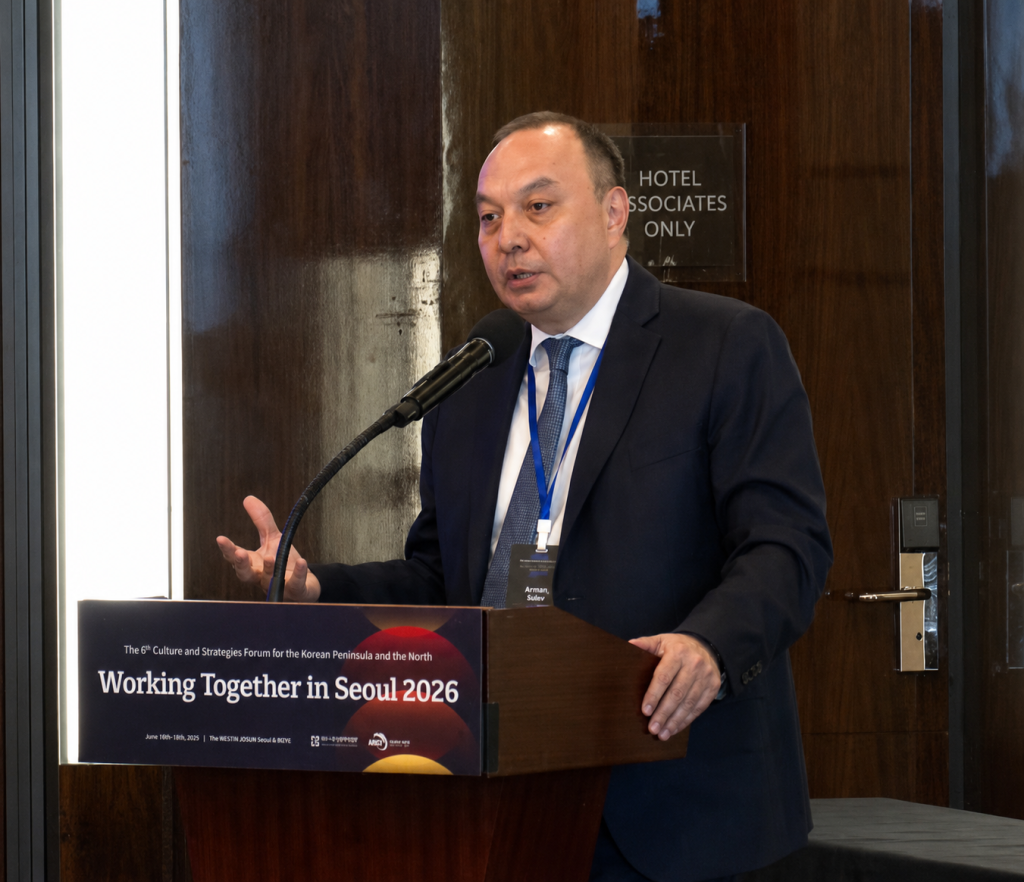
Addressing a session on public diplomacy, Mr. Aripov emphasized that amid growing geopolitical uncertainty, mechanisms to strengthen trust between states and peoples are becoming increasingly important.
In this context, the ISRS Director presented Central Asia’s experience, where a breakthrough has been achieved in advancing regional cooperation. He noted that the political will demonstrated by the region’s leaders has created favorable conditions for resolving longstanding differences, expanding cross-border engagement, and fostering a climate of mutual trust.
According to Mr. Aripov, Central Asia today is experiencing robust growth in both political and economic interaction. Over recent years, intraregional trade has increased nearly fivefold, while mutual investment flows have more than doubled.
Particular attention was devoted to the role of public diplomacy in consolidating these achievements. As the ISRS Director noted, lasting peace and stability cannot be sustained without the active participation of local communities. Expanding people-to-people contacts, promoting cross-border trade, tourism, educational exchanges, and cultural cooperation all contribute to building trust, which remains a key driver of the region’s continued development.
As practical mechanisms for strengthening regional connectivity, Mr. Aripov highlighted the Consultative Meetings of the Heads of State of Central Asia, the Central Asian Inter-Parliamentary Forum, the Central Asian Women Leaders’ Dialogue, the Forum of Rectors of Central Asian Universities, the Forum of Historians and Area Studies Scholars, and the Central Asian Youth Forum. He also underscored the initiative to establish the international media platform “History and Culture of Central Asia: One Past and a Shared Future”, aimed at promoting the region’s shared historical and cultural heritage.
Speaking about relations between Uzbekistan and the Republic of Korea, Mr. Aripov stressed that the Republic of Korea is one of Uzbekistan’s key partners in Asia. He noted that humanitarian ties constitute an important pillar of bilateral cooperation, which was elevated to a Special Strategic Partnership in 2019. By the end of 2025, bilateral trade had approached USD 2 billion.
The ISRS Director emphasized that the largest ethnic Korean community in the CIS, numbering approximately 177,000 people and residing in Uzbekistan, remains an important factor in strengthening bilateral relations and contributes significantly to the development of friendly ties between the two countries.
Mr. Aripov also highlighted the dynamic pace of cooperation in education and science. Today, the Korean language is taught at nine universities and twenty-four schools across Uzbekistan. The country hosts four branch campuses of South Korean universities, while higher education institutions in Uzbekistan maintain partnerships with more than 45 universities and research centers in the Republic of Korea.
Concluding his remarks, the ISRS Director stressed that Central Asia’s experience clearly demonstrates the effectiveness of policies based on good-neighborliness, open dialogue, and respect for each other’s interests. In his view, the further development of public diplomacy and humanitarian cooperation serves the broader goals of strengthening peace, stability, and sustainable development both in Central Asia and across the wider Eurasian region.
UzA