Innovative decarbonization solutions in public buildings and transport
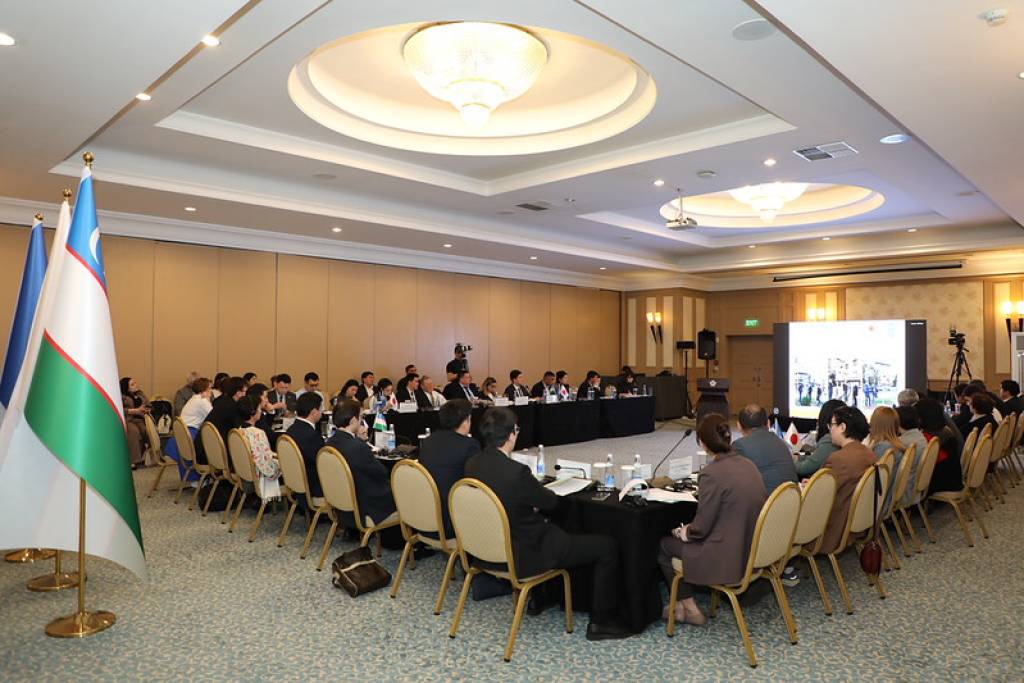
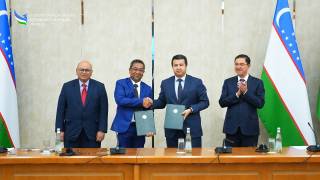
The United Nations Development Programme (UNDP) and the Ministry of Economy and Finance of the Republic of Uzbekistan hosted the Closure Workshop of the joint project “Promoting Innovative Decarbonization Solutions through the Joint Crediting Mechanism and Demonstration of Decarbonization Potential of Public Buildings and Public Transport in Uzbekistan”.
The event brought together project implementers and beneficiaries, including the mayor of Syrdarya region and representatives of local schools and pre-school institutions, to review results and lessons learned, with a particular focus on energy-efficiency pilots.
Five pilot initiatives are underway in Mirabad district of Tashkent city and in rural communities of Syrdarya region, where the project has installed eight propane‑based heat pumps and thirty‑eight air conditioners in public facilities such as a school, kindergartens, and a polyclinic. These upgrades replace outdated electric and coal‑based systems, cutting coal use by 115 tons and reducing greenhouse gas emissions by 482,3 tons per year.
The heat pumps, based on advanced Japanese technologies, deliver three to four times more heat per unit of electricity, lowering energy costs and improving comfort for more than 13.500 users, with children placed at the heart of this initiative. Complementing these efforts, the project has also introduced enhanced air-quality monitoring through a dedicated station on Shota Rustaveli Street in Tashkent that tracks air contamination levels and benefits over 120,000 residents in the area.
“These achievements are not just technical solutions – they provide a solid foundation for more deliberate and well‑informed policymaking. Syrdarya is proud to be a pilot region where these decarbonization solutions have been implemented, tested, and proven effective. We are ready to continue on a cleaner and more sustainable path”, Azizbek Turdimurodov, Hokim of Syrdarya district, said.
Another focus of the workshop was to introduce and validate Uzbekistan’s newly developed National Methodology for Fossil Fuel Subsidy Inventory, designed in line with international practices and piloted across selected energy carriers. Experts from the Center for Economic Research and Reforms (CERR) outlined the methodology’s conceptual framework, data architecture, and monitoring, reporting, and verification (MRV) considerations, underscoring its importance for integrating subsidy data into national statistical and climate reporting systems.
Event participants also examined the results of a pioneering socio-economic and sectoral vulnerability assessment related to potential reforms to fossil fuel subsidies. The analysis identified sensitive sectors and population groups, provided insights into risk exposure, and offered policy recommendations to ensure subsidy reform aligns with Uzbekistan’s climate commitments and the Long-Term Low-Emission Development Strategy.
The workshop concluded with a practical dialogue focused on strengthening the project’s impact. Implementers and beneficiaries agreed on the need to scale up results in areas where clear benefits have already been demonstrated, such as upgraded, more energy-efficient heating and cooling systems that reduce emissions in pilot areas of Syrdarya region, alongside expanded air-quality and greenhouse-gas monitoring networks in Tashkent. These efforts demonstrate how targeted technical upgrades can be effectively linked to shaping a healthier environment and creating opportunities for young people.

“Inclusivity and local ownership have been central to our work. This project clearly demonstrates the vital role that local communities and regional authorities play in improving energy efficiency and reducing greenhouse gas emissions in public buildings, especially when supported by state financing mechanisms”, Akiko Fujii, UNDP Resident Representative in Uzbekistan, noted.
The initiative, financed by the Government of Japan, has supported national efforts to pilot decarbonisation solutions, strengthen evidence-based climate policy, and advance Uzbekistan’s transition toward a more sustainable future.
O.Kharchenko, UzA