Akramjon Nematov: Central Asia’s contemporary identity should be built on shared values and a common vision for the future
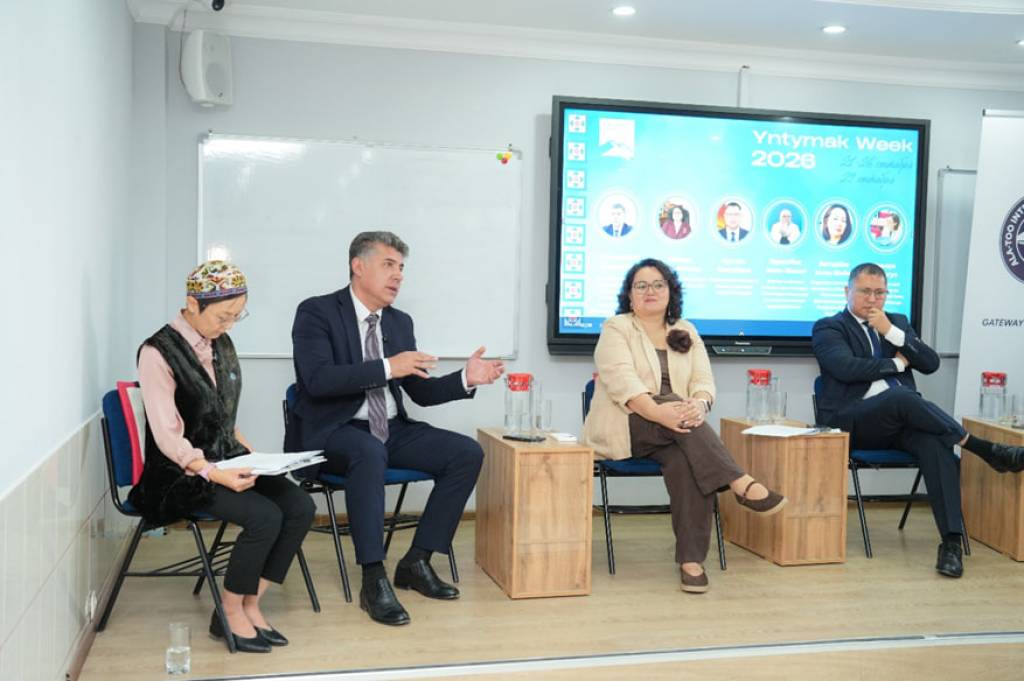
On September 23 in Bishkek, Akramjon Nematov, First Deputy Director of the Institute for Strategic and Regional Studies under the President of the Republic of Uzbekistan (ISRS), participated in Yntymak Week, an annual inclusive platform that brings together representatives of government institutions, civil society, the expert and academic communities, young people, and the international community.
This year’s forum is being held at Ala-Too International University with the theme “Youth and Women in Community Development and Peacebuilding”. The national partner is the National Agency for Religious Affairs and Interethnic Relations, under the President of the Kyrgyz Republic. The program covers social cohesion, the participation of women and young people, natural resource management, climate resilience, and community development.
The events bring together representatives from public authorities, research and educational institutions, civil society, and international organizations, including participants from across Central Asia.
Speaking at the opening ceremony, Arslan Koichiev, State Secretary of the Kyrgyz Republic, highlighted Yntymak Week as a platform for promoting peace, mutual understanding, and social harmony. He emphasized the role of young people and women as active contributors to positive change in local communities.
Yntymak Week, held since 2023, was conceived as a space for direct engagement among government institutions, civil society, international partners, local communities, businesses, the media, and experts in peacebuilding and social cohesion. Over time, the initiative has taken on a broader regional dimension.
An important milestone in this process was the first Fergana Peace Forum, organized by ISRS and its partners in Fergana in 2025. The forum featured Uzbekistan’s first Yntymak Day, bringing together government institutions, civil society, youth and women’s associations, academia, and international organizations to build trust and strengthen good-neighborly relations in the Fergana Valley.
During this year’s Yntymak Week, Akramjon Nematov addressed a special session titled “Central Asia: From a Shared Past to a Shared Future”, which examined the development and strengthening of Central Asia’s regional identity.
The session brought together representatives of government institutions, academic and expert communities, civil society, and young people. Discussions focused on the draft Concept for Developing and Strengthening Central Asia’s Regional Identity, prepared by a group of specialists from across the region.
Alongside representatives of Ala-Too International University, the discussion included students from other universities in Bishkek: Jusup Balasagyn Kyrgyz National University, the International University of Kyrgyzstan, and the International University of Central Asia. This participation broadened the discussion among young people and brought together perspectives from students across different academic environments in the Kyrgyz capital.
Participants noted that, from the outset, the document was conceived as a collective intellectual endeavor for Central Asia, rather than an initiative by a single country or think tank. The draft has undergone several rounds of consultation with scholars, experts, think tank representatives, civil society, and young people from across the region. Each discussion has helped refine its substance and incorporate diverse perspectives.
The revised draft focuses on strengthening an existing sense of regional belonging rather than artificially constructing a new or supranational identity. This sense of belonging is rooted in the region’s interconnected historical and cultural heritage, its contemporary experience of cooperation, shared values, and a common vision for the future.
The emphasis was on the role of regional identity in building broad public support for closer ties within Central Asia and ensuring that this process is sustainable and enduring. Agreements between states gain firmer foundations when cooperation becomes meaningful in people’s daily lives through education, academic mobility, trade, travel, joint projects, cultural exchanges, and interpersonal ties.
“Regional identity cannot be firmly established through intergovernmental decisions alone. It becomes enduring when networks of relationships form among universities, cities, regions, entrepreneurs, journalists, researchers, cultural practitioners, and youth and women’s organizations”, Akramjon Nematov said.
In his view, contemporary regional identity should rest not only on historical ties but also, above all, on shared values and a common vision for the future.
“History explains why we are close. Cooperation today shows what we can achieve together. A shared vision for the future answers the most important question: what purpose does a sense of regional belonging serve today?” the ISRS representative emphasized.
Regional identity is understood as an additional layer of belonging that complements national identity. It enables individuals to maintain strong ties to their country, culture, and traditions while recognizing their place within a broader Central Asian community.
The practical segment of the session was interactive. Experts, scholars, civil society representatives, and students from various universities in Bishkek worked in groups to develop proposals to refine the draft Concept.
Participants discussed potential barriers and sensitive issues, as well as the steps needed to make regional identity meaningful in citizens’ everyday lives. Attention was given to the role of education, academic exchanges, youth initiatives, and direct contact between people in building lasting ties across the region.
Youth participation thus became more than a component of the event’s program: it contributed directly to the substantive refinement of the Concept. The involvement of students from various universities in Bishkek brought a broader range of young people’s perspectives to the discussion and demonstrated demand for open dialogue among universities about Central Asia’s future.
This approach enabled further refinement of the document through a bottom-up process, in which the public actively participates in shaping a regional community rather than merely serving as the intended recipient of such efforts.
During his visit to Bishkek, Akramjon Nematov also met with the leadership of the Swiss PeaceNexus Foundation, including Executive Director Catriona Gourlay and Board Member Dieter von Blarer.
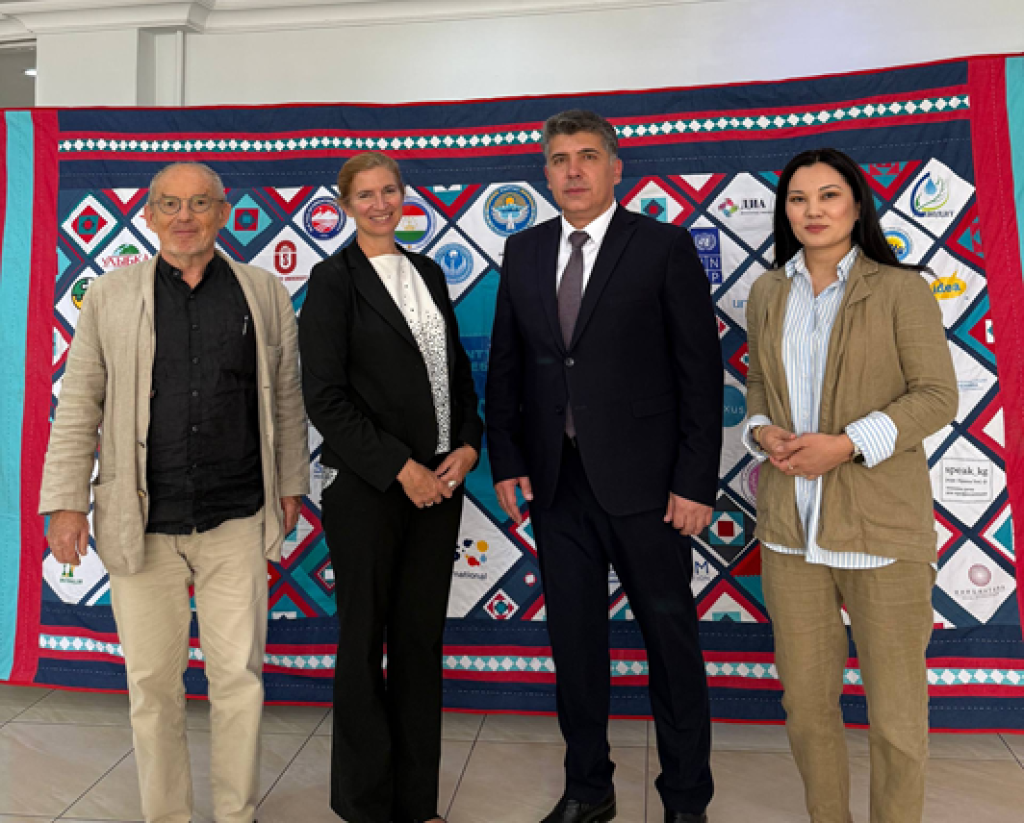
The two sides discussed developments in regional cooperation in Central Asia, further development of the partnership between ISRS and PeaceNexus, and prospects for jointly supporting expert and civic initiatives to strengthen trust, social cohesion, and regional identity.
The Foundation’s representatives commended progress in strengthening unity among the Central Asian states and expressed their readiness to continue working together to advance regional dialogue and peacebuilding.
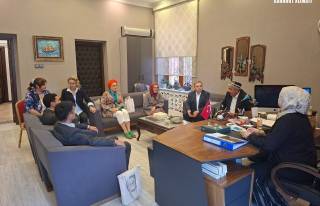
A separate meeting was held with Nazira Esenalieva, the Rector of Ala-Too International University.
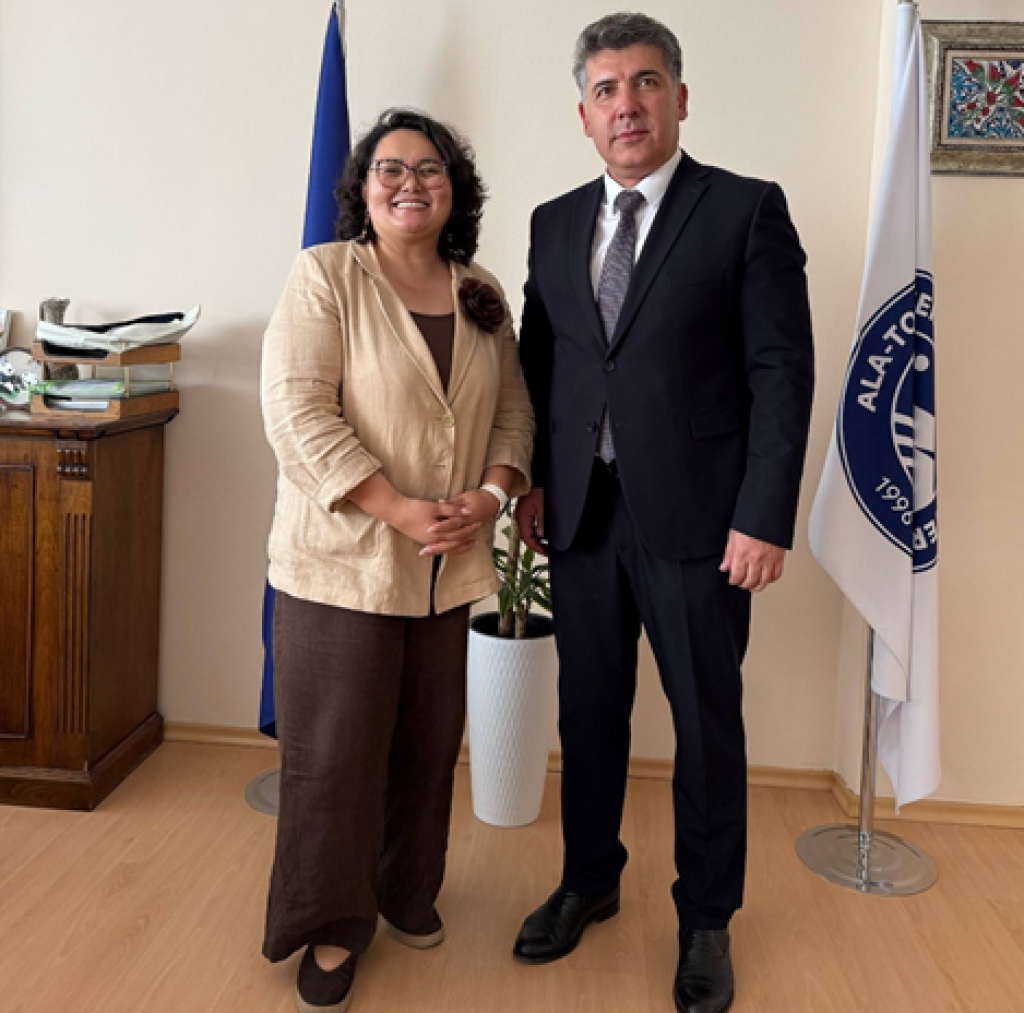
The discussion addressed prospects for cooperation among Central Asian countries in higher education, including stronger direct ties between universities, joint educational and research programs, and academic exchanges involving students, faculty, and researchers.
It was emphasized that academic mobility and sustained cooperation among universities are key to strengthening a sense of regional community. Regular interaction among students, faculty, and early-career researchers deepens mutual understanding across the region, builds new professional and personal ties, and provides a practical foundation for long-term regional cooperation.
At the conclusion of Yntymak Week, the Institute for Strategic and Regional Studies under the President of the Republic of Uzbekistan received a certificate of appreciation from the Peacebuilding Hub for its contributions to advancing peacebuilding initiatives, strengthening dialogue, and developing regional cooperation.
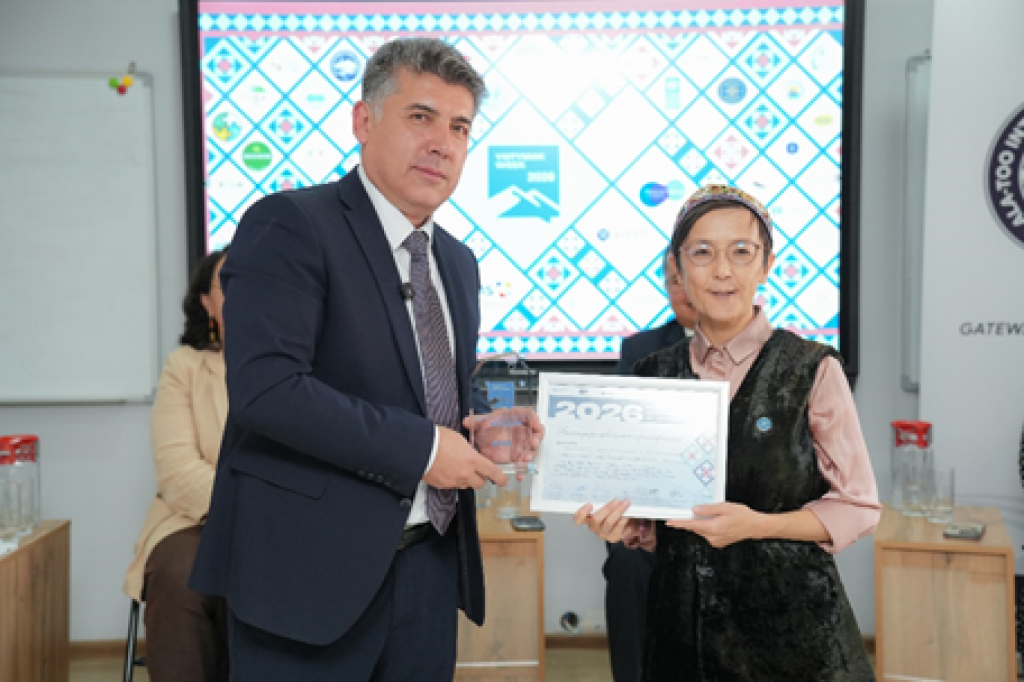
The Hub brings together international and civil society organizations working on peacebuilding and social cohesion. It serves as a platform for coordination, the exchange of experience, and the development of joint approaches.
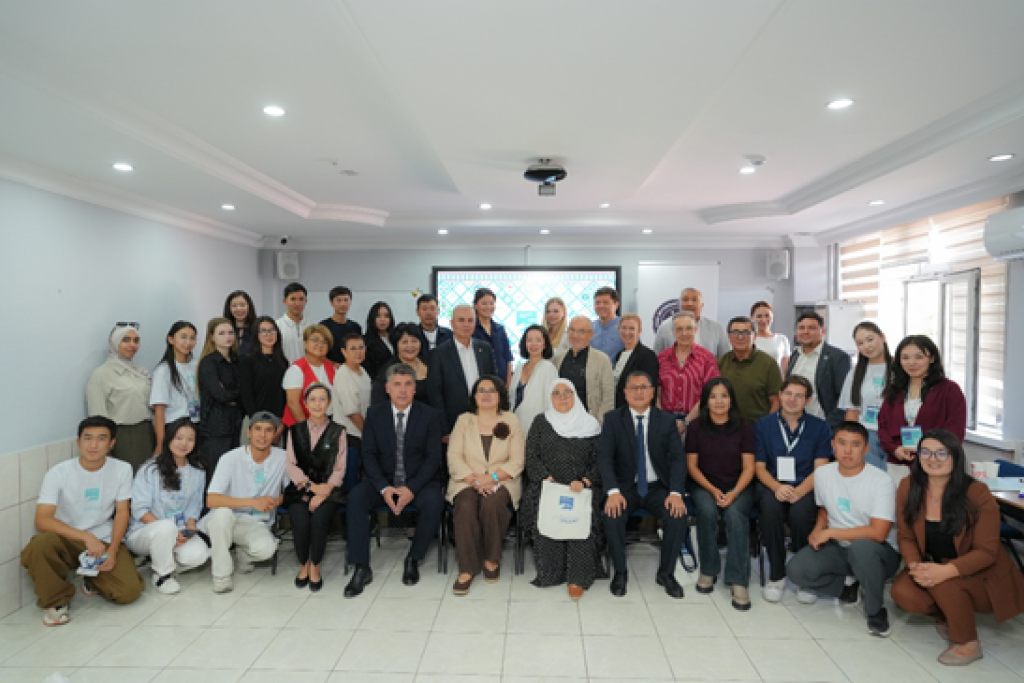
ISRS’s participation in Yntymak Week continued the Institute’s sustained engagement with partners across Central Asia and with international organizations to strengthen public support for closer regional ties, build mutual trust, and advance Central Asia as a region of peace, good-neighborly relations, and shared development.
UzA