ADB President: “High-quality, sustainable investments go where there is confidence”
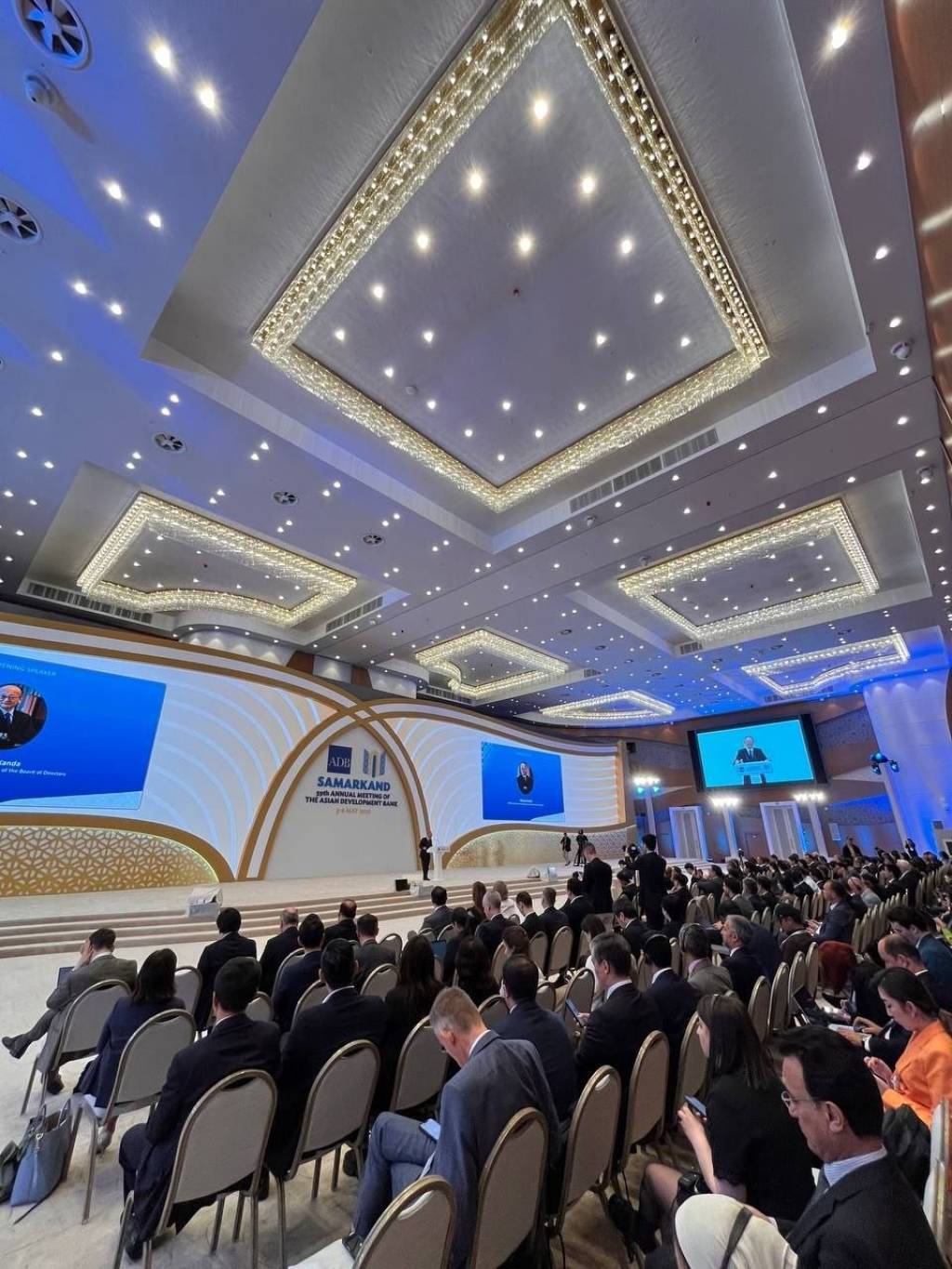
Samarkand has become a platform for international economic dialogue and the discussion of investment prospects.
As part of the 59th Annual Meeting of the Board of Governors of the Asian Development Bank, the events are attended by representatives of governments, investors, experts, and specialists from international organizations. The focus is on attracting sustainable foreign direct investment to Central Asia, developing the capital market, and improving the investment climate.
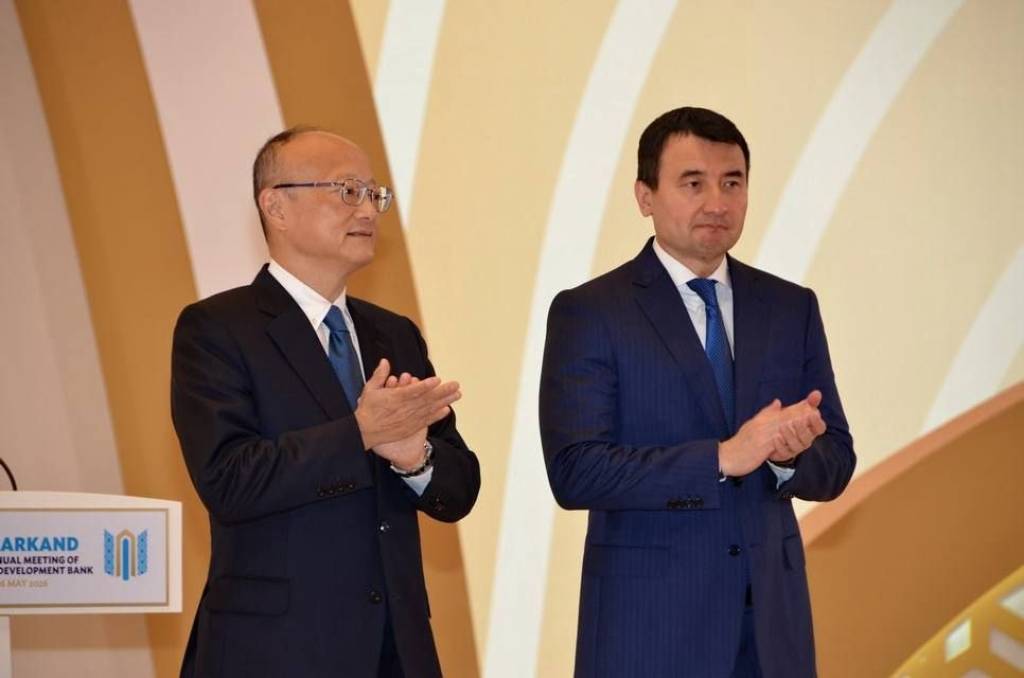
At the seminar on promoting quality and sustainable foreign direct investment in Central Asia, the President of the Asian Development Bank, Masato Kanda, once again emphasized the growing complexity of the global economy. He noted that uncertainty in international trade persists. The conflict in the Middle East is adding to geopolitical risks, putting pressure on growth and inflation while disrupting supply chains for key commodities.
“The situation remains fluid”, Masato Kanda said. “Prolonged disruption could weigh heavily upon economic activity, elevating downside risks, including in the Caucasus and Central and West Asia. Even so, the region enters this period from a position of strength. In this environment, foreign direct investment has a critical role to play. It can help close infrastructure gaps, accelerate the energy transition, advance digital transformation, and create quality jobs. But capital alone is not enough. High-quality, sustainable investments go where there is confidence. Confidence grounded in clear policies, strong institutions, and fair, predictable rules”.
Masato Kanda particularly highlighted the reforms carried out in Uzbekistan in recent years and gave a high assessment of the practical measures to improve the investment climate. He noted that with ADB’s support, Uzbekistan has modernized its investment framework, including the Law on International Commercial Arbitration, alongside sustained capacity building for judges, lawyers, and businesses.
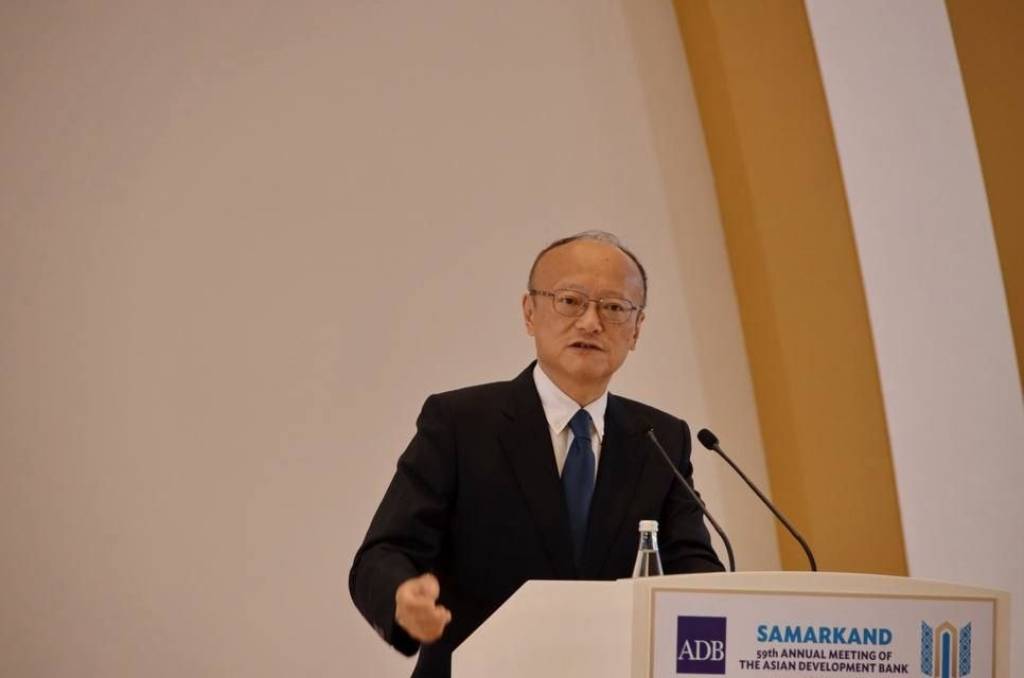
“Foreign direct investment ultimately rests on trust”, the President of the Asian Development Bank said. “Trust that contracts will be honored, disputes resolved impartially, and decisions enforced. Predictable dispute resolution is not a technical detail. It is decisive for long-term investment. A key outcome of our partnership is Uzbekistan’s Roadmap for Sustainable Investment Policy Reforms, developed with the Organisation for Economic Co-operation and Development (OECD). It strengthens competition, improves investment facilitation, promotes responsible business conduct, and supports the energy and digital transition. It signals that Uzbekistan is open, competitive, and ready to be a destination of choice for quality investment”.
It was also noted that Uzbekistan’s aspiration to establish the Tashkent International Financial Center reflects this direction, drawing upon global best practices to deepen investor confidence.
The ADB President also addressed the issue of regional integration, noting that in the face of geopolitical instability, no country can address large-scale challenges on its own.
“No country can achieve this alone. In a period of uncertainty and geopolitical tension, stronger regional cooperation is essential. Initiatives like the Central Asia Regional Economic Cooperation (CAREC) Trade and Investment Facilitation Partnership Agreement are practical steps to expand cross-border trade and investment across the region”, Masato Kanda said.
In conclusion, Masato Kanda called for particular attention to the very essence of the investment process, emphasizing that investment is not just about financing. It is about the jobs created, the businesses built, and the lives improved.
Thus, the forum taking place in Samarkand has established itself as a key platform for defining priority areas not only for regional but also for global economic partnership.
Musulmon Ziyo, UzA