Uzbekistan and Albania: opportunities for multilateral collaboration
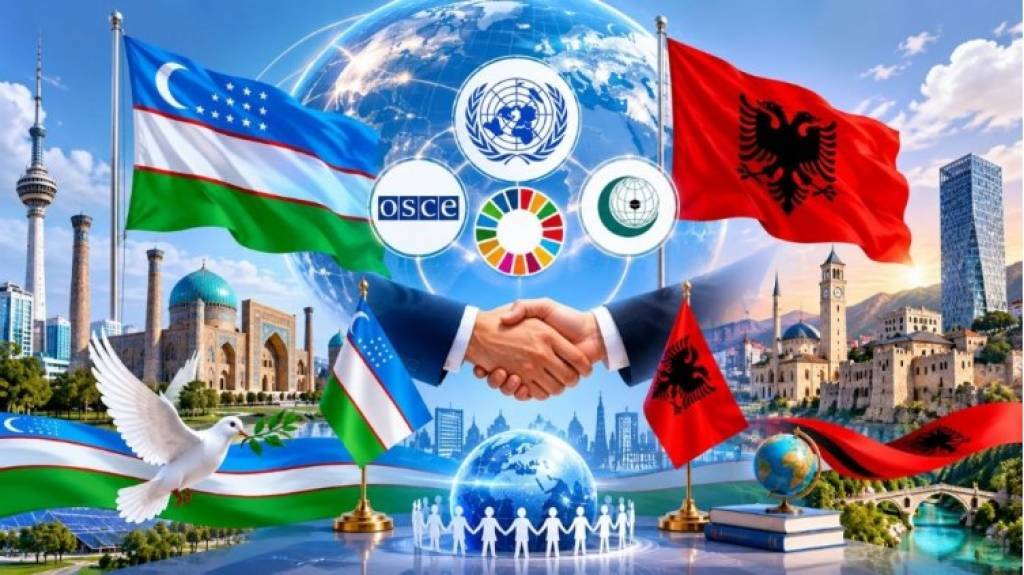
Recently, cooperation between Uzbekistan, a prominent Central Asian country, and Albania, an important Balkan state, has grown rapidly.
In today’s international relations, state interactions hold increasing geopolitical significance not only bilaterally but also within global and regional organizations and on international stages. The two nations routinely coordinate their strategies to promote global security, achieve the Sustainable Development Goals, and uphold international law on major platforms like the United Nations (UN) and the Organization for Security and Cooperation in Europe (OSCE). At the UN, they exhibit strong political unity on issues such as addressing global crises, combating climate change, and defending the principles of sovereignty and territorial integrity.
The Albanian side viewed Uzbekistan’s proposal to designate the Aral Sea region as a zone for environmental innovation and technology favorably. As they work towards achieving the 2030 Agenda for Sustainable Development, both countries coordinate their efforts with the international community.
The OSCE platform acts as a vital security tool for Uzbekistan and Albania, helping to counter transnational threats such as terrorism, extremism, drug trafficking, and cybercrime. The countries share their experiences in addressing the unique security issues of the Balkan and Central Asian regions across politico-military, economic, and environmental areas within the OSCE framework. Albania’s membership in the Organization of Islamic Cooperation enhances relations, adding political, legal, cultural, and humanitarian dimensions. This platform offers ample opportunities for collaboration in promoting tolerance in Islamic civilization, developing pilgrimage tourism, and safeguarding cultural heritage.
Amid ongoing geopolitical shifts and a global crisis, the cooperation between Uzbekistan and Albania, including their collaboration within multilateral organizations, reflects their shared perspectives on foreign policy. This effort not only boosts their international profiles but also significantly contributes to promoting peace and sustainable development worldwide.
Fardona Yakhshiboyeva, UzA