New Opportunities to Expand Cooperation Between Uzbekistan and Serbia
The upcoming visit of the President of the Republic of Uzbekistan to Serbia is poised to be an important milestone in the development of bilateral relations.
Over the past year, the political dialogue between Tashkent and Belgrade has significantly intensified and become more systematic. In this context, one of the key tasks is to translate the achieved level of political dialogue into concrete trade, economic, investment, transport, and humanitarian projects.
Today's positive momentum builds upon a relationship forged over nearly three decades. Serbia recognized Uzbekistan's independence on December 31, 1991, and diplomatic relations between the two countries were established on January 18, 1995. In the initial years, relations were conducted through the diplomatic mission of the Federal Republic of Yugoslavia in Tashkent. In 2003, this diplomatic mission ceased its operations due to the economic situation in Serbia.
Relations gained new momentum in 2025. In September, a conversation between President of Uzbekistan Shavkat Mirziyoyev and President of Serbia Aleksandar Vučić took place in Beijing on the sidelines of events commemorating the 80th anniversary of the Victory in World War II. The first official visit of the Serbian leader to Uzbekistan from October 28-31 was a significant event. Following the negotiations, the heads of state signed a Joint Declaration, and a package of intergovernmental and interdepartmental documents was adopted, covering the economy, investment, education, tourism, labor migration, and other areas of cooperation.
The mutual accreditation of ambassadors was also an important institutional step. On July 7, 2025, Uzbekistan's first ambassador to Serbia presented his credentials to the President of Serbia, and on October 27, the Serbian ambassador to Uzbekistan presented his credentials to the Uzbek side.
The high pace of relations was maintained in 2026. In April, the foreign ministers of the two countries held talks on the sidelines of the Antalya Diplomacy Forum, and in May, Serbian Foreign Minister Marko Đurić visited Uzbekistan. On May 18, Shavkat Mirziyoyev and Aleksandar Vučić met again on the margins of the World Urban Forum in Baku. The leaders held a telephone conversation in July, and on August 3, the third round of political consultations between the foreign ministries of the two countries took place in Belgrade.
The political dialogue is being progressively complemented by the development of ties between the legislative bodies of the two countries. An inter-parliamentary group for cooperation with the National Assembly of the Republic of Serbia has been established in the chambers of the Oliy Majlis. In June 2026, Senate Chairperson T. Narbayeva visited Belgrade to participate in the Global Conference of Women Parliamentarians of the Inter-Parliamentary Union. A few weeks later, Tashkent hosted a delegation led by A. Marković, chairman of the "Serbia-Uzbekistan" parliamentary friendship group.
The established political and institutional framework creates favorable conditions for expanding economic cooperation. At the same time, its current scale remains considerably below the existing potential. At the end of 2025, mutual trade volume amounted to approximately 12 million US dollars. There are 9 enterprises with Serbian capital operating in Uzbekistan. This indicates that significant opportunities exist for a substantial expansion of both trade volume and industrial cooperation.
The cultural and humanitarian dimension of bilateral relations is also gradually expanding. An important step in this regard was the signing of an agreement on establishing partnership relations between Tashkent and Belgrade during the Serbian President's visit in October 2025. This document creates additional opportunities for establishing direct ties and implementing joint initiatives between the two capitals.
The progress achieved over the past year lays the foundation for transitioning to more systematic work in several areas.
First, great potential remains in the trade and economic sphere. Priority areas could include expanding Uzbekistan's range of exports, increasing the share of high-value-added products, and establishing a preferential trade regime. In February 2026, Deputy Prime Minister of Uzbekistan J. Khodjaev and Deputy Prime Minister of Serbia A. Mesarović identified this issue as one of the priority areas for future cooperation.
Both sides possess economic opportunities to expand trade. Uzbekistan has a rapidly developing industrial base in the textile, chemical, food, and mechanical engineering sectors. Serbia, in turn, has preferential access to the European Union market and an extensive network of free trade agreements. This creates conditions not only for increasing the volume of mutual product supply but also for developing industrial cooperation, which will enable future access to the markets of third countries.
Secondly, developing transport connectivity is of significant practical interest. In February 2026, negotiations took place in Belgrade between the Uzbek delegation and representatives of the Serbian transport sector. During separate meetings, prospects for cooperation in the railway sector were discussed with Serbian Railways Infrastructure, while the possibility of establishing direct flights between Tashkent and Belgrade was discussed with Air Serbia.
The launch of direct flights could significantly facilitate business, tourism, educational, and humanitarian ties between the two countries. Concurrently, the development of cargo transportation between Central Asian and Balkan countries is also a promising area. In the long term, the growth of the cargo base on routes involving Uzbekistan could further increase demand for such connectivity between the Central Asian and European markets.
Thirdly, the development of labor mobility is of particular importance. Uzbekistan is systematically establishing a system of organized external labor migration and has proven itself a reliable partner in training qualified personnel. According to the Migration Agency, the country has 48 agreements in this field with 23 countries.
This experience provides a practical basis for establishing a similar mechanism with Serbia. Reaching the relevant agreements will facilitate the formation of transparent mechanisms for organized employment, strengthen the legal and social protection of citizens, and at the same time, promote regulated labor mobility between the two countries.
This experience can serve as a practical basis for establishing a similar mechanism with Serbia. Reaching the relevant agreements will allow for the introduction of transparent mechanisms for the organized employment of citizens, the reliable protection of their rights and interests, as well as the development of regulated labor mobility between the two countries.
Fourthly, educational and scientific-technological cooperation also holds great potential. The intergovernmental agreement on cooperation in education, science, and culture, signed in October 2025, strengthened the legal framework for this area. The participation of Uzbek students in Serbian state educational programs, including the "World in Serbia" scholarship program, could be one avenue of practical cooperation.
Amid the ongoing reforms in Uzbekistan's higher education system, the opportunities for expanding such cooperation are growing. Today, 215 higher educational institutions operate in the country, including 30 branches of foreign educational institutions. Uzbekistan's higher education institutions are consistently strengthening their positions in international rankings, while the scope of joint programs with leading foreign educational institutions is also expanding.
Considering the existing institutional capacities, implementing joint educational programs and scientific projects in technical specialties, digital technologies, and personnel training for priority sectors of both economies is a promising prospect. Such cooperation can enrich political dialogue with strong professional and institutional ties, contributing to the long-term and sustainable development of bilateral relations.
Fifth, tourism and cultural exchanges are additional factors for bringing the two countries closer together. In April 2026, the relevant agencies of the two countries discussed joint projects in the fields of film tourism, PR promotion, and organizing familiarization tours for media representatives and bloggers. In practical terms, such initiatives can serve not only to increase tourist flows but also to expand direct ties between the societies of the two countries.
Overall, in a relatively short period, Uzbekistan and Serbia have created a solid political and institutional foundation for the further development of mutual relations. Currently, the pace of political dialogue remains much higher than the scale of trade, economic, and investment cooperation. Therefore, the development of relations in the next stage will largely depend on reinforcing the political agreements reached with concrete projects and sustainable cooperation mechanisms.
The upcoming visit of the President of Uzbekistan to Serbia can give new impetus to this process. The practical significance of the visit is determined, first and foremost, by reaching specific agreements in the areas of trade and investment, transport, labor mobility, education, and tourism. The realization of these initiatives will serve to further strengthen the dynamically developing political dialogue with practical economic and humanitarian cooperation.
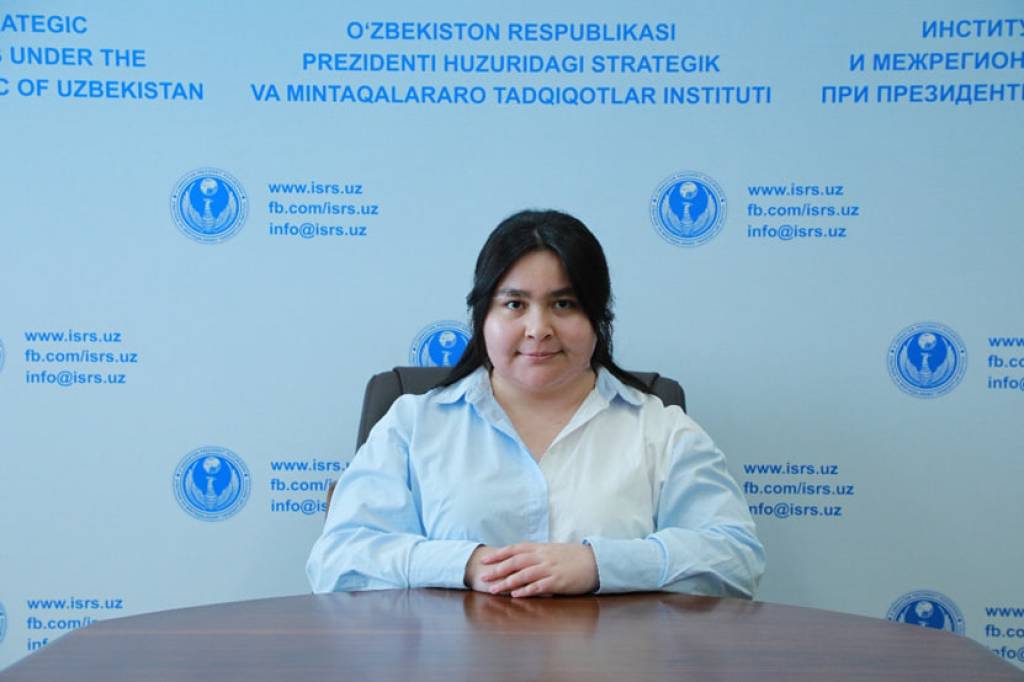
Qayumova Madinabonu,
Leading Research Fellow at the ISRS
under the President of the Republic of Uzbekistan