Independence Through Memory, Peace and Human Dignity (+video)
On the eve of Uzbekistan’s Independence Day, it is worth reflecting on what freedom and peace truly mean. Their value is often understood most deeply through history, memory, and the experiences of ordinary people. Uzbekistan’s development reflects this broader understanding of independence: the country is working to strengthen its sovereignty, unlock its potential, place human interests at the center of public policy, and engage with the wider world more openly and with greater confidence.
In recent years, reforms initiated under the leadership of President Shavkat Mirziyoyev have significantly reshaped Uzbekistan’s domestic development and international engagement. Economic liberalization, increased attention to human rights and gender equality, investment in education and social protection, and a more open approach to relations with neighboring countries have all become important elements of the country’s transformation. The new 2026-2030 UN Sustainable Development Cooperation Framework for Uzbekistan likewise places human development, reducing inequality, and ensuring that the benefits of progress reach all segments of society at its core.
Yet the value of independence cannot be measured by economic indicators or development programs alone. At its heart lies people’s ability to live freely, raise their children in peace, and build their future without fear. The memory of war and loss makes the value of peace even more profound. Standing before the Books of Memory, the question, “What does humanity owe to the generations that will come after us?”, takes on particular significance. The consequences of war do not disappear when the fighting ends. They endure in families, in memories, and across generations. Remembering that human cost is therefore not simply an act of looking back but a responsibility to safeguard peace for those who come next.
Seeing Uzbekistan through its mahallas, its people, and the warmth of everyday interactions reveals another dimension of the country’s story. A conversation with a neighbor, an invitation to share tea, or a simple act of kindness can say more about a society than any formal description. The same holds for the small choices people make when no official audience is present. Compassion, hospitality, and an unwillingness to remain indifferent to another living being transcend titles and institutions.
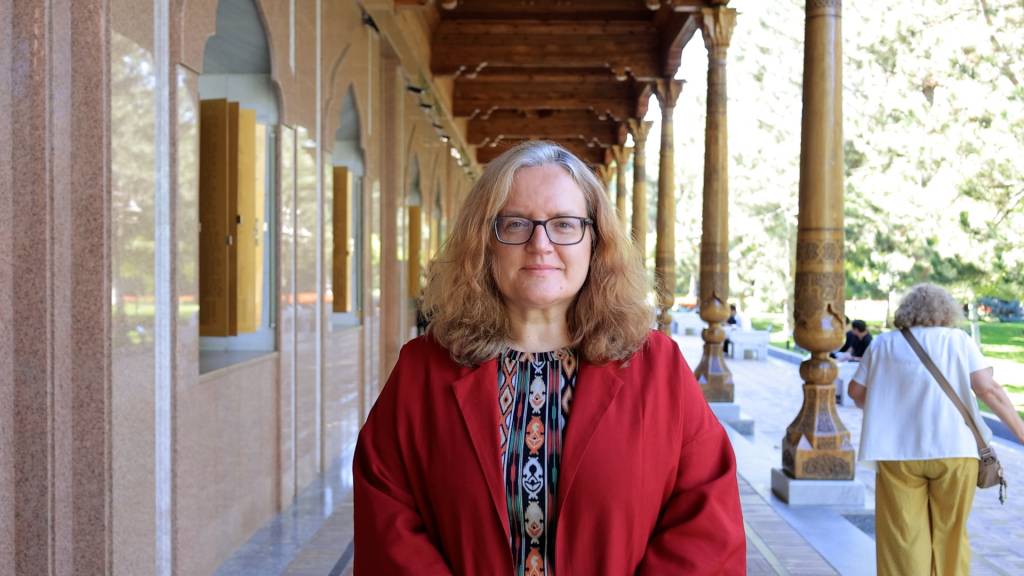
These reflections were shared with the Uzbekistan National News Agency (UzA) in an exclusive interview with Sabine Machl, United Nations Resident Coordinator in Uzbekistan, who has served in the country since June 2024. An Austrian diplomat with more than 25 years of experience in international law, development, conflict prevention, and gender equality, she was awarded Uzbekistan’s “Friendship” Order on 22 August 2026, ahead of the country’s 35th Independence Day, for her contribution to strengthening friendship and cooperation between Uzbekistan and the United Nations. Sabine Machl is more than an international official. She has integrated into a local mahalla, appreciates Uzbek hospitality, cherishes family life, and, as a small but meaningful reflection of her personality, couldn’t pass a stray dog without eventually giving it a home.
<iframe width="680" height="420" src="https://www.youtube.com/embed/BohDYI0hrWQ" title="Between War and Peace: Through the Eyes of a UN Official" frameborder="0" allow="accelerometer; autoplay; clipboard-write; encrypted-media; gyroscope; picture-in-picture; web-share" referrerpolicy="strict-origin-when-cross-origin" allowfullscreen></iframe>Musulmon Ziyo, video by Nishonboy Abduvoitov, UzA