Uzbekistan launches new environmental initiatives focused on investing in nature restoration
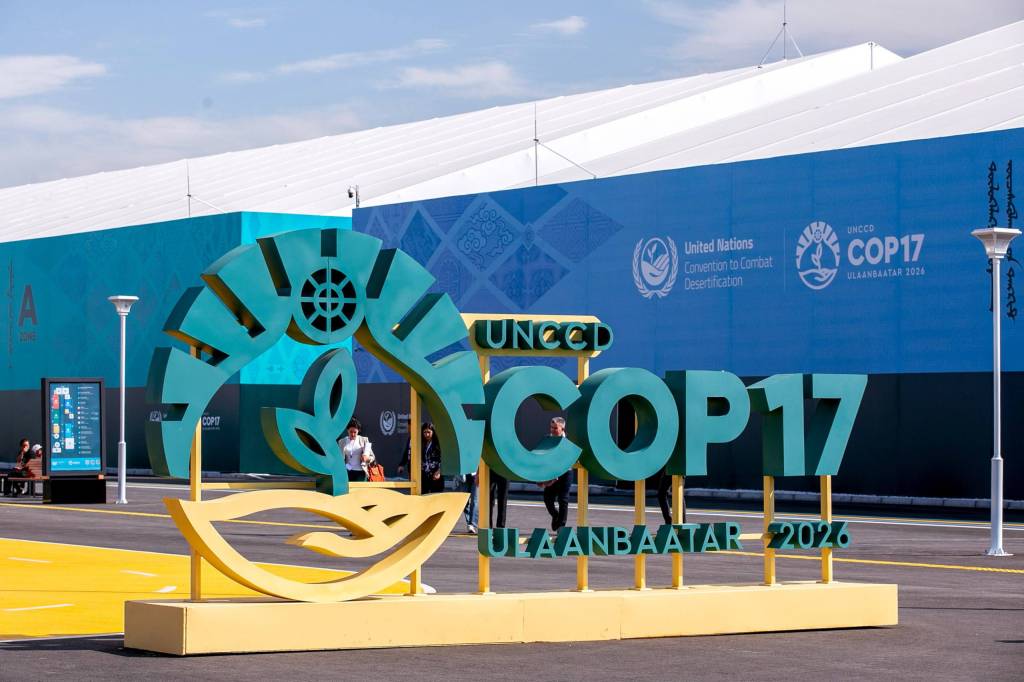
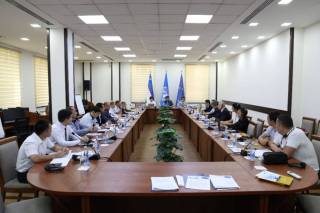
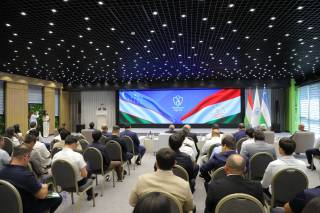
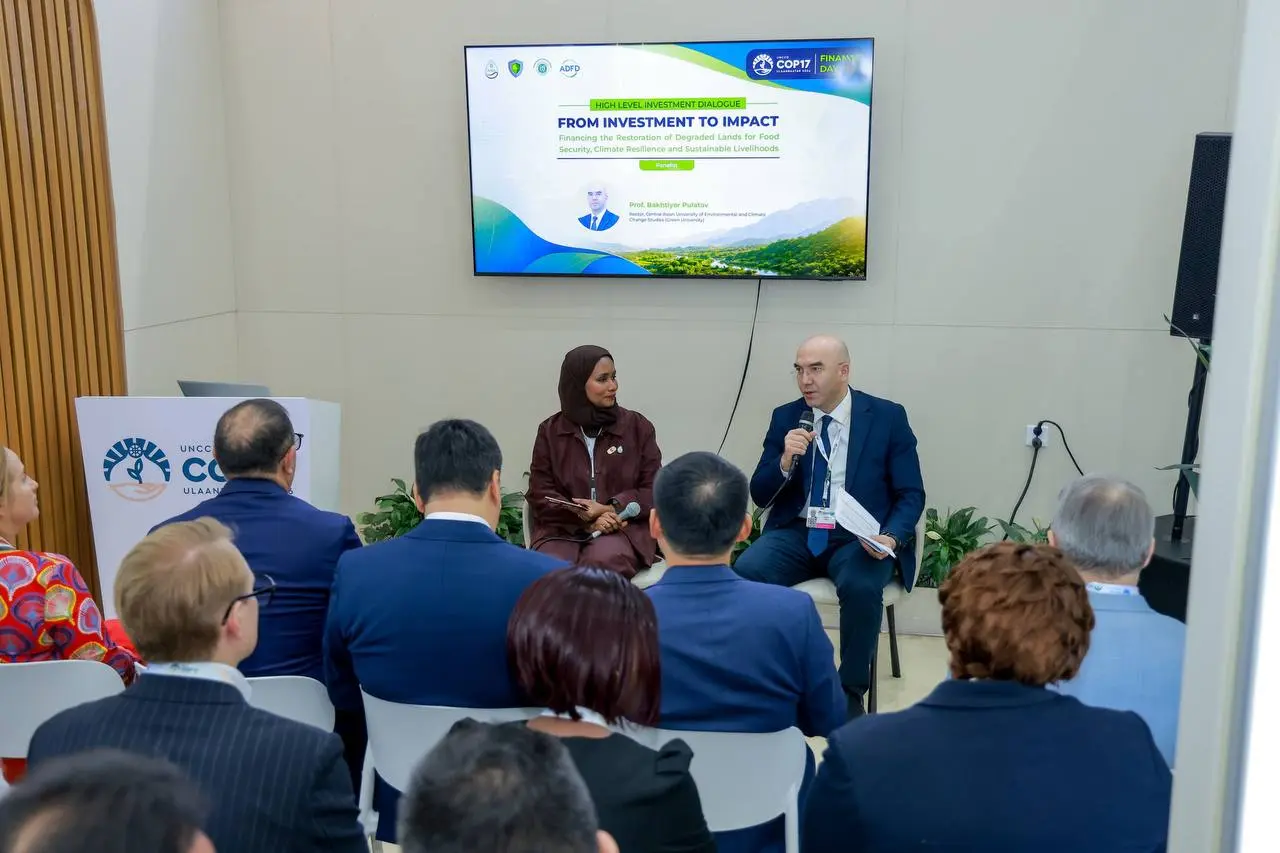
An event titled “From Investment to Impact” was held at Uzbekistan’s National Pavilion in Ulaanbaatar as part of the UN Conference to Combat Desertification.
The participants discussed issues including land restoration, enhancing climate resilience, promoting broader use of environmental solutions, and efficiently mobilizing investments in these sectors.
The event was attended by Aziz Abduhakimov, Advisor to the President of the Republic of Uzbekistan on Environmental Issues, Chairman of the National Committee on Ecology and Climate Change, Dr. Tarifa Alzaabi, Director General of the International Center for Biosaline Agriculture (ICBA), Professor Bakhtiyor Pulatov, Rector of Green University, Dr. Marguba Rejapova, ICBA CAC Post-Doctoral Research Fellow, and other experts.
Mr. Abduhakimov highlighted that Karakalpakstan’s experience shows targeted investment can deliver lasting impacts well beyond a single project.
In 2023, with US$5.1 million from the Abu Dhabi Fund for Development, the National Committee on Ecology and Climate Change, in collaboration with ICBA, carried out a project to create sustainable agricultural systems in degraded districts of Karakalpakstan.
The project involved setting up three demonstration sites to test climate-resilient crops. It also developed new methods to use soil and water resources efficiently and manage agriculture sustainably. Over time, the project expanded into a comprehensive system for sharing technologies and knowledge.
In 2025-2026, the program supported 4,144 farmers throughout all districts of Karakalpakstan, with seed production surpassing 20.9 tons.
The event introduced a concept to broaden collaboration between Uzbekistan and ICBA.
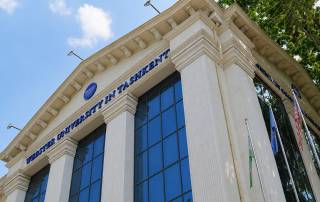
A proposal was made to set up the Central Asian Biosaline Agriculture and Climate Resilience Hub at Green University. This new scientific center will integrate fieldwork, laboratory research, capacity-building, and the practical application of innovative technologies. A major focus will be creating a specialized US$5 million spirulina research laboratory, equipped to analyze microalgae, water resources, and soil salinity. It will also serve as a training facility for students, young researchers, and farmers.
A Drylands Project Lab is also suggested at Green University to develop environmental startups, focusing on baseline indicators, social safeguards, KPIs, and funding sources. The initial international team of developers is planned for 2027 and will include experts from Central Asia, Mongolia, and other arid regions.
The event also proposed creating a regional land restoration quality standard and a monitoring, reporting, and verification system. Experts would evaluate not just land coverage, but also vegetation recovery, soil health, water balance, productivity, and socio-economic impacts. Initially, this methodology is planned to be piloted across 5-10 projects.
Muhayyo Toshqorayeva, UzA