Uzbekistan and the EU work to improve the efficiency of the Trans-Caspian Transport Corridor
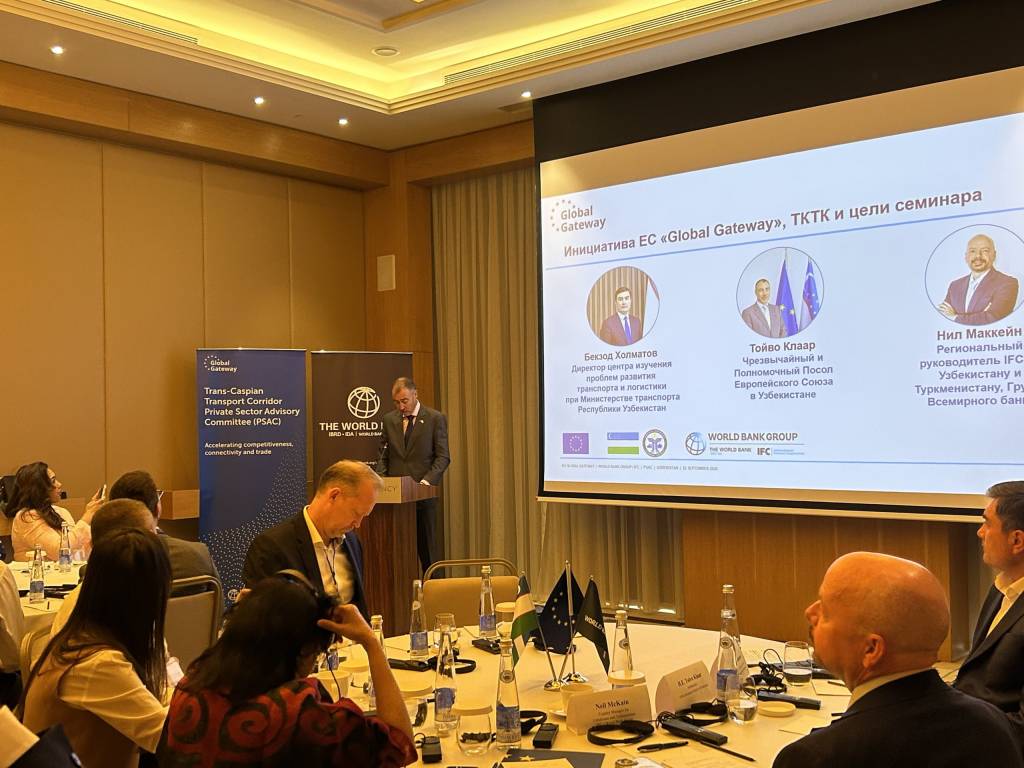
Tashkent hosted a workshop titled “Priority reforms for the Trans-Caspian Transport Corridor” for representatives of Uzbekistan’s private sector in cooperation with the European Union, the Ministry of Transport of the Republic of Uzbekistan and the International Finance Corporation (IFC), as part of the Trans-Caspian Transport Corridor Coordination Platform.
The workshop brought together representatives from government agencies, logistics and freight forwarding companies, shippers, business associations, and international financial institutions. Participants discussed priority reforms and practical steps to improve the corridor’s efficiency.
European Union Ambassador to Uzbekistan Toivo Klaar emphasized that the Trans-Caspian Transport Corridor is among the strategic priorities of the EU’s Global Gateway initiative. According to the diplomat, the European Union supports projects to develop transport infrastructure and strengthen logistics connectivity.
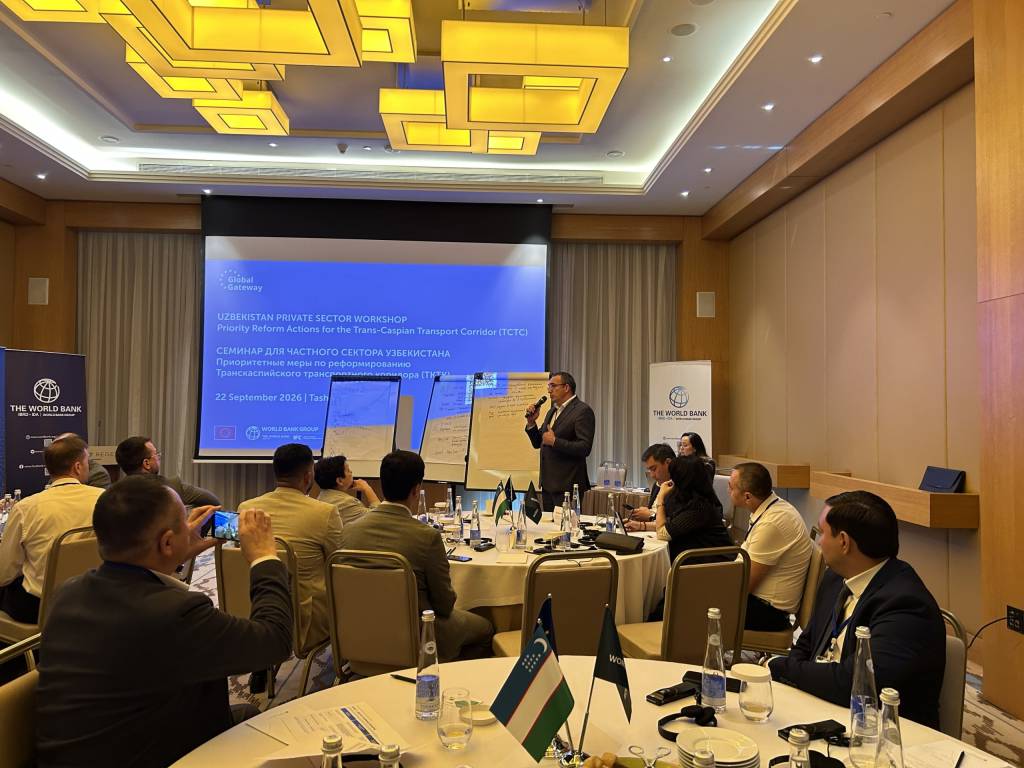
Bekzod Kholmatov, Director of the Center for the Study of Transport and Logistics Development under the Ministry of Transport, reported that in 2025, 1.2 million tons of Uzbek cargo were transported across the Caspian Sea via the Trans-Caspian corridor. The country’s share of freight turnover with the European Union rose from 12% in 2021 to 28%.
The event highlighted several challenges, including the Caspian Sea’s falling water level, port congestion, high transportation costs, and differences in border procedures. At the same time, the e-Permit and e-TIR electronic systems are being introduced.

Following the meeting, participants identified key measures to improve the efficiency of the Trans-Caspian Transport Corridor, eliminate current barriers, and increase private-sector involvement.
Nasiba Ziyodullayeva, UzA