Priority tasks identified to promote economic growth and improve living standards in Andijan
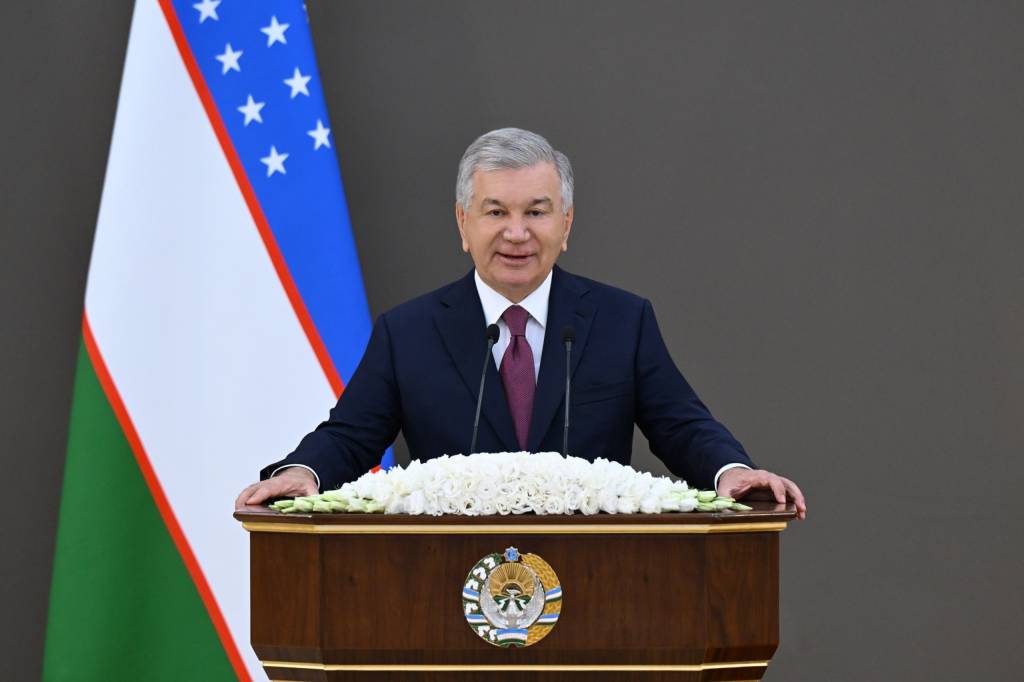
On September 24, President Shavkat Mirziyoyev chaired a meeting on the socio-economic development of Andijan region, support for entrepreneurship, and increasing the population’s incomes.
Reviewing the results of the reforms being implemented in the region, the Head of State noted that the economy grew by 8.8 percent in the first half of this year. Positive trends are also evident in industry, services, and investment. At the same time, it was emphasized that the key criterion is the extent to which these indicators translate into improvements in the daily lives of every family.
Although Andijan has limited land and natural resources, it has enterprising and proactive residents, a high level of business activity, a large youth population, a strong industrial base, and a substantial market. In recent years, the volume of budget funds and credit resources allocated to the region has increased significantly, and local leaders have been granted broad powers. These opportunities must now be directed toward creating high-income jobs and improving the population’s well-being.
The meeting first addressed improving the quality and efficiency of investment. It was noted that attracting $7 billion in investment, based on 1,000 hectares of land allocated for industry and entrepreneurship, would make it possible to create at least 70,000 high-income jobs.
At the same time, insufficient diversification of investment by country and sector was noted, along with low investment in information technology and research. The need to strengthen the technological base of industries in which the region has skilled personnel and export potential was emphasized.
The task was to advance domestic technology development in the automotive and mechanical engineering industries, building on the experience gained in Asaka. The importance of establishing the Asaka Engineering Valley and creating a value chain spanning software development, electronics, electromechanics, and engineering services was also noted.
It is also necessary to improve the efficiency of existing textile industry capacity, attract foreign designers, engineers, and brands, and shift toward producing higher value-added goods. It was decided to assess investment effectiveness based on the value added generated per square meter of space.
Drawing on Karakalpakstan’s experience, the project manager role will also be introduced in other regions. The project manager in Andijan will be responsible for shaping the region’s new investment model. The potential of districts across industry, services, and agriculture will be assessed using artificial intelligence, and a plan will be developed to attract investment to areas offering the highest efficiency.
Measures will be taken to create new jobs by expanding operations and upgrading the technology of major enterprises. For next year, the region has been tasked with achieving at least 10 percent economic growth, attracting $5 billion in investment, and increasing exports to $1.5 billion.
Particular attention was paid to food security and to increasing the incomes of the rural population.
The potential to expand livestock farming in Ulugnor by making effective use of land converted from cotton cultivation to fodder crops, as well as of field margins, was highlighted. Instructions were given to develop projects for large livestock complexes in Ulugnor and Buston.
New poultry farming projects will be launched in Jalaquduq and Khojaabad, drawing on the experience of the poultry meat production complex in Baliqchi. A fish farming cluster will be established in Ulugnor.
A separate company, Agrostar, will be established to bring hilly land in Jalaquduq, Marhamat, Asaka, and Andijan districts into economic use. By spring, water supply is planned for 4,000-5,000 hectares, paving the way for the development of commercial orchards. The orchards will be maintained for three years and then transferred to the population as fully established farms.
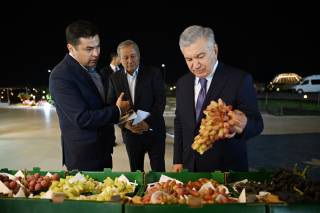
In the fruit and vegetable sector, the task was to shift to the principle of “maximum return per hectare”. The population will receive small-scale processing equipment on a lease basis, and the development of district-level brands will be encouraged. These measures could increase the share of processed agricultural produce to 30 percent and exports to $500 million. The greenhouse project experience in Baliqchi will be scaled up nationwide.
Amid declining demand for cotton in foreign markets and rising export logistics costs, additional support measures have been identified for farmers, clusters, and finished-product manufacturers.
Both farmers who sell cotton through the commodity exchange and clusters that purchase it will receive a subsidy of 500,000 UZS per ton. Clusters growing cotton on their own land will receive a subsidy of 1.5 million UZS per hectare. Instructions were issued to submit calculations for compensating part of the interest rates on loans taken by exporters of finished products for a period of three years. Proposals will also be prepared to reimburse part of the cost of products sold through online marketplaces.
Separate incentives are also planned for industrial enterprises that create large numbers of jobs. At enterprises employing at least 1,000 people, half of the costs of training and professional development, as well as employee transportation expenses, will be reimbursed. Employees who have worked for at least five years will be compensated for their children’s tuition. Grants will also be allocated to enterprises whose number of jobs is approaching 1,000.
To provide qualified personnel for new industrial projects, the task was to turn Andijan into a center for engineering talent in Fergana Valley. The need to closely integrate the potential of the region’s universities and technical colleges with industry was emphasized.
The activities at Andijan Technical Institute will undergo transformation. Foreign managers and professors will be invited, and educational programs will be revised. The institute will establish a dedicated design faculty, which will operate based on a dual education model and be connected to industrial enterprises.
It was emphasized that the region’s rivers and canals have significant untapped potential to supply energy to its growing industry. Andijan’s hydropower potential is estimated at 200 MW. Entrepreneurs have shown strong interest in building small and micro hydropower plants. Moreover, turbine production for such facilities has already been established in the region.
The task was to implement turnkey micro hydropower projects under a two-year program, transfer them to entrepreneurs on a lease basis, and introduce effective financing mechanisms.
Given the population’s growing demand for modern services, new retail and service spaces will be developed. Buildings and land plots vacated after the relocation of government agencies to the city of Babur will be used for this purpose. This will make it possible to attract additional investment and create thousands of jobs.
The task was set to transform the administrative centers of Asaka, Shakhrikhan, and Kurgantepa districts, as well as the city of Khanabad, into zones for high-income businesses. Their master plans will be adapted to projects aimed at developing trade and services.
It was emphasized that expanding opportunities for entrepreneurship also requires a new approach to banking. State-owned banks should operate on the principle of supporting the growth of their clients’ businesses, rather than limiting themselves to traditional collateral requirements and standardized terms applied uniformly across all borrowers.
Financial products based on actual cash flows, orders and contracts, turnover, and business value chains will now be introduced on a broad scale. A long-term contract between a small business and a major customer will be accepted as collateral for a loan. For projects worth up to 500 million UZS, a business plan will not be required for lending, and financing will be provided based on cash flow. To obtain loans to purchase raw materials for producing export-oriented goods, a single insurance policy will be sufficient as collateral.
It was noted that tax authorities should also facilitate the expansion of entrepreneurial activity and preserve jobs. The problems of enterprises that have experienced declining revenues or job cuts will be examined directly at the mahalla level. The tax inspector, assistant hokim, and mahalla banker will jointly submit proposals to defer tax payments, extend loan maturities, provide working capital, and help businesses access markets and promote exports.
Tasks were also identified to expand the region’s transportation and logistics capacity. In view of the expected increase in freight traffic along the China – Kyrgyzstan – Uzbekistan railway, a $600 million logistics complex project will be launched in Kurgantepa and Khanabad. The construction of the Keskaner border checkpoint, agreed with Kyrgyzstan, will help increase freight volumes and reduce delivery times.
Taking into account the new transport flows, design work will begin on the Khanabad – Andijan toll road. It was noted that the Tashkent – Andijan high-speed train service will be launched this month, reducing travel time from six to four hours. Construction of a toll road along this route will begin next year.
Regarding the creation of decent living conditions for the population, it was noted that 25,000 people have already moved into homes in the city of Babur, and construction has begun on housing designed to accommodate another 200,000 residents.
Entrepreneurs implementing projects in the new city to build retail, business, hotel, private educational, medical, and sports facilities will receive support. Given the long payback period for investments in such facilities, a proposal was supported to set the starting price of land plots for these projects at half the level applied to residential construction.
Plans include building new overpasses in Andijan and commissioning a bypass bridge in the center of Asaka district. Modernization of drinking water and sewerage systems will continue. Construction of the second line of the Khanabad – Andijan trunk water pipeline will improve water supply for 1 million residents. Sewerage networks in the city of Andijan will be upgraded, and the capacity of wastewater treatment facilities in Oltinkul will be increased.
Particular attention was paid to ensuring women’s employment. To create opportunities for women unable to work because they cannot place their children in kindergarten, instructions were given to accelerate the opening of new family kindergartens. A separate $20 million fund will be established in the region to support women’s employment.
Digital technologies will be widely used to ensure public safety. Deputy positions responsible for digitalization and combating cybercrime will be introduced under the heads of internal affairs bodies in the cities of Andijan and Shakhrikhan, as well as in Andijan district. Measures will be taken to prevent offenses and road traffic accidents using artificial intelligence. Public awareness of ways to protect against cyberattacks will also be increased.
The Head of State emphasized that a mahalla becomes well-developed through the work and involvement of every resident. Instructions were given to prepare a plan to give 100 mahallas in Andijan the New Uzbekistan appearance next year.
Following the meeting, reports from responsible officials were heard, followed by a dialogue with Andijan residents.
Thereupon, the President concluded his visit to Andijan and returned to Tashkent.
UzA