President outlines priorities to take entrepreneurship to a new level
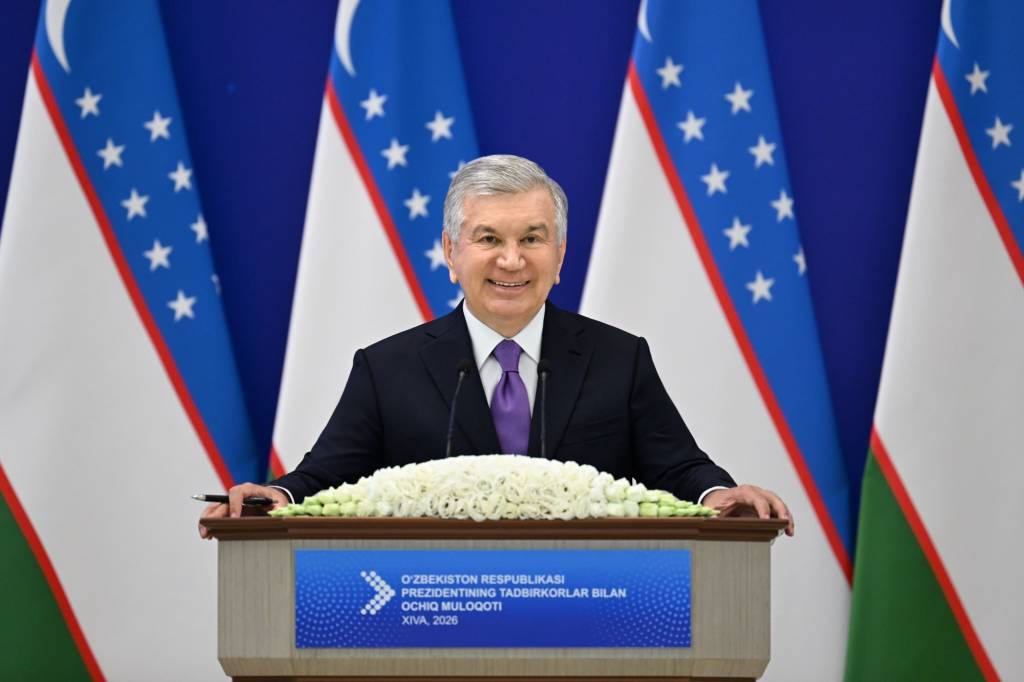
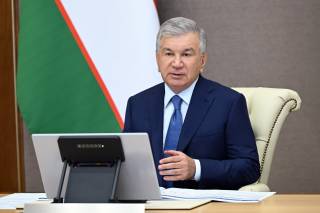
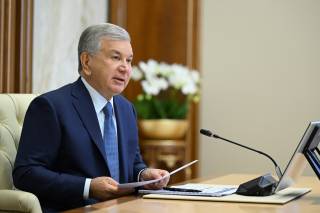
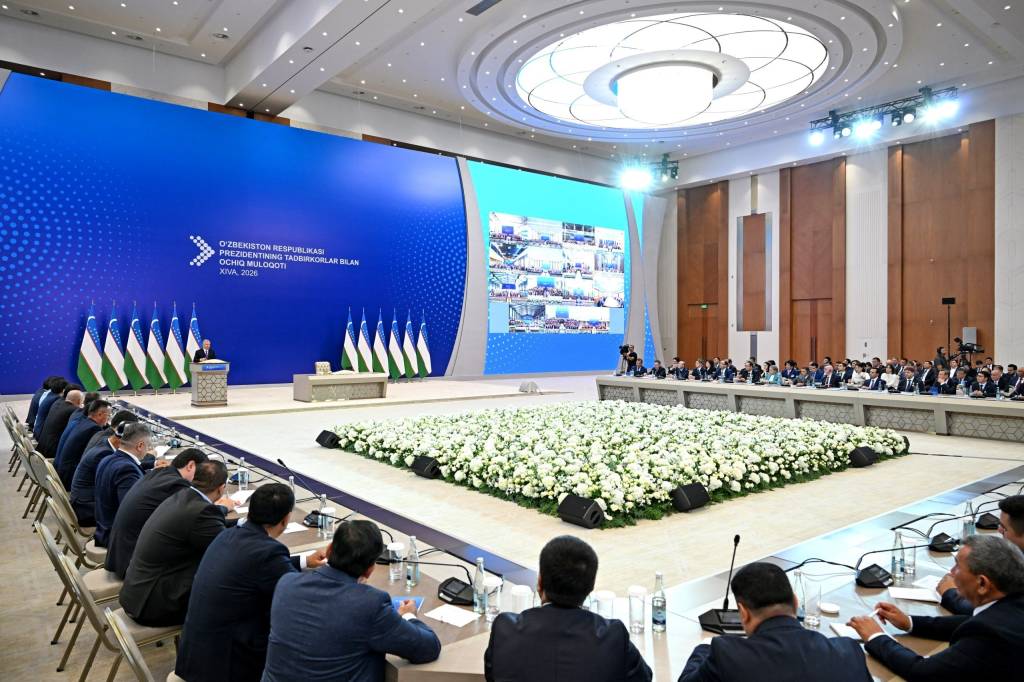
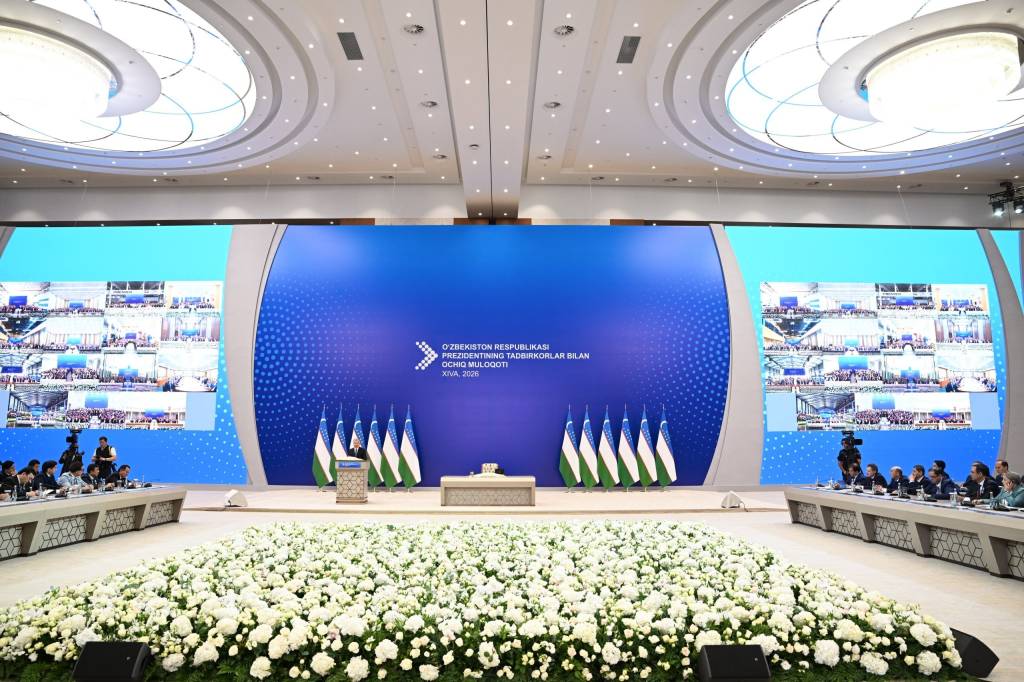
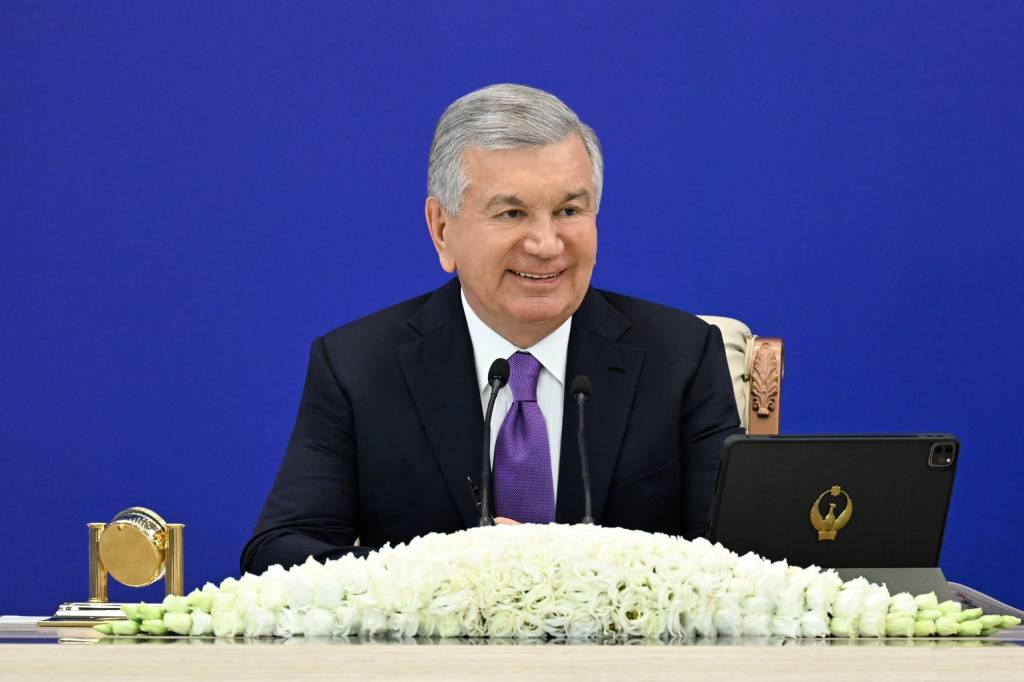
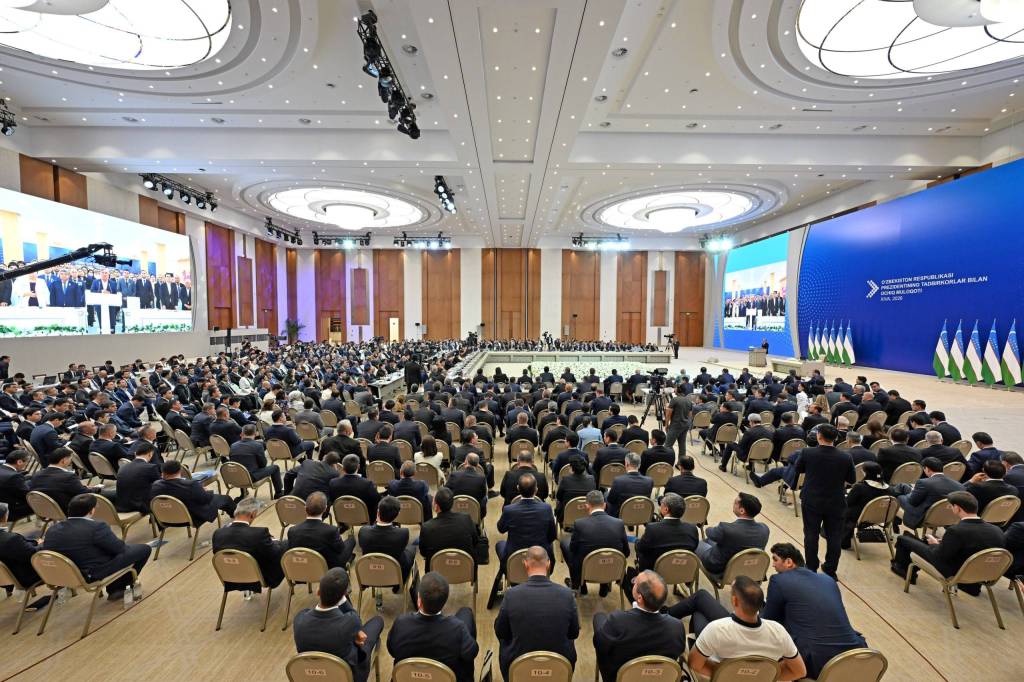
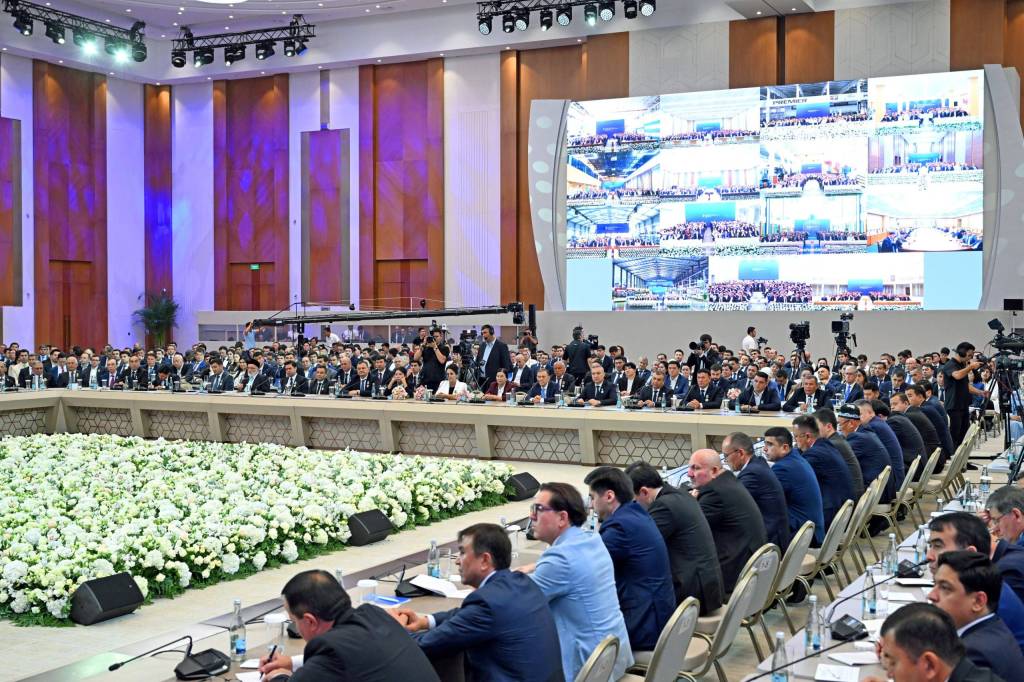
President Shavkat Mirziyoyev held an open dialogue with entrepreneurs in Khiva.
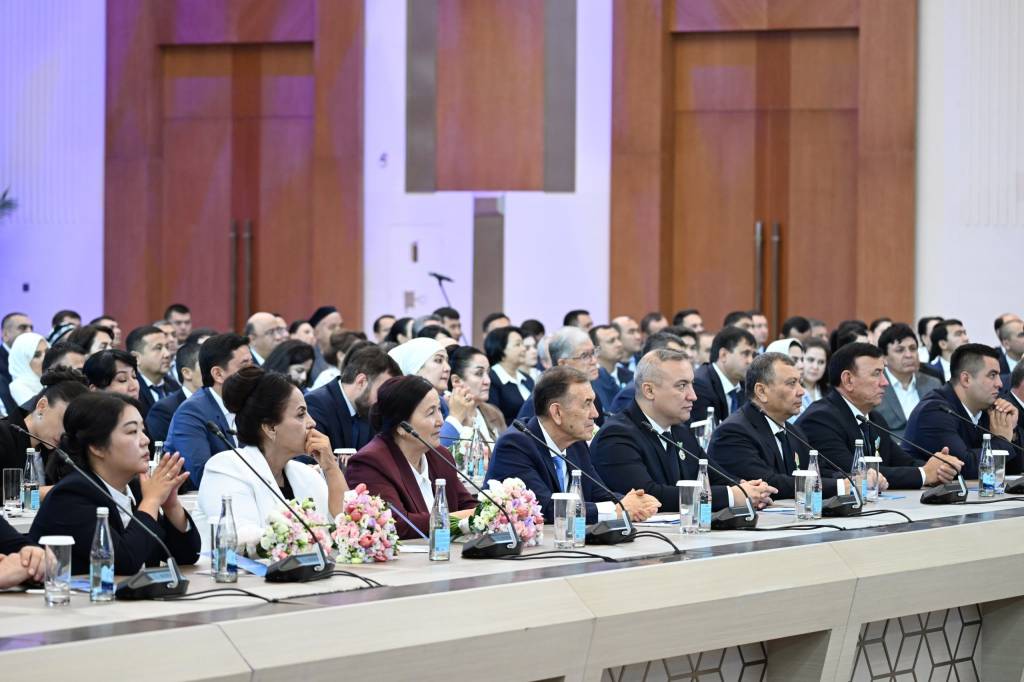
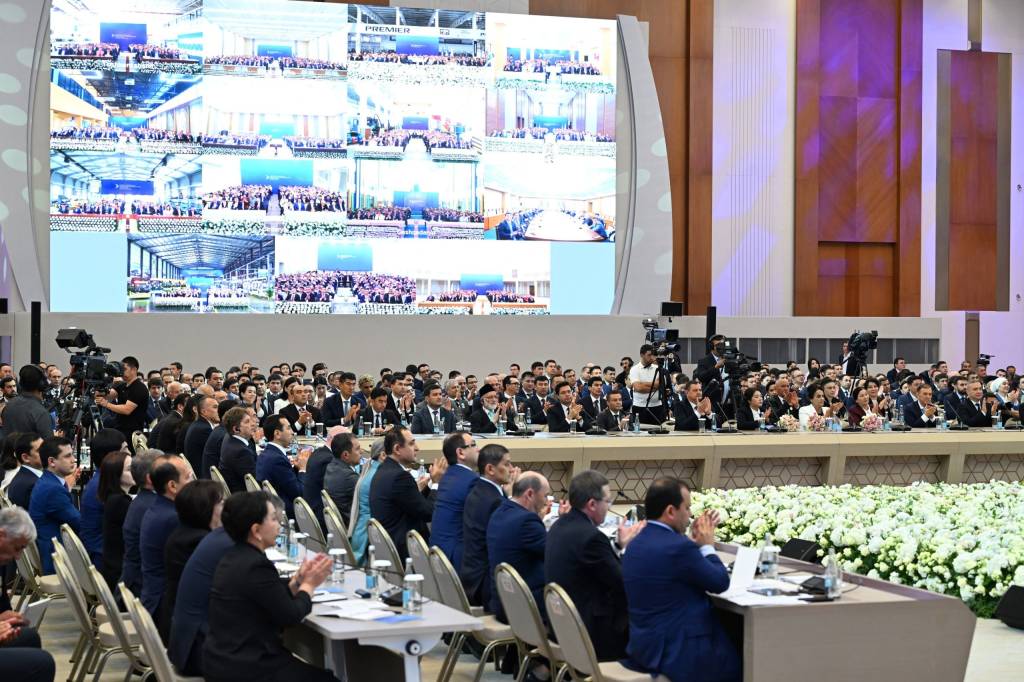
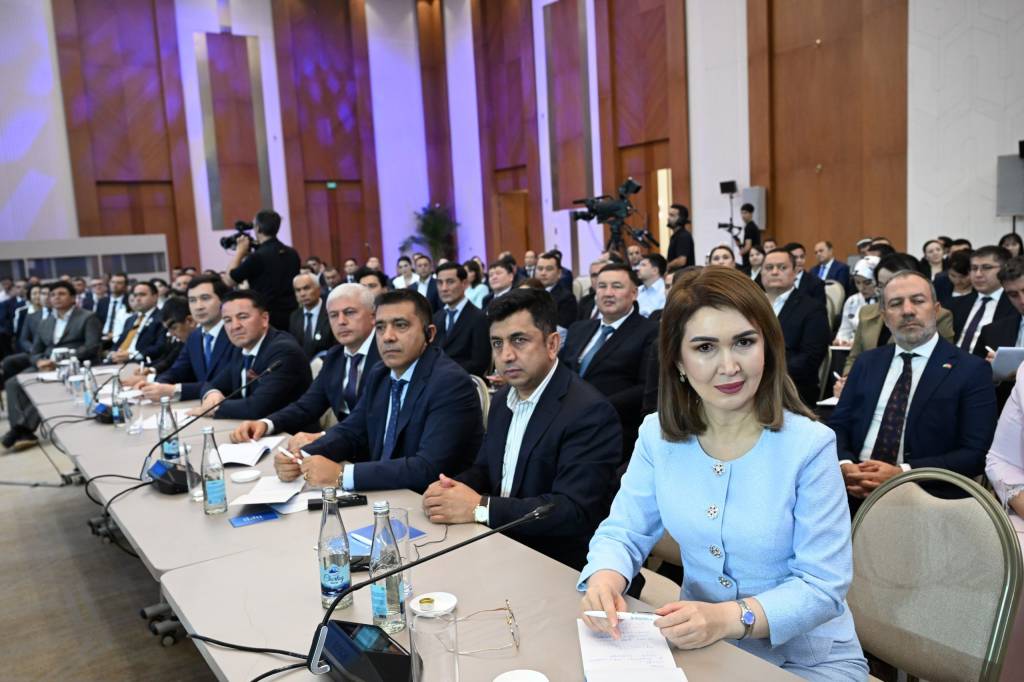
The event brought together entrepreneurs from all regions of the country, including about 25,000 business representatives who joined from district studios.
The Head of State congratulated the 1.2 million members of the business community, who make a significant contribution to strengthening the country’s economic potential, on Entrepreneurs’ Day.
Over the past five years since the tradition of holding open dialogues with entrepreneurs was established, thousands of issues hindering business development have been resolved. To this end, 84 laws and 861 decrees and resolutions have been adopted.
“Why? This is all to create favorable conditions for our entrepreneurs, generate more jobs, and enable people to earn a decent income in their own mahallas without traveling far from home”, the President said.
Over this period, the business lending portfolio has nearly tripled to 450 trillion UZS. Enterprise investment in fixed capital has also tripled.
The number of districts with industrial output exceeding $100 million has increased from 66 to 116, while the number of districts with services exceeding 1 trillion UZS has risen from 41 to 152. More entrepreneurs are establishing national brands and opening branches across the country.
The President noted that recent years have also brought new opportunities for business development in Khorezm region. In a relatively short period, the region has attracted $4 billion in foreign investment, and 10,000 new production facilities have been commissioned. Today, small businesses account for 72 percent of the regional economy and 81 percent of its exports.
Despite challenging global conditions, Uzbekistan’s economy grew by 8.5 percent in the first half of this year. International rating agencies have upgraded Uzbekistan’s sovereign credit rating.
The Head of State noted that these achievements are, above all, the result of reforms carried out in close cooperation with entrepreneurs.
During the dialogue, new initiatives were put forward across five priority areas in response to issues raised by entrepreneurs.
The first priority is to ensure sustainable growth in entrepreneurship.
A new financing system will be introduced for small and medium-sized businesses. Through the “Unified Digital Portal for Credit Services”, entrepreneurs can receive offers from banks by submitting a single application, while new entrepreneurs can apply online for loans of up to 5 billion UZS.
A comprehensive ecosystem will be established to support businesses at every stage of their development. The “Business Start” program will be launched for new entrepreneurs, the “Business Lift” program for those who have established production, and the “Business Yuksalish” program for entrepreneurs moving to the next stage of growth.
Under the “Business Start” program, entrepreneurs will be trained to prepare project and loan documentation and manage reporting using artificial intelligence. A system will also be introduced to provide a ready-made business plan and a collateral-free loan of up to 200 million UZS.
“We will create a comprehensive system that will not simply provide entrepreneurs with loans but will support them every step of the way, from taking their first steps in business to becoming a large enterprise”, the Head of State said.
To ease collateral requirements for small businesses, a “counter-guarantee” system will be introduced. When obtaining a loan of up to 10 billion UZS, entrepreneurs will need to provide collateral equivalent to 25 percent of the loan amount.
The second priority is to expand business opportunities in the regions.
When purchasing a state asset, the down payment will be reduced from 30 to 15 percent. Entrepreneurs who have paid half of the purchase price will be able to pay the remaining amount in interest-free installments over seven years.
Land plots offered at auction will be made available as a “ready package”, complete with all documentation required for construction.
Banks will be allowed to sell 2,500 properties on their balance sheets, with a total value of 9 trillion UZS, on preferential terms, with no down payment and interest-free installments.
Bonded Industrial Zones will be established within the Navoi, Jizzakh, Namangan, Urgut, and Khazarasp special economic zones. These zones will integrate production localization, research and development, laboratory services, and engineering services into a single chain.
The requirement for 100 percent advance payment for electricity and gas will also be revised. For enterprises equipped with smart electricity and gas meters and maintaining good payment discipline, the advance payment will be set at 15 percent.
The third priority is to create an ecosystem linking “artificial intelligence – management efficiency – new investment”.
“The entrepreneur who increases added value, boosts productivity with artificial intelligence, and seeks ways to reduce costs today will gain a competitive advantage in the future”, the President said.
The “Artificial Intelligence – Partner for 10,000 Enterprises” program will be launched. Enterprises will be compensated for 50 percent of the costs of implementing artificial intelligence and will receive free access to a supercomputer to develop models for new products.
The first stage of the program will receive at least $100 million.
To bring domestic enterprises to the capital market, an acceleration program will be launched, under which 50 large enterprises will be prepared for an IPO each year.
Large investment projects will be required to include personnel training measures. The professional training model introduced in Urgench will be extended to all regions of the country. The goal is to train 1 million young people in modern professions.
The fourth priority is to increase export potential and promote national brands in foreign markets.
An “Export Navigator” system will be established to provide comprehensive services at all stages of entering foreign markets. A list of the 100 most in-demand products in foreign markets will be compiled, with solutions developed for each, taking into account the specific market, tariffs, and logistics.
The production processes of 2,000 enterprises will be adapted to foreign-market requirements. Entrepreneurs will be compensated for part of the costs of engaging foreign branding specialists, promoting national brands in foreign markets, and participating in marketplaces and international tenders.
At least $1 billion will be allocated to a unified support system for exporters.
“Today, competition for sales markets is intensifying around the world. Under these conditions, we cannot allow an entrepreneur who has entered a foreign market to be left alone to face difficulties”, the Head of State said.
The work of “export ambassadors” will be organized in key and promising foreign markets. The deadlines for crediting foreign currency earnings from export operations will be extended, and certain restrictions will be lifted.
The fifth priority is to significantly reduce administrative pressure on businesses.
“Bringing the economy out of the ‘shadow’ should be achieved not through inspections, but by advising entrepreneurs and teaching them how to conduct business properly”, the President emphasized.
A three-year moratorium will be introduced for small businesses on all inspections unrelated to harm to human health or the interests of other entrepreneurs.
Medium and large businesses that undergo a voluntary preventive audit will not be fined, provided that the identified violations are rectified. All types of fines will be reduced by an average of half.
Starting next year, the principles of “presumption that the entrepreneur is right” and “warning for the first offense” will be introduced when considering disputes between entrepreneurs and the state.
Half of public services in entrepreneurship will operate under the “silence is consent” principle. Licenses and permits will be abolished for more than 30 types of activities, while the time required to issue them will be reduced for another 35 types.
Instead of several permits required for food exports, a single “Health Certificate” will be introduced.
During the dialogue, measures to support entrepreneurs in the tourism sector were also identified.
$50 million will be allocated for the construction, reconstruction, and equipping of hotels. The provision of subsidies for the construction of three-, four-, and five-star hotels will be extended for another two years, while land and property tax benefits will be extended until 2030.
Services provided by tour operators to foreign tourists will be treated as exports. Benefits for importing tourist buses and electric buses will also be extended.
Following the dialogue, key goals for taking the economy to a new level were identified.
“We are a nation of 40 million people. To improve our people’s standard of living, we need to maintain high rates of economic growth”, the Head of State said.
The task has been set to increase gross domestic product to more than $180 billion this year and exports to more than $40 billion.
Taking into account the potential of each region, new growth points have been identified. In Tashkent, the focus will be on developing export-oriented businesses, in Fergana Valley, industries with full production chains, and in Samarkand, Bukhara, and Khorezm, tourism, creative industries, and agro-industrial brands.
In Navoi and Tashkent regions, the main growth points will be mining, metallurgy, and science-intensive chemical industries, in the Kashkadarya and Surkhandarya regions, the agro-industrial sector and petrochemicals, in Karakalpakstan, green energy, information technology, and artificial intelligence, and in Jizzakh and Syrdarya regions, the automotive and electrical industries and the production of building materials.
During the open dialogue, the President listened to proposals and initiatives from entrepreneurs.
“A new generation of entrepreneurs is emerging in our country, with a modern outlook and a drive to innovate to expand their businesses.
Never stop moving forward, growing, developing, and innovating! You will always have a strong state ready to support you, laws that protect your rights and interests, and the President who will stand by you as you pursue your initiatives and goals”, the Head of State said at the meeting’s conclusion.
UzA