Plans to modernize and expand the Bukhara Oil Refinery’s production capacity reviewed
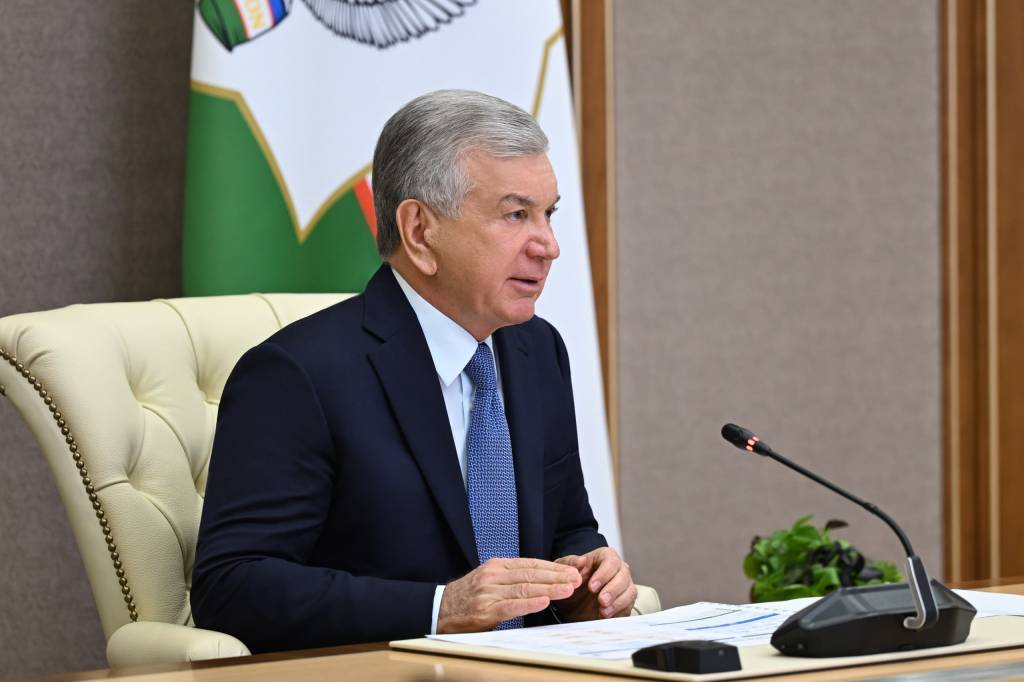
President Shavkat Mirziyoyev reviewed a presentation on the current operations of the Bukhara Oil Refinery and plans to expand its production capacity.
Commissioned in 1997, the refinery plays an important role in the country’s fuel and energy sector. It has an annual processing capacity of 2.5 million tons of crude oil and gas condensate. The refinery produces motor gasoline, diesel fuel, aviation kerosene and other petroleum products. The facility employs more than 3,200 people.
The presentation covered the refinery’s operational and financial performance. During the first nine months of this year, the facility processed more than 1.5 million tons of feedstock and produced nearly 1.5 million tons of petroleum products. Net profit amounted to 2.2 trillion UZS.
By the end of the year, the refinery plans to increase its total feedstock processing volume to 2.17 million tons and petroleum product output to 2.12 million tons.

One of the refinery’s development priorities is to modernize its production facilities and introduce the production of high-quality fuels.
A $328 million project has been developed to launch the production of AI-92 and AI-95 motor gasoline meeting the Euro 5 emissions standard. The project envisages upgrading existing technological processes and constructing new production lines.
Once implemented, the project will enable the refinery to produce 1.1 million tons of Euro 5-compliant motor gasoline annually. Savings of up to $150 million a year are expected through reduced spending on imported fuel additives. The project is also expected to create 200 new jobs.
The project is scheduled to be launched in the second quarter of 2029.
The presentation also covered a prospective project to expand the refinery’s production capacity.

The project, with a preliminary estimated cost of $1.8 billion, envisages introducing advanced oil refining and petrochemical technologies and constructing new processing units.
The project will enable the refinery to increase its total annual petroleum product output from the current 2.1 million tons to 4.6 million tons. In particular, annual production is expected to reach 2.7 million tons of motor gasoline, 1.24 million tons of diesel fuel and 500,000 tons of aviation kerosene.
The expansion will also create opportunities to develop the production of benzene and other petrochemical products, as well as higher-value-added products through advanced feedstock processing.
The refinery plans to collaborate with leading technology companies from China, France, the United States and Azerbaijan on the project. Construction is scheduled to begin in 2028.
During the presentation, particular attention was paid to the economic viability of the projects, the introduction of advanced technologies, the full utilization of production capacity, and the expansion of output of high-quality, competitive petroleum products.
UzA