President of Uzbekistan proposes climate integration initiative
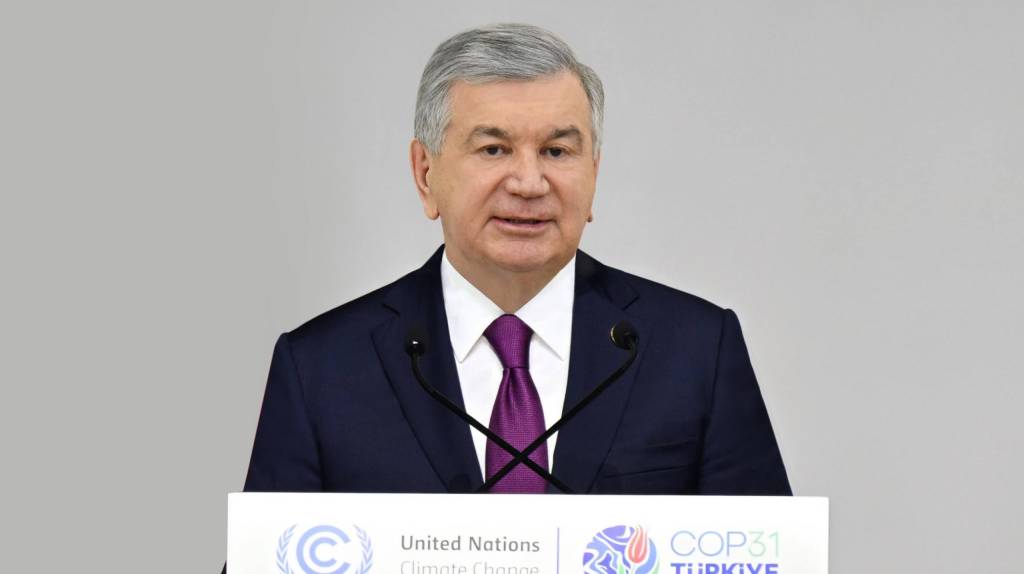
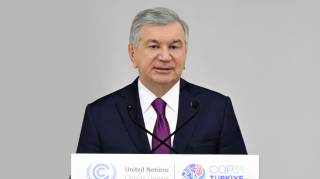
The President of the Republic of Uzbekistan Shavkat Mirziyoyev addressed the plenary session of the COP31 Leaders’ Summit, currently taking place in Antalya.
The summit is attended by heads of state and government from more than 90 countries, as well as leaders of major international organizations and financial institutions.
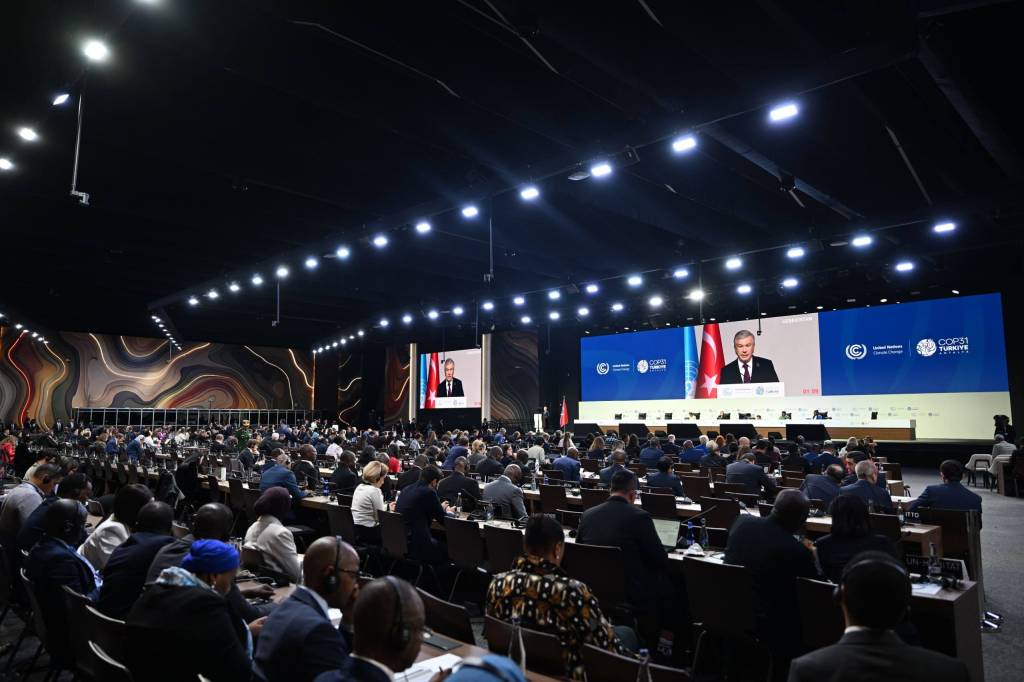
At the beginning of his address, the President of Uzbekistan expressed his sincere gratitude to the President of the Republic of Türkiye Recep Tayyip Erdoğan for hospitality and praised the high standard of preparations for the conference, co-chaired by Türkiye and Australia.
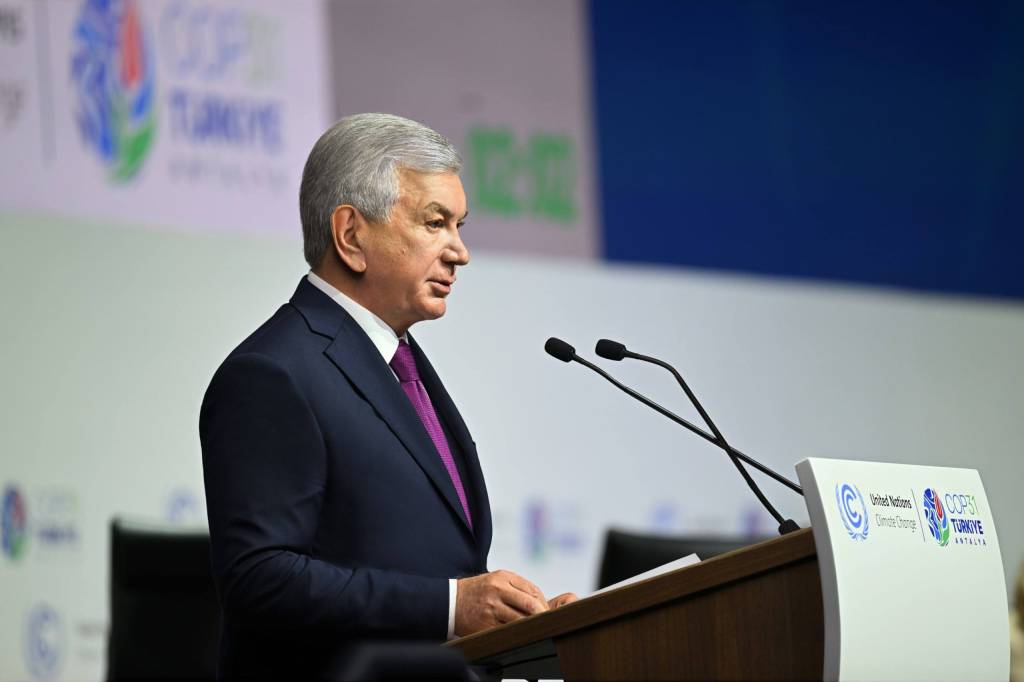
As the President noted, Uzbekistan supports global efforts to combat climate change and is building its development model around the sustainable use of natural resources and green technologies.
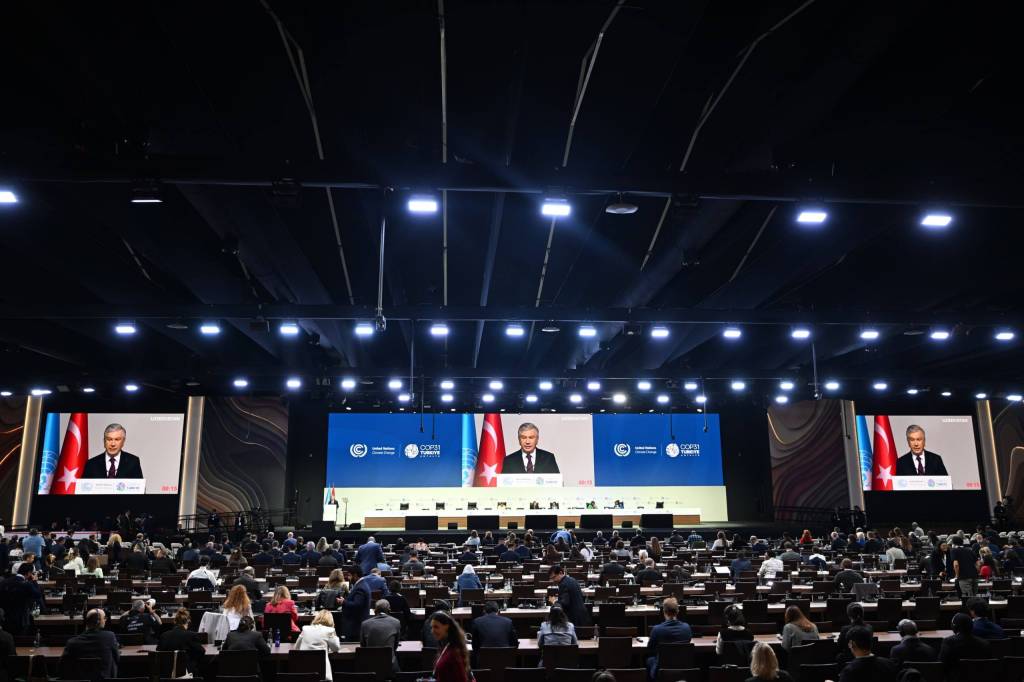
He outlined Uzbekistan’s national efforts and achievements in this area to the international community.
As part of its efforts to reduce carbon intensity, Uzbekistan achieved its target of reducing emissions per unit of GDP by 35 percent ahead of schedule. A new target has been set to achieve a 50 percent reduction by 2035.
Over the past decade, the water intensity of the economy has nearly halved, while water withdrawals have decreased by one-fifth. Water-saving technologies now cover more than 60 percent of irrigated farmland.
As a result of large-scale land restoration measures, the area under forest plantations in the country has increased by six million hectares, one-third of which is located in the Aral Sea region.
The Waste Management Strategy is being implemented consistently.
It was emphasized that caring for the younger generation is central to the country’s policies.
“Environmental education in our country begins in the family, the mahalla and school. From an early age, we teach children to conserve water, care for trees, and keep shared spaces clean”, the President of Uzbekistan emphasized.
It was noted that one in five people in Uzbekistan is a school or university student. This means that by 2050, three-quarters of the country’s population will have received nature-centered education.
Outlining his vision for further joint action, Shavkat Mirziyoyev emphasized that no country can adapt to climate challenges alone.
“In Central Asia, threats such as melting glaciers, water scarcity, and extreme droughts are growing. These shared challenges require coordinated action by the countries of the region”, the President stated.
In this context, he proposed developing a regional Climate Integration Model, with cooperation initially focused on three key areas.
The first is information sharing. In this area, he proposed establishing infrastructure for exchanging climate risk data with the support of the World Meteorological Organization.
The second area is technology. Uzbekistan expressed its readiness to turn the ECO-EXPO exhibition into a permanent investment and technology platform for modern environmental solutions adapted to the region’s specific conditions.
The third area is financing. To ensure adequate and predictable funding, the President proposed working with development banks and specialized funds to develop new support instruments, including concessional grants, as well as blue and arid financing mechanisms.
In conclusion, President Shavkat Mirziyoyev called on conference participants to turn the concept of climate integration into practical action and proposed applying this vital model in all interested regions of the world.
UzA