From Independence to Democratic Governance
Thirty-five years of Uzbekistan’s independence mark both the journey of establishing a sovereign state and the steady growth of institutions representing popular sovereignty.
Today, the country is transitioning from formal representation to true democratic governance rooted in citizen participation and government accountability to society.
From State-Building to Popular Sovereignty
The Constitution, adopted on December 8, 1992, established the principles of popular sovereignty, separation of powers, and the election of representative bodies. At the outset, the primary task was to build stable statehood and effective government institutions, with representative bodies forming part of this process. This was a natural progression: institutions are established first and then given substantive meaning.
Parliament is Growing Stronger
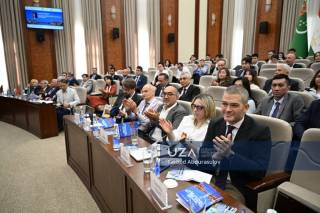
A key milestone was the establishment of the bicameral Oliy Majlis: the Legislative Chamber represents society's political interests, while the Senate represents regional interests. Over time, parliamentary oversight has also expanded, with deputies becoming more active in hearing reports from government bodies and reviewing how laws are implemented. As a result, parliament has gradually evolved from a purely legislative body into a key institution overseeing the executive branch.
The State Must Listen to Its Citizens
The reforms of New Uzbekistan have placed people, their rights, and their everyday concerns at the center of public policy. The principle that “the people should not serve the state, the state should serve the people” has taken on an institutional dimension: deputies are now expected not only to vote but also to maintain continuous engagement with their constituents, for which parliamentarians have been provided with the necessary resources.
The 2023 Constitution: A New Model at the Local Level
A key change concerned local government. Previously, a hokim simultaneously headed both the executive authority and the Council of People’s Deputies. The revised Constitution separated these functions: the Council is headed by a chairperson elected from among its deputies, while the hokim heads the executive authority, so the two positions may no longer be combined. The Council sets priorities, approves the budget, and oversees its implementation, while the hokim is responsible for performance outcomes. The model’s underlying formula is set out in the Concept for the Development of Representative Bodies until 2030: “A strong Council, an accountable and proactive hokim”.
The 2024 Elections: A New Balance
For the first time, elections to the Legislative Chamber were held under a mixed electoral system: half of the deputies were elected from single-member constituencies, while the other half were elected through party lists. This system combines a deputy’s personal responsibility to their constituency with a party’s political responsibility to society.
Democracy Begins Close to Home
For most citizens, the state is not about sessions of the Oliy Majlis but about roads, schools, clinics, and the local budget. This is why the role of local Councils is coming to the forefront: when citizens can approach a deputy and see tangible results, popular sovereignty takes on genuine meaning.
Powers Must Be Backed by Capacity
The Council’s new powers do not, by themselves, guarantee results. They also require professional administrative staff, qualified specialists, digital systems, and ongoing communication with the public. At this new stage of reform, it is proposed to establish a Presidium of the Council to address operational matters, create the position of deputy chairperson to oversee the secretariat, and establish a “Council Hour” during which heads of local authorities will answer deputies’ questions. The status of standing commissions and party groups is also expected to be strengthened.
Digital Engagement with Citizens
Electronic reception offices for deputies, open data on local budgets, online broadcasts of Council meetings, and public oversight of decision implementation can bring government closer to the people, complementing rather than replacing direct communication between deputies and their constituents.
The Core Meaning of the Transformation
Uzbekistan has consistently progressed from building an independent state to establishing a modern parliament and strengthening the oversight functions of representative bodies, and now seeks to ensure these institutions genuinely serve citizens’ interests. Democracy is measured not by the number of elections or laws, but by whether citizens can influence problem-solving through their representatives and see tangible results.
Today marks the start of a new phase – democratic governance. Its core focus is not on weakening the state but on enhancing its accountability to the public, clearly distinguishing the roles of elected and executive authorities, and fostering genuine representation of citizens’ interests. The true maturity of a democratic system is gauged by one key question: how effectively can a citizen be heard and, through their representatives, shape decisions impacting their life?
Alimjan Akilov,
Chief Research Fellow,
Institute of Legislation and Legal Policy under the President of the Republic of Uzbekistan,
Doctor of Law, Professor