Fighting Corruption: A Key Factor in Ensuring Integrity
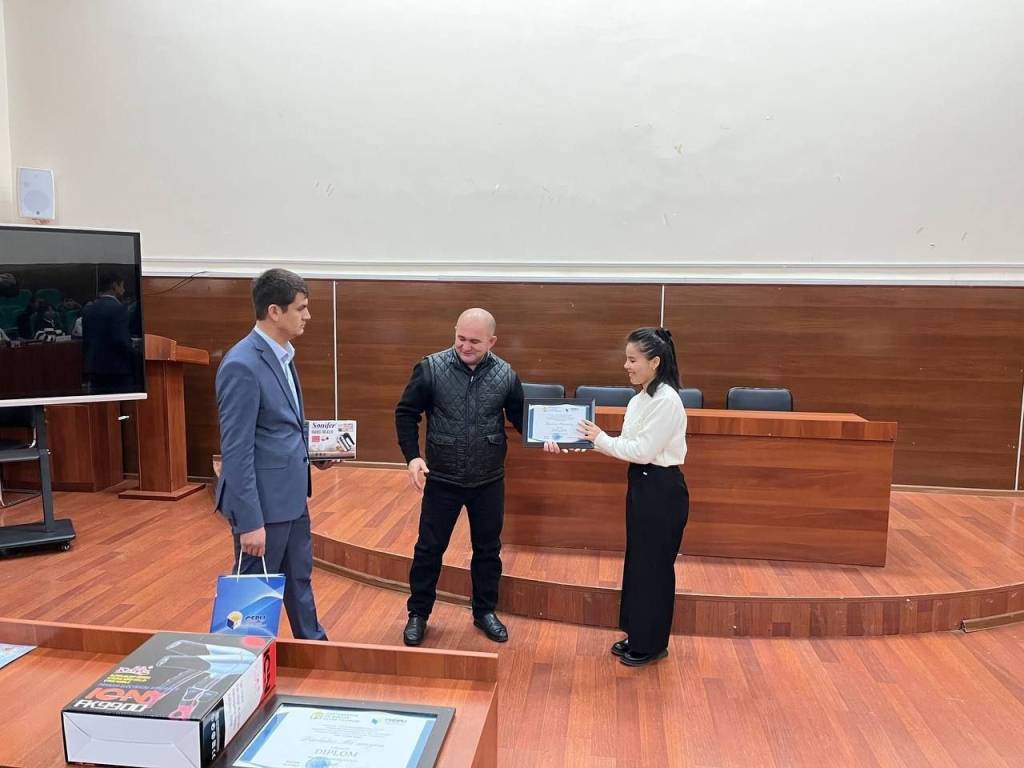
Today, combating and preventing corruption is a priority not only for government agencies but also for every organization and institution.
It is particularly important to foster an uncompromising attitude toward corruption and to establish the principles of honesty and justice in higher education institutions that educate and nurture the younger generation.
Chirchik State Pedagogical University is consistently implementing measures aimed at preventing corruption, reducing corruption-related risks, raising the legal awareness of staff and students, and strengthening the principles of honesty and transparency.
To ensure the implementation of tasks set forth in the State Program, approved by Decree No. PF-200 of the President of the Republic of Uzbekistan on November 27, 2023, the university has organized a series of practical anti-corruption and prevention measures.
Specifically, relevant work was carried out on clauses 3, 5, and 6 of the action plan for the assigned tasks, and reports on their implementation were prepared.
Additionally, the implementation of tasks defined in clauses 24.1 and 24.3 of the 2024–2025 "Roadmap," aimed at reducing corruption risks in the higher education sector, was ensured.
Such efforts serve to strengthen preventive and educational approaches aimed at averting corruption, rather than limiting the fight against it to legal measures alone.
Increasing the legal awareness and culture of the population, especially the youth, is a crucial factor in combating corruption. To this end, the university organized roundtables, seminars, meetings, open dialogues, and training sessions involving both staff and students.
During the reporting period, eight roundtables on the topic "We Are Against Corruption" were held for employees, with 455 staff members participating. Additionally, two seminars were attended by 290 participants.
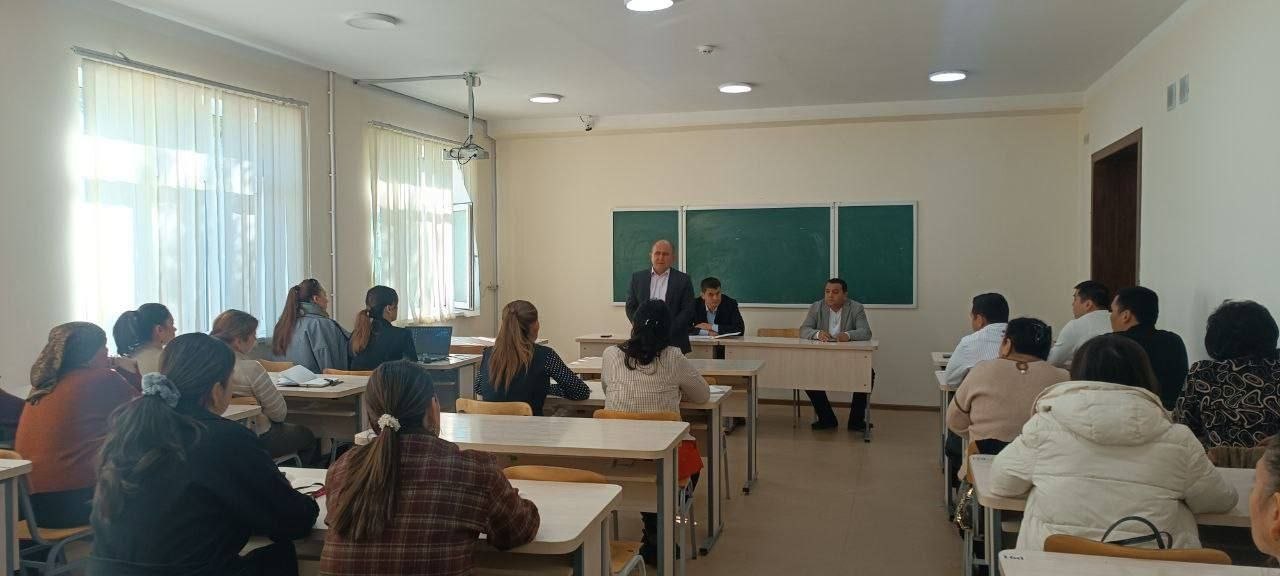
Comprehensive preventive measures were also organized among students. Specifically, 3,255 students participated in 16 roundtables, and 2,010 students took part in two meetings.
During the events, explanations were provided on the concept of corruption, its causes, its negative impact on the development of society and the state, the prevention of corruption risks, and adherence to the principles of honesty and justice.
The active participation of youth in the fight against corruption is of particular importance. Indeed, today's student is tomorrow's specialist, educator, leader, and active member of society.
A special course titled "Fundamentals of Anti-Corruption" was established at the university to strengthen students' knowledge and skills. It provided knowledge on the nature and types of corruption, its underlying factors, its negative consequences, and the national and international legal frameworks for combating it.
Additionally, classes, seminars, training sessions, and open dialogues were held on the topics "Honesty is the Highest Value" and "The Role of Youth in Combating Corruption."
Psychological training sessions organized by the faculty of the university's Psychology Department were aimed at fostering an intolerant attitude toward corruption among students and strengthening their psychological resilience against negative influences.
At the university, awareness-raising activities among students have also been established in collaboration with the "Compliance Control" System Management Department and the "Anti-Corruption Volunteers" group.
During the reporting period, two joint awareness-raising events were organized in this area.
Volunteers contribute to fostering an anti-corruption culture by organizing events, engaging students, distributing informational materials, and participating in open dialogues.
Such initiatives are vital in transforming young people from passive observers into active participants in the fight against corruption.
To combat corruption effectively, citizens must be well-informed of their rights and obligations, as well as the liability measures established for corruption-related offenses.
To this end, the university held four anti-corruption legal awareness and advocacy events for students and staff.
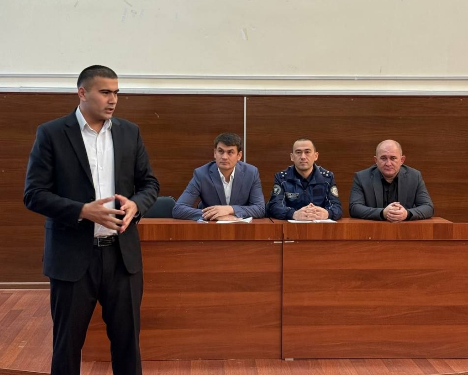
These events explained the substance and significance of Articles 168, 205, 206, 207, 209, 210, 211, and 212 of the Criminal Code of the Republic of Uzbekistan, as well as the liability issues for corruption-related crimes.
At the same time, special attention was paid to the importance of integrity in performing official duties, adhering to codes of ethics, preventing conflicts of interest, and maintaining an uncompromising stance on corruption.
Systematic information and advocacy efforts are also of great importance in the fight against corruption.
For this reason, banners and posters on the topic of combating corruption were placed on the university grounds. Materials aimed at preventing corruption and promoting integrity and transparency were regularly published on the university's social media networks.
Additionally, through videos and presentations, the negative consequences of corruption were explained to students, and they were urged to take an active stance against this vice.
The effectiveness of the fight against corruption depends, first and foremost, on the knowledge and qualifications of the personnel working in this area.
In accordance with instruction letter No. 03-13/658 of the Ministry of Preschool and School Education of the Republic of Uzbekistan, dated February 4, 2026, information regarding 150 employees who completed advanced training on the electronic platform of the Virtual Anti-Corruption Academy in 2025 and are scheduled for advanced training in 2026 was compiled and submitted in electronic form as per the established procedure.
This serves to continuously improve the knowledge and skills of employees in the field of anti-corruption.
The main goal of all measures implemented at the university is not merely to identify corruption offenses or apply liability measures against them. The most important task is the early identification of factors that enable corruption, their prevention, and the cultivation of an environment of integrity within the university community.
Indeed, fostering immunity to corruption should be an integral part of the educational process. In this, it is crucial for every professor, instructor, employee, and student to deeply understand their responsibility, strictly adhere to legal requirements, and maintain an uncompromising attitude toward any form of corruption.
The work carried out at Chirchik State Pedagogical University from January to August 2026 demonstrates the formation of a comprehensive approach aimed at this goal. The synergy of preventive measures, legal advocacy, special courses, psychological training, the volunteer movement, and information and advocacy efforts is helping to strengthen an effective anti-corruption system.
In the future, the university will consistently continue its work aimed at regularly analyzing corruption risks, further strengthening preventive measures, expanding student participation in the "Anti-Corruption Volunteers" movement, and further embedding the principles of integrity and openness into the educational process.
Where there is integrity, there is trust, justice, and progress. The fight against corruption is an essential condition for preserving these values and passing them on to future generations.
Muhammadali SULTONOV,
Chirchik State Pedagogical University
Chief Specialist of the Anti-Corruption
Compliance Control System Management Department