Akramjon Nematov: young people should play an active role in shaping the future of Central Asia
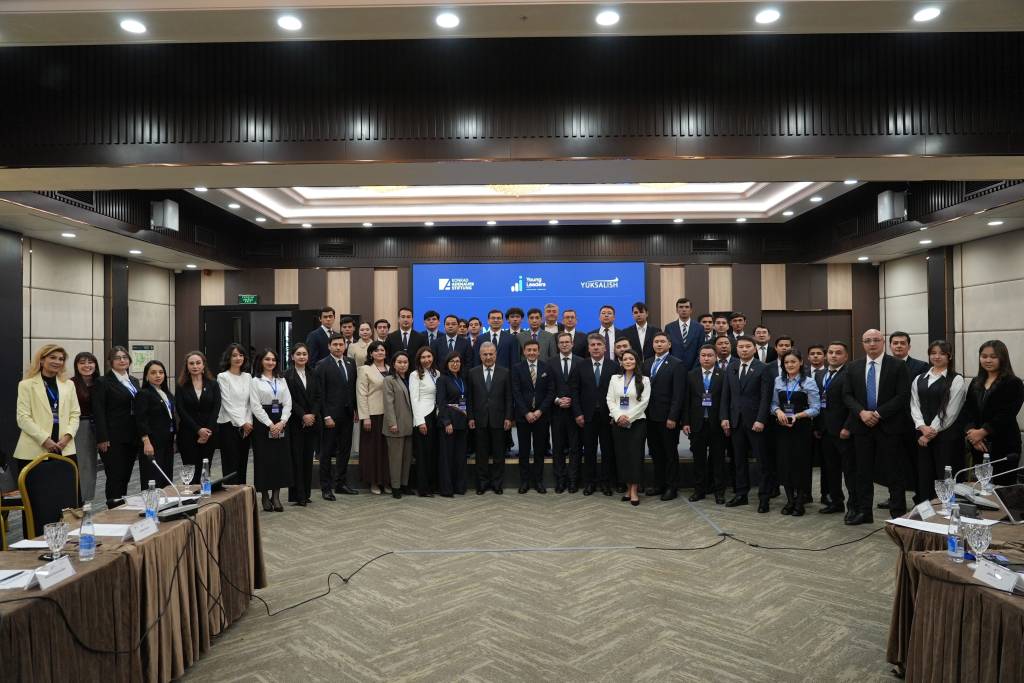
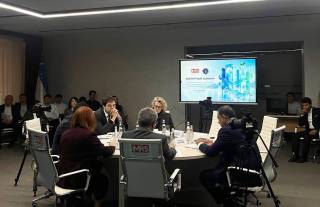
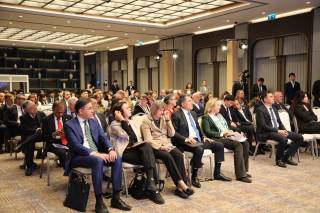
The regional program “Young Leaders of Central Asia and Azerbaijan”, organized by the nationwide movement “Yuksalish” in partnership with the Konrad Adenauer Foundation, was launched in Tashkent.
Running from 26 to 30 October in Tashkent and Bukhara, the program brought together more than 30 young representatives of government institutions, parliaments, research and analytical centers, and civil society organizations from six countries. The program aims to strengthen professional ties, facilitate the exchange of experience, and promote practical cooperation in priority areas of regional development.
Speaking at the opening ceremony, Akramjon Nematov, First Deputy Director of the Institute for Strategic and Regional Studies under the President of the Republic of Uzbekistan (ISRS), emphasized that regional dialogue is assuming strategic importance under current conditions, becoming one of the key instruments for ensuring sustainable development and stability and enabling a coordinated response to shared challenges.
According to him, the world is undergoing a period of profound and fundamental transformation affecting virtually every sphere of international relations. Rapid advances in technology, artificial intelligence and the digital economy are opening up unprecedented opportunities for growth and modernization. At the same time, geopolitical competition is intensifying, climate and demographic changes are accelerating, and challenges relating to water, energy and food security are becoming more acute.
What distinguishes the current phase is that these processes are unfolding simultaneously, overlapping and reinforcing one another’s effects. This creates new risks and uncertainty, while also expanding opportunities for states and regions that can adapt promptly.
At the same time, the transformation of the international order is accompanied by a decline in the effectiveness of certain traditional multilateral mechanisms, which are increasingly struggling to resolve crises and develop coordinated responses.
“Under these circumstances, cohesive regions capable of setting common priorities, reconciling interests and pooling their efforts to address shared challenges are becoming particularly important”, the ISRS representative noted.
It was emphasized that no country can effectively address the full range of contemporary cross-border challenges on its own or fully capitalize on emerging opportunities. Regional cooperation makes it possible to pool resources, knowledge and technology, turning shared challenges into drivers of joint development.
In this context, Mr. Nematov highlighted the qualitative changes that have taken place in Central Asia in recent years. Thanks to the political will and joint efforts of regional leaders, mutual trust has strengthened, several sensitive issues have been resolved, transport links have been restored, and trade, economic, investment, cultural, and humanitarian cooperation has expanded.
Regional cooperation is now entering a new phase, with greater emphasis on aligning national strategies, implementing joint projects and creating a common economic development space.
The outcomes of the Eighth Consultative Meeting of the Heads of State of Central Asia and Azerbaijan, held on 8 October in Avaza, provided an important illustration of this trend, opening up new prospects for cooperation in industry, transport, energy, digitalization, environmental protection and human capital development.
Azerbaijan’s participation broadens opportunities to strengthen connectivity between Central Asia, the Caspian region and the South Caucasus, develop new transport routes, and establish industrial cooperation and production linkages.
At the same time, as Mr. Nematov emphasized, making regional rapprochement sustainable and irreversible requires a solid intellectual, educational and societal foundation for cooperation.
Amid rapid technological change, states’ competitiveness increasingly depends on the quality of human capital, educational attainment, scientific capacity, and the ability to develop and implement innovations. This makes it particularly important to train a new generation of professionals equipped with up-to-date knowledge, competencies and international cooperation skills.
In this regard, the ISRS representative highlighted President of Uzbekistan Shavkat Mirziyoyev’s initiatives to expand youth and educational cooperation, including the Central Asian Youth Forum, regional innovation competitions, academic mobility, joint educational programs and collaborative research.
Particular attention was given to the Regional Atlas of In-Demand Professions and Skills, proposed by the President of Uzbekistan at the meeting in Avaza.
The initiative is intended to bring education systems into closer alignment with the emerging needs of national economies, particularly in industry, energy, transport, digital technologies, artificial intelligence and the green economy.
“We need to prepare young people not only for the jobs of today, but also for those that will shape the development of our economies over the next ten to twenty years”, Mr. Nematov stressed.
He identified creating a common space for education, science, knowledge and innovation across Central Asia and Azerbaijan as one of the strategic priorities for cooperation.
This involves expanding inter-university ties, joint educational and research programs, academic exchanges, networks of young researchers, and support for technology start-ups and entrepreneurship.
Such cooperation would help pool the intellectual resources of the participating countries to address shared challenges, ranging from digital transformation and industrial modernization to water conservation, climate adaptation and energy resilience.
Equally important is developing a shared information, cultural and humanitarian space, alongside expanded contacts among researchers, public officials, entrepreneurs and civil society representatives.
Mr. Nematov placed particular emphasis on fostering a shared sense of the region’s common future. According to him, the peoples of Central Asia and Azerbaijan are connected by centuries-old historical, cultural and spiritual ties. Today, however, it is equally important to recognize that each country’s well-being is increasingly linked to its neighbors’ stability and prosperity.
Regional identity does not imply abandoning national distinctiveness. Rather, it should be built on mutual respect, the preservation of cultural diversity and an understanding of shared long-term interests.
“It is important not only to remember our common past, but also to foster an awareness of our shared future”, the ISRS representative noted.
Regional exchange programs, which build trust through direct interaction, joint learning, and exposure to one another’s experiences, offer a practical way to translate these principles into action.
In particular, the program for young leaders visiting Uzbekistan includes visits to the chambers of the Oliy Majlis, government institutions, and IT Park, as well as opportunities to learn about public administration and local governance. In Bukhara, participants will explore experiences in industrial cooperation, textile manufacturing, entrepreneurship, and tourism, and meet with young members of parliament and business community representatives.
The program thus combines political and expert dialogue with exposure to practical approaches to governance, economic development and social policy, creating opportunities to establish new professional networks and develop joint initiatives.
In conclusion, Mr. Nematov emphasized that the strategic task is to transform the trust established among the countries into a sustainable system of cooperation grounded not only in political agreements, but also in strong ties among societies, scientific and educational institutions, and business communities.
“It is the younger generation that can make regional rapprochement truly sustainable and irreversible. The future of Central Asia and Azerbaijan is not something that awaits us. It is something we are building together today”, the First Deputy Director of ISRS concluded.
UzA