Akramjon Nematov: Productivity and efficiency as key conditions for transforming growth into long-term prosperity
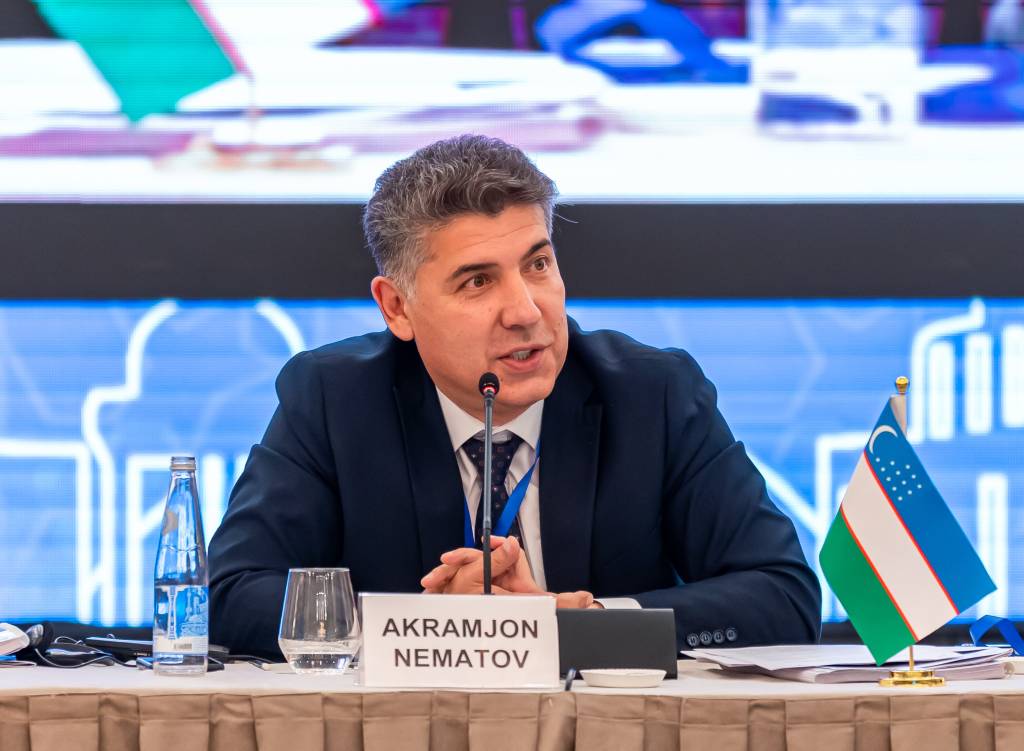
Akramjon Nematov, First Deputy Director of the Institute for Strategic and Regional Studies under the President of the Republic of Uzbekistan (ISRS), analyzing the results of the meeting chaired by the Head of State, emphasized that the outcomes of Uzbekistan’s socio-economic development for the first quarter of 2026 confirm that the country has not only adapted to global turbulence but also developed strong internal resilience to external shocks. According to him, the indicators demonstrate that the national economy has reached a qualitatively new level of dynamic development. Despite unprecedented volatility in global markets, disruptions in global supply chains, and mounting inflationary pressure, Uzbekistan recorded an impressive GDP growth of 8.7%, significantly exceeding the 6.8% recorded in the same period last year.
Such a significant breakthrough, the expert is convinced, has been a direct result of the well-considered and consistent strategy of the President of Uzbekistan Shavkat Mirziyoyev, aimed at the fundamental transformation of all spheres of public life. During this challenging period, the state assumed not merely the role of a regulator but that of an active catalyst for modernization: the industrial sector grew by 8%, compared with 4.1% in 2025, while the services sector, which has become the engine of renewal, surged by 16.1%. Against the backdrop of global instability, Uzbekistan, for the first time on an annual basis, managed to curb inflation, reducing it from 10.6% in March 2025 to 7.1% in the current period, thereby opening new horizons for long-term investment planning.
The country’s leadership has made a significant contribution, reflected in unprecedented financial support for entrepreneurship. In 2026, 140 trillion UZS are being allocated for these purposes through the banking system, 30% more than last year. Targeted assistance to mahallas in the first quarter alone amounted to 3.6 trillion UZS, a 25% increase, enabling local budgets to generate an additional 2.2 trillion UZS in revenue.
As the expert noted, during the critical analysis, the Head of State emphasized that the quantitative records achieved must serve as a foundation for significant structural improvements in the economy, necessitating a transition to an advanced, innovative development model. One of the central tasks identified is a sharp increase in labor productivity, which should rise by at least 10-15% through the integration of modern technologies and management standards. The state aims to fully move away from the raw-materials-exporter model toward the creation of high-tech regional value chains, engaging more than 40 global brands as strategic partners.
Particular attention is being paid to the efficiency of project management. With a record volume of foreign investment in the quarter totaling $13.7 billion, 1.6 times higher than last year, the focus is shifting toward precise monitoring of returns. The President has decided to elevate the economy to a new international level: as early as next month, 30% of state assets worth $2.4 billion will be listed on international stock markets. This has become possible due to the transfer of management of 13 strategic enterprises of the National Investment Fund to the reputable company Franklin Templeton. At the same time, the state is accelerating reform of the energy framework, allocating $50 million for concessional lending to support businesses in transitioning to renewable energy sources, and creating a digital logistics infrastructure capable of increasing exports through electronic platforms, raising the target to $700 million.
At the same time, expert analysis shows that external challenges are not only persisting but also intensifying significantly: the continued rise in global energy prices and the increasing complexity of global logistics are creating tangible pressure on domestic production costs and competitiveness.
Under current conditions, activities in the external sphere must be maximally synchronized with domestic reforms. This implies a focus on facilitating technology transfer, attracting smart capital into artificial intelligence, and diversifying transport corridors to strengthen Uzbekistan’s status as a central link in regional connectivity. The steady acceleration of exports and the systematic removal of barriers for high-value-added products today require deep coordination between the state and the private sector, as well as the mobilization of all available resources to achieve qualitative results, the expert believes.
To maintain current high growth rates and reach new milestones, it is necessary, as the President emphasized, to radically increase the flexibility of managerial decision-making and execution discipline at the local level. It is important to transform quantitative growth into the structural quality of the economy, to ensure development through a multiple increase in productivity and the creation of high added value in key sectors.
The balanced and proactive foreign policy of the country’s leader creates the necessary zone of stability at the regional level. However, it is precisely the internal mobilization of the public administration, an uncompromising focus on innovation, and the efficiency of management that are today the decisive conditions for enabling Uzbekistan to successfully transform global pressure into new “windows of opportunity” for long-term national prosperity.
UzA