Uzbekistan and Azerbaijan strengthen strategic partnership
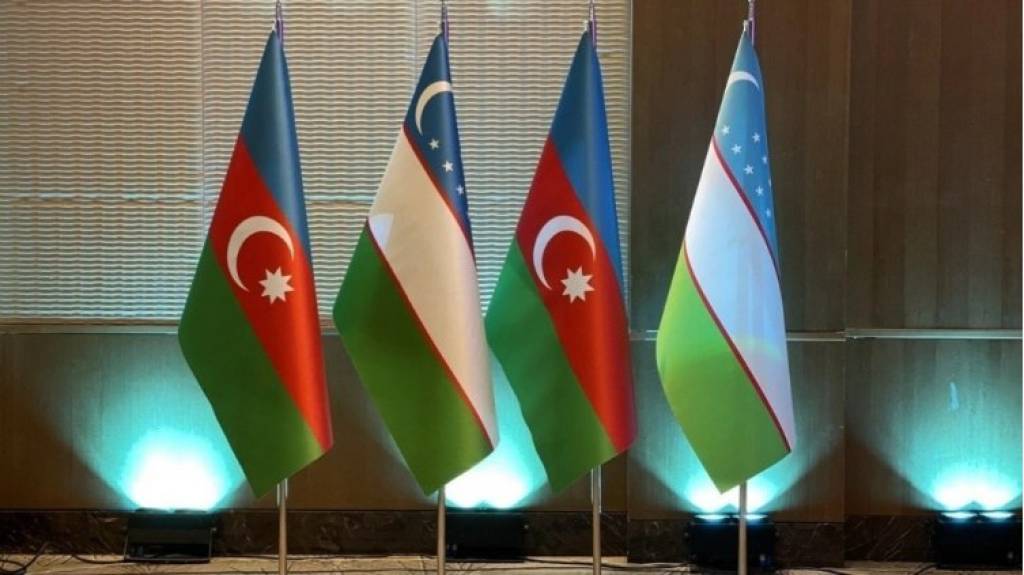
Recently, cooperation between Uzbekistan and Azerbaijan has become more strategic as new transport and energy infrastructure projects expand across Eurasia.
Political scientist Sayfiddin Jurayev notes that as global logistics systems transform, cooperation among these countries is reaching a qualitatively new level.
Uzbekistan seeks to become a production and transit hub for the region, while Azerbaijan is strengthening its position as a key logistics hub for access to the European market via the Caspian Sea.
The policy of openness initiated by the President of Uzbekistan Shavkat Mirziyoyev has contributed to the intensification of ties with Baku. Cooperation, which previously had a declarative character, has moved into a practical dimension.
High-level visits have become routine. A treaty on allied relations and several major agreements in key areas of the economy and transportation have been signed.
Several key factors drive the strengthening of relations between Uzbekistan and Azerbaijan.
First, civilizational closeness. A shared language, culture, historical memory, and Turkic roots create a foundation for relations that go beyond pragmatic interests. This helps foster an atmosphere of mutual trust.
Second, a similar approach to foreign policy. Both states pursue a multi-vector policy, seek independence from external influence, and shape a foreign economic strategy focused on national interests.
In recent years, there has been a significant increase in trade turnover between the countries. In 2017, the volume of mutual trade was less than $100 million, and this figure has now approached $500 million. The parties have set a goal of increasing trade to $1 billion in the coming years.
Uzbekistan exports agricultural products and goods from the textile and chemical industries to Azerbaijan, while Azerbaijan supplies petrochemical products, construction materials, and energy sector goods.
Relations between the two countries are also developing within the framework of the Organization of Turkic States, which has gained importance in recent years as a political and economic structure. On this platform, Tashkent and Baku are actively implementing joint projects in transport integration, energy security, the digital economy, and humanitarian cooperation.
Cultural ties strengthen political interaction. In this context, student exchanges, joint educational programs, and cultural events play a special role.
According to experts, further cooperation between Uzbekistan and Azerbaijan will focus on three key areas. The first is the development of transport corridors and the strengthening of the two countries’ positions on the new international trade route connecting China and Europe. The second is green energy, with plans to supply renewable energy from Central Asia to Europe via the Caspian Sea, turning Tashkent and Baku into strategic partners in the energy sector. The third is digital integration, with a high likelihood of creating a new technological axis through joint efforts in cybersecurity, e-government, and IT infrastructure.
Musulmon Ziyo, UzA