The Baku Forum opens wide opportunities for Uzbekistan
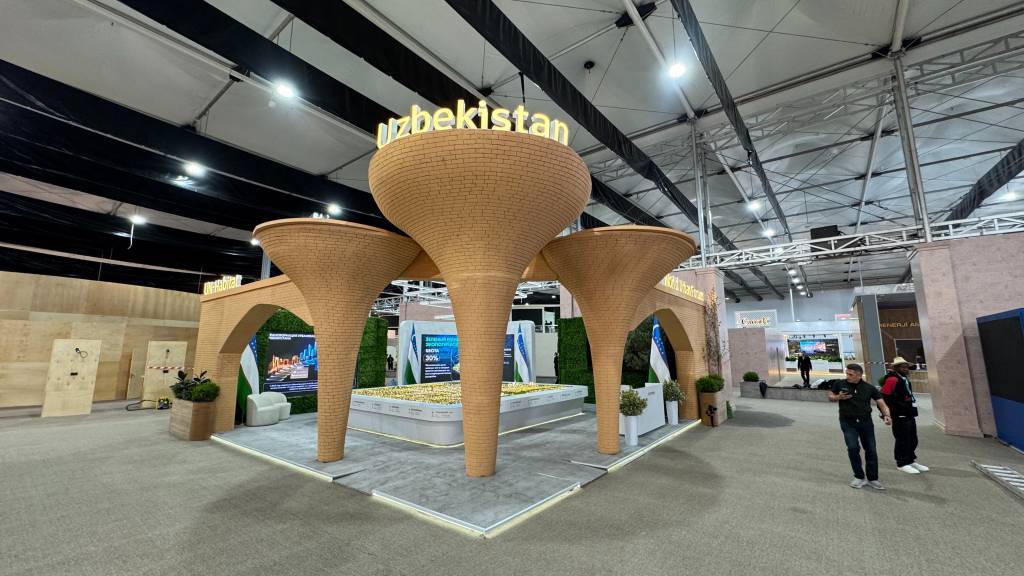
The Thirteenth session of the World Urban Forum (WUF13) was held in Baku under the auspices of UN-Habitat.
The Uzbekistan delegation also took part in this event.
In an interview with Artyom Kreskas, Head of Department at the National Committee for the Sustainable Development of Urbanization and the Housing Market of Uzbekistan, we discussed the negotiations at the conference, the signed international documents, and their significance for urban development in Uzbekistan.
– Please tell us about our participation in this prestigious event.
– This time, the forum recorded one of the highest figures in its history in terms of scale and number of participants, – says Mr. Kreskas. – It was attended by more than 35 thousand representatives from 180 countries. The event itself was organized on the grounds of the Baku Olympic Stadium and the adjacent area, totaling 53 hectares, where modern meeting halls, media centers, exhibition grounds, and transport terminals were built. It was on such a huge global stage that the national pavilion of Uzbekistan was organized for the first time in history as part of the Urban Expo Exhibition. Our exposition stood out among all the pavilions. The green concept of the event has become a symbol of Uzbekistan’s commitment to combating global climate change, the environmental agenda, and the principles of sustainable urban development.
From the first days of the forum, the main focus was on creating platforms for communication and dialogue. We consistently provided detailed information on the reforms implemented in our country at the President’s initiative, particularly the significant expansion of green zones in cities, the systematic coordination of urbanization processes, the provision of affordable, high-quality housing to the population, and the introduction of modern concepts of “smart” and “15-minute” cities. In addition, we exchanged views with foreign experts on current issues.
– Within the forum’s framework, a Memorandum of Understanding on urban planning was signed with the Organization of Turkic States (OTS). What is the significance of this document? How did the OTS leadership assess Uzbekistan’s projects?
– Elevating cooperation with the Organization of Turkic States to a new level has become one of the most important historical achievements of the forum for us. The First Deputy Chairman of the National Committee for the Sustainable Development of Urbanization and the Housing Market of the Republic of Uzbekistan participated in a high-level dialogue on urban planning.
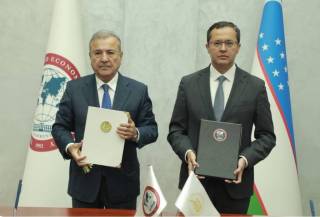
A Memorandum of Understanding on joint urban planning was signed by the member states of the structure. This document will systematically facilitate a mutual exchange of experience and specialists in modern architecture, architectural planning, and urban infrastructure development in the Turkic-speaking countries.
Kubanychbek Omuraliev, Secretary General of the Organization of Turkic States, highly appreciated the reforms carried out in Uzbekistan in the field of urban planning, especially the scale of the megaproject “New Tashkent” and the green solutions presented at the exhibition. He emphasized the importance of joint development in urbanization and urban planning, and of creating an ecologically safe urban environment within the framework of the OTS.
– What issues were the focus of our delegation’s meetings with the leadership of UN-Habitat and representatives of the World Bank? How will the international experience gained from these dialogues be applied to the “New Uzbekistan” and “New Tashkent” projects?
– Representatives of the National Committee for Sustainable Development of Urbanization and the Housing Market of Uzbekistan took part in an important session featuring UN Under-Secretary-General and Executive Director of UN-Habitat Anacláudia Rossbach. An in-depth analysis of global challenges was conducted: the impact of rapid urbanization on city economies and climates, the provision of affordable, high-quality housing for the world’s population, and the effects of global migration on these factors. A productive bilateral meeting was also held with the World Bank Group’s Global Director, Ming Zhang, and Vice President for Infrastructure, Valérie Levkov. Views were exchanged on issues of urbanization, housing policy, and the sustainable development of regions in our country. A detailed presentation on the megaproject “New Tashkent” and the concept of building New Uzbekistan arrays in the regions was delivered to foreign colleagues. Following the meeting, the parties agreed to strengthen partnership relations.
During the forum, the most advanced international practices for creating a green infrastructure in the face of climate change, energy-efficient housing policy, modern transport systems, and a digitalized smart city were presented. WUF13 has opened up huge opportunities for us to explore and integrate these modern approaches into our projects, widely implement international standards in large-scale construction in our country, and establish new investment partnerships with leading financial institutions.
Interviewed by A.Mamatov, UzA