National Cultural Centers: A Hub of Harmony and Solidarity
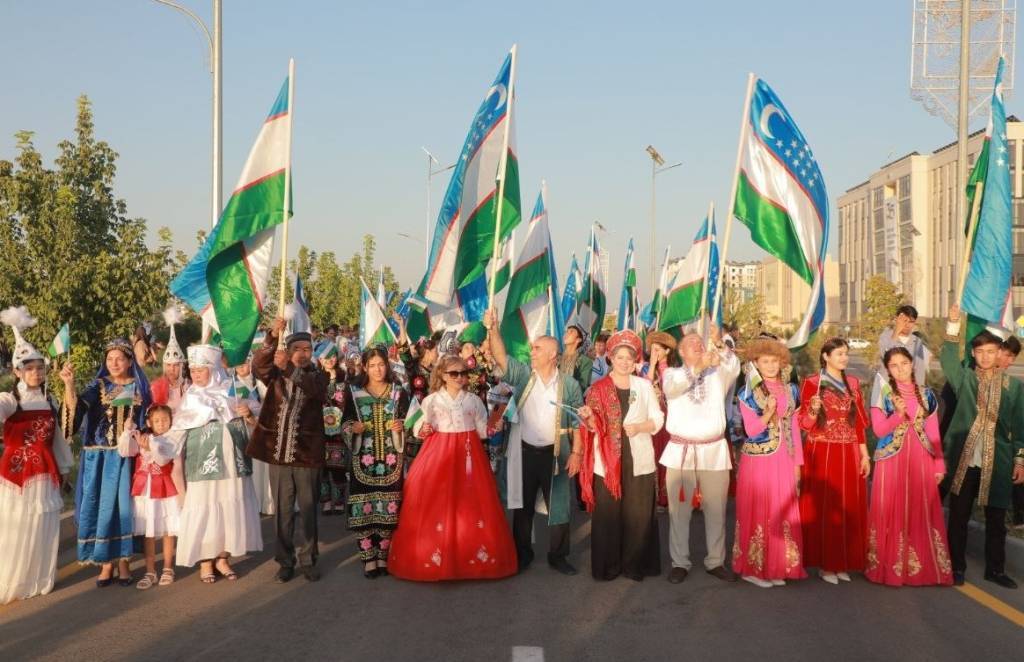
Kashkadarya holds a special place as an oasis where, since ancient times, representatives of various nationalities, languages, and faiths have lived and worked side by side, forming a unique cultural environment. On this land, interethnic harmony is manifested in daily life through traditions such as neighborly relations, mutual respect, compassion, and the joint celebration of holidays and ceremonies.
In truth, a nation's greatest wealth is the ability of representatives of different cultures to live together in peace and harmony on the same land, to respect each other's values, and to be united in pursuit of common goals.
National cultural centers are a vital public institution for preserving this harmony, instilling it in the mindset of the new generation, and turning it into a catalyst for collective development. They are, above all, a social space that preserves cultural memory, connects generations, and strengthens dialogue and mutual understanding between representatives of different nationalities.
Legal Guarantees and Social Trust
Ensuring interethnic harmony and religious tolerance has been designated as one of the priority areas of state policy in our country.
Today, representatives of more than 130 nations and ethnicities and 16 religious confessions live in peace and harmony in Uzbekistan. There are 157 national cultural centers and 46 friendship societies operating in the country. Education is provided in 7 languages, television and radio programs are broadcast in 12 languages, and newspapers and magazines are published in 14 languages.
The adoption of 10 regulatory legal acts in the field of interethnic relations in recent years also indicates the consistent strengthening of the legal and institutional foundations in this area.
Kashkadarya: From Culture to Unity
Today, Arab, Tajik, Russian, Tatar-Bashkir, and Turkmen national cultural centers operate in the Kashkadarya region. Each of them contributes to preserving and widely promoting their native language, literature, art, national attire, and traditions.
It is noteworthy that their activities are not confined to a specific ethnic group. The joint participation of various national cultural centers in Navruz, Independence Day, the Day of Peoples' Friendship, and other public events demonstrates that the cultural diversity of Kashkadarya is harmonizing within a single social space.
The folklore and artistic groups associated with the centers express national memory through the language of the stage. The participation of ensembles such as "Koyash," "Gunesh," "Al-Jiynat," and "Sudarushka" in regional and national events not only presents examples of national art to the general public but also serves to pass them on to future generations.
In this process, the activities of the Kashkadarya Arab National Cultural Center integrate various approaches to preserving national heritage. A traditional Arab carpet-weaving workshop, Arabic language courses, and an ethnographic museum have been established in Jeynov. Documentary films such as "From the Depths of Centuries," "The People of Jeynov," and "Arabs of Uzbekistan" have been produced, and ancient songs and dances have been staged.
Furthermore, the allocation of state grants by the Public Fund for the Support of Civil Society Institutions under the Oliy Majlis to the Arab and Tatar-Bashkir national cultural centers for the "Ensuring harmony between different nations and ethnicities, developing national cultural centers and friendship societies" initiative is a clear expression of the practical attention the state pays to the comprehensive support of this sphere. These projects serve to expand the organizational, material, and technical capacities of the national cultural centers, implement new cultural and educational projects, nurture youth in the spirit of interethnic harmony and tolerance, and further strengthen civic solidarity in society.
Cultural Dialogue: A Factor of Social Trust
Cooperation among national cultural centers is also important; joint concerts, literary and artistic evenings, and exhibitions of national cuisine and handicrafts held in the region with their participation bring different cultures closer together.
In particular, the centers' participation in charity, public improvement works, environmental campaigns, and social projects unifies culture and civic responsibility. In noble initiatives such as visiting families in need, beautifying mahallas, or protecting nature, one's humanity and civic position take precedence.
In this respect, the cooperation between national cultural centers is an important factor that not only serves to preserve and promote the cultural heritage of different nations but also strengthens mutual trust, compassion, and civic solidarity in society. Through joint cultural events, philanthropy, and social initiatives, representatives of different nationalities gain a better understanding of each other and unite around common values.
A Focus on Youth
Today, one of the most important tasks in ensuring interethnic harmony is to instill these values in the minds of the younger generation. Indeed, it is not enough to remember tolerance only on holidays. It must become a way of life within the family, school, mahalla, higher education institutions, and the community.
Native language and folklore clubs, reading nights, creative meetings, and excursions to museums and historical sites strengthen young people's sense of pride in their national heritage. Joint projects with representatives of other nationalities cultivate their ability to properly understand and respect cultural differences and to cooperate toward a common goal.
In this regard, the effective use of modern information technologies is also important. The 2026 broadcast of the television program "Under One Sky," dedicated to the activities of the Tatar-Bashkir national cultural center in Kashkadarya region, served as a good example of conveying the life of national centers to the general public.
Considering that today's younger generation primarily gets its information from the digital environment, strengthening the activities of national cultural centers on social networks is a pressing task. By creating short videos, podcasts, interviews, digital exhibitions, and electronic archives of national crafts and folklore, cultural heritage can be delivered to young people in a format they understand and find interesting.
To preserve values is to pass them on to the future
Sometimes, a sincere conversation around a shared table, a variety of songs performed on a single stage, or a charitable initiative carried out for a common purpose has a stronger impact than hundreds of official slogans. This is because people not only hear about harmony but also experience it in practice.
The opportunities created to support national cultural centers also serve to ensure the sustainability of this process. Since 2021, state subsidies have been allocated to them, and conditions have been created for them to operate free of charge in "Friendship Houses" and their respective buildings.
From this perspective, recording examples of oral history, digitizing rare songs and rituals, cataloging national costumes and handicrafts, and presenting them to the public electronically in national languages alongside Uzbek are important tasks for the future.
Forming an annual joint program among the region's national cultural centers would also yield good results. Specifically, within the framework of cultural weeks, it is possible to combine language and literature days, family handicraft exhibitions, student academic dialogues, national food festivals, and charity events into a single program.
In this sense, the current role of national cultural centers should not be limited to merely preserving the heritage of the past. They must serve as a living bridge connecting history and modernity, national identity and universal civic values, the experience of the older generation, and the initiatives of youth. This is because every national culture is enriched through dialogue with other cultures, and values are recreated in people's relationships with one another. Today, national cultural centers are fulfilling an important social function as places where these values are put into practice.
Rustam ANNAEV,
Chief Specialist, Kashkadarya regional division of the Center for Analysis of Democratic Processes.
UzA