ISRS and BISR explored new areas of Uzbekistan – Belarus cooperation
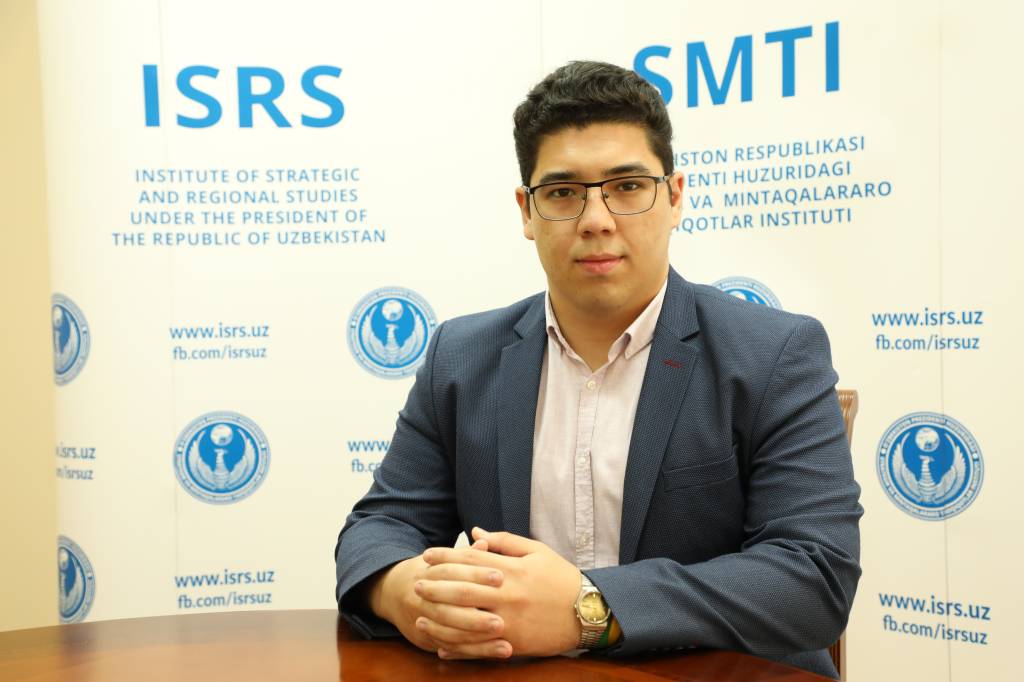
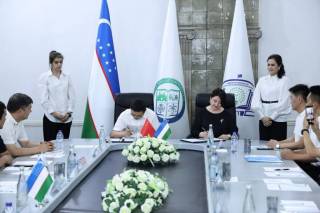
On June 29, an international roundtable titled “Belarus and Uzbekistan: New Avenues for Cooperation” was held in Minsk.
The event was co-organized by the Belarusian Institute of Strategic Research (BISR) and the Institute for Strategic and Regional Studies under the President of the Republic of Uzbekistan (ISRS).
The event brought together the heads of the diplomatic missions of Uzbekistan and Belarus, representatives of government ministries and agencies, state-owned enterprises, and members of the expert community.
The Belarusian delegation included Minister of Economy Yuri Chebotar, executives and experts from the state-owned enterprises National Export Support Centre of the Republic of Belarus and Beltamozhservice, as well as representatives of the International Business Alliance (IBA Group), the Transtekhnika National Transport Research Institute, and the foreign enterprise IBA IT Park.
The Uzbekistan delegation comprised officials and experts from the Institute for Strategic and Regional Studies under the President of the Republic of Uzbekistan (ISRS), the Institute of Macroeconomic and Regional Studies under the Cabinet of Ministers of the Republic of Uzbekistan, the Centre for the Study of Transport and Logistics Development under the Ministry of Transport of the Republic of Uzbekistan, and the Agency for Strategic Development and Reforms under the President of the Republic of Uzbekistan.
During the discussion, participants reviewed the current state and prospects of cooperation between Uzbekistan and Belarus. Particular attention was given to expanding bilateral trade, strengthening industrial and agro-industrial cooperation, enhancing transport and logistics connectivity, and promoting the adoption of new technologies. Special emphasis was also placed on identifying practical mechanisms to expand bilateral cooperation and on implementing joint initiatives of mutual interest.
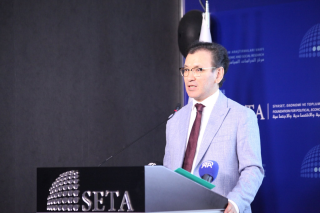
Opening the roundtable, Oleg Makarov, Director of the Belarusian Institute of Strategic Research, praised the transformations taking place in Uzbekistan in recent years. He noted that the country had significantly intensified its international engagement, become a venue for numerous high-level and summit-level international events, and considerably strengthened its standing as a regional actor.
In his view, Belarus and Uzbekistan have built a relationship founded on trust, openness, and mutual respect. “Today, there are virtually no barriers between Belarus and Uzbekistan”, he said.
Ambassador Extraordinary and Plenipotentiary of the Republic of Belarus to the Republic of Uzbekistan Alexander Ogorodnikov reaffirmed that relations between Belarus and Uzbekistan continue to develop stably and consistently. According to the Ambassador, the two countries have effectively established a strategic partnership that is being steadily reinforced through new projects and initiatives.
Turning to concrete achievements, the Ambassador highlighted the positive momentum in bilateral trade and economic cooperation. He expressed confidence that by the end of the current year, Belarus and Uzbekistan would not only reach but also surpass $1 billion in bilateral trade. “The next strategic objective should be to increase bilateral trade to $2 billion. Ambitious as this goal may be, both sides remain committed to identifying new growth opportunities and expanding cooperation”, he stressed.
Speaking about prospects, Alexander Ogorodnikov identified industrial and agro-industrial cooperation as particularly promising. In his assessment, the localization of Belarusian manufacturing facilities in Uzbekistan offers considerable potential. Leveraging the country’s manufacturing capacity and expanding industrial partnerships would provide a solid foundation for entering third-country markets jointly.
The Ambassador also underscored the importance of transport and logistics cooperation, noting that the lack of direct access to the sea makes both Belarus and Uzbekistan particularly interested in developing efficient transport corridors. He expressed confidence that, amid the ongoing transformation of global trade routes, modern logistics infrastructure would be a key driver of deeper economic partnership.
Belarusian Minister of Economy Yuri Chebotar, in turn, commended the dynamic development of bilateral relations, noting that over the past decade, bilateral trade in goods has increased more than thirteenfold and trade in services has grown more than thirtyfold. “Today, Uzbekistan ranks third among Belarus’s trading partners for both goods and services and second among CIS countries in terms of accumulated Belarusian investment”, he stated.
The Minister identified industrial cooperation as a top priority. He stated that Belarus stands ready to invest in joint projects, including those that enable comprehensive technology transfer and create high-value jobs.
In addition, Yuri Chebotar highlighted Belarus’s interest in expanding cooperation in technology, industrial automation, tourism, and services.
In conclusion, the participants reaffirmed their mutual commitment to deepen bilateral cooperation and underscored the importance of maintaining a regular expert dialogue as an effective mechanism for developing practical recommendations that can strengthen relations between Uzbekistan and Belarus.
UzA