Green agenda for Central Asia: environmental cooperation as a guarantee of stability
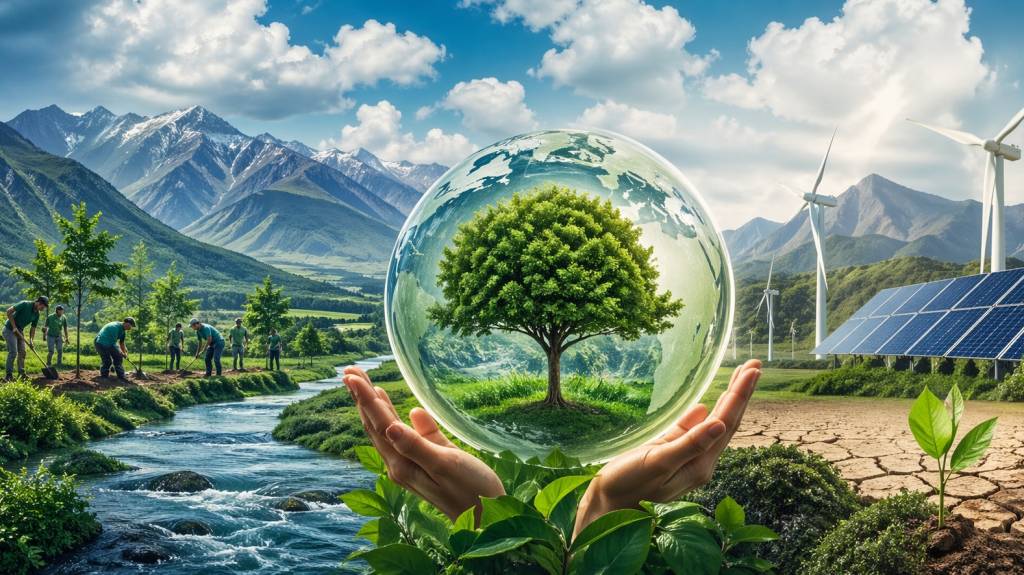
Environmental issues have become one of the most pressing challenges for all humanity, have taken on a global character, and affect the development of all countries.
Climate change, environmental pollution, and the depletion of water resources pose a serious threat not only to environmental stability but also to geopolitical and geoeconomic stability. In this regard, the need for international initiatives and dialogue platforms to address these problems is growing.
As noted by Adhamjon Mamajonov, Director of the Scientific and Analytical Center for the Study of the Development of Eastern Countries at the Tashkent State University of Oriental Studies and Doctor of Philosophy in Political Science, amid intensifying climate challenges, Uzbekistan is consistently pursuing a foreign policy focused on environmental protection, the rational use of natural resources, and the expansion of international cooperation. The country acts not only as an observer but also as an active participant, putting forward concrete proposals and practical initiatives. In particular, the Regional Ecological Summit in Astana and the meeting of the Council of Heads of State – founders of the International Fund for Saving the Aral Sea – have become practical reflections of these efforts. The participation of the President of Uzbekistan, Shavkat Mirziyoyev, in these events confirmed the country’s authority on the international stage and the consistency of its constructive foreign policy in this area.
In his address, the Head of State endorsed the summit’s theme, “Shared Vision for a Sustainable Future”, and presented specific proposals. The President of Uzbekistan also emphasized that interconnected environmental risks can be addressed only through joint efforts.
The discussions focused on ensuring sustainable development in Central Asia and on jointly addressing environmental and water-related challenges.
President Shavkat Mirziyoyev particularly noted that the erosion of global environmental solidarity is a matter of deep concern. Resources do not back declarations and appeals. Countries that have contributed the least to global climate change are once again left to face its consequences alone. In this context, the fact that the states of Central Asia have elevated environmental protection to a priority area of regional cooperation is particularly important. An important role in this process is played by the regional climate adaptation strategy and the “Green Agenda for Central Asia” program.
Within the forum’s framework, an initiative was proposed to, in coordination with UN structures, adopt the “Environmental Solidarity of Central Asia” declaration and an Action Program through 2030. These documents are expected to mark a new stage in addressing the region’s environmental challenges.
The Head of State also noted the systemic work underway in Uzbekistan to ensure environmental sustainability. In particular, the planting of trees and shrubs within the framework of the nationwide “Yashil Makon” project, as well as the creation of green belts on the dried bed of the Aral Sea.
It was also noted that Uzbekistan has fulfilled its commitments to reduce harmful emissions by 35% under the Paris Agreement ahead of schedule and has set a goal to double this figure by 2035. An important development was the adoption by the UN General Assembly, at Uzbekistan’s initiative, of the Resolution “Decade of Action on Afforestation and Reforestation”.
During the summit, the President of Uzbekistan put forward several initiatives. In particular, it was proposed to establish an interstate consortium, “Clean Air of Central Asia”, in response to deteriorating air quality, and to grant regional status to the Center for Combating Desertification, Drought Prevention, and Early Warning of Sand and Dust Storms, which operates in Uzbekistan under the Green University.
To accelerate technological modernization, it was proposed to establish a “Green Trade Corridor of Central Asia” and to create a unified regional Investment Portfolio of Climate Projects for Central Asia. In addition, initiatives were proposed to develop a Unified Regional Atlas of Environmental Changes in Central Asia and a “Red Data Book of Central Asia” to conserve biodiversity. Particular attention was given to expanding youth participation in these processes. It was proposed to hold the World Youth Climate Forum in Uzbekistan in 2027, which will help ensure the active involvement of the younger generation in advancing the environmental agenda.
It was also noted that this year, Samarkand will host the eighth Assembly of the Global Environment Facility and, at the end of September, the World Forum on Water Conservation. These events will undoubtedly strengthen environmental cooperation in the region.
In conclusion to his address, the President called on the summit participants to actively participate in the upcoming international events. It was noted that the full implementation of the adopted decisions and documents will not only enable adaptation to environmental challenges but also make them an important factor in technological renewal, economic growth, and social stability.
Musulmon Ziyo, UzA