Eurasian technology meridian: shaping the architecture of the special strategic partnership between Uzbekistan and the Republic of Korea
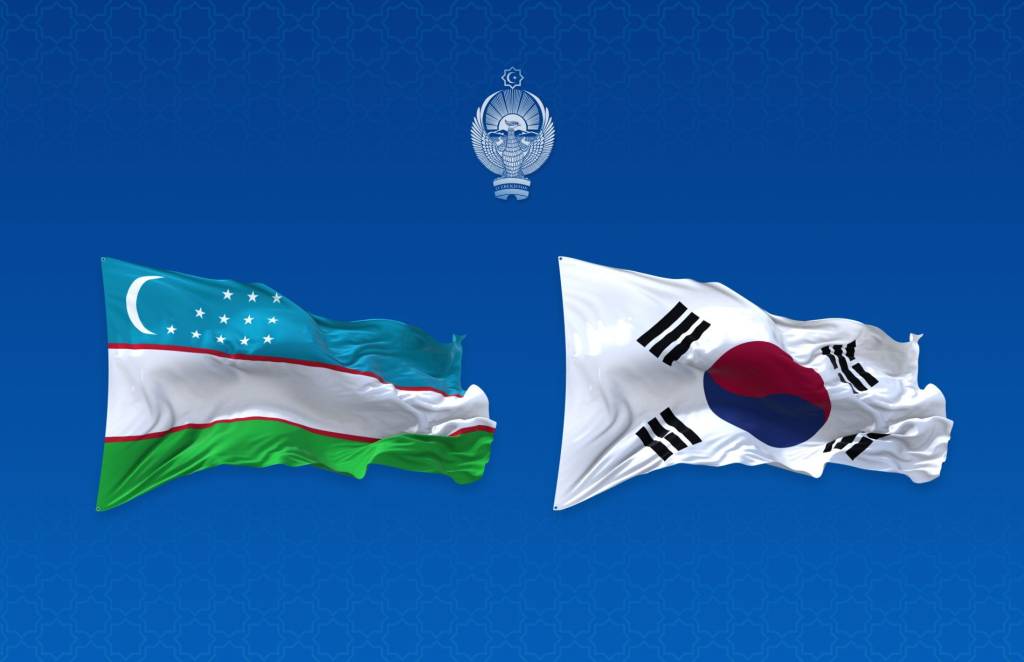
Historical parallels between the Balkan and Central Asian crossroads of civilizations show a key pattern: transit hubs gain global influence only when they turn their geographical position into industrial and technological strength. In today’s Eurasian geoeconomic landscape, a country’s importance relies less on resource rents and more on its capacity to participate in high-tech value chains and attract focused investments.
This is why rising competition among economic superpowers for control of advanced microchip manufacturing has become a national security issue for middle powers. The United States aims to focus AI infrastructure development within alliances of friendly countries, while Taiwan’s TSMC, U.S.-based Intel, and South Korea’s Samsung effectively share dominance in cutting-edge components.
The Republic of Uzbekistan, adopting a pragmatic and multifaceted foreign policy, considers the Republic of Korea a crucial strategic partner in Asia. Their bilateral relations have been upgraded to a special strategic partnership and include plans to develop a dedicated program of technological and industrial collaboration.
The state visit of the President of Uzbekistan to Seoul and the inaugural Central Asia – Republic of Korea Summit, scheduled for 16-17 September 2026, will signify a shift from a simple export-import trade approach to a focus on deepening investment and technological collaboration. Seoul, facing systemic pressures in its traditional markets, including potential U.S. tariffs on automobile imports that could impact up to 65 percent of Hyundai-Kia exports to the U.S., is keen to establish dependable industrial bases across Eurasia. Meanwhile, Uzbekistan is fostering a favorable legal and investment climate for technology transfer by resuming WTO accession talks in 2020 and advancing preparations for free trade agreements with the European Union and the Republic of Korea.
Macroeconomic environment: redefining trade balance and FDI structure
Uzbekistan’s foreign economic strategy is experiencing a significant structural shift. In 2024, the country’s foreign trade turnover grew by 3.8%, nearing $66 billion. Exports rose 8.4%, while imports rose only 0.8%, reducing the trade deficit to $12 billion. Gold exports amounted to $7.48 billion for the year, a decrease of 8.3% compared to the previous year, including $854 million from December sales. Although gold remains a stabilizing factor, the focus is clearly shifting toward diversifying beyond resource dependence.
The reorganization of Eurasian logistics is evident in trade flows: trade with Russia rose 14.5% to $11.63 billion, while trade with China fell 9.7% to $12.48 billion. While South Korea has traditionally ranked among the top five trading partners, its focus is shifting from expanding trade to localization and investment. Seoul reports that its investments in Uzbekistan have already surpassed $8 billion, and bilateral trade has increased by 12% since early 2026. Additionally, Seoul believes it can grow the joint project portfolio from $2 billion to $20 billion.
The level of integration is also evident in the corporate landscape. By July 2025, Uzbekistan hosted 16,609 enterprises with foreign participation. By early 2026, this number rose to 18,100, up 3,293 companies, or 22%, in a year. The Republic of Korea ranked among the top five investors, with 693 operating enterprises, following China with 5,044, Russia with 3,181, Türkiye with 2,137, and Kazakhstan with 1,212. To facilitate market entry for investors, the Ministry of Investment, Industry and Trade plans to cut the resident status issuance time at free economic zones from 10 days plus 15 days for land auctions to just two days. Additionally, a unified electronic platform for FEZs is set to launch. Currently, around 1,400 projects are underway across 47 zones. Major sources of investment include China ($4 billion), Russia ($300 million), and Türkiye ($157 million), with steady growth from the UAE, Saudi Arabia, the UK, Korea, and India.
A clear indicator of growing industrial collaboration was the Supplier Board Workshop held in South Korea by Uzbekistan’s ADM Global. Over 80 representatives from the automotive components sector discussed expanding localization and joint investments. Simultaneously, the light industry sector is also consolidating: the Competition Promotion and Consumer Protection Committee approved Zarofattex, a Chirchiq-based enterprise, joining the Uztex Group. The majority owner, with about 90 percent, is Kim Jong, a South Korean citizen. Uzbekistan is implementing a Leniency Programme to create a more mature competitive environment and reduce liability for cartel agreements, inspired by practices of South Korea, the European Union, and the UK. Additionally, high-value intellectual service exports are taking on a Korean influence: the founders of Archiquad, an architectural firm, who completed master’s degrees in South Korea, grew the company’s annual revenue from $300,000 to $1 million by working on commercial projects for clients like Porsche, Huawei, Samsung, and UNDP.
Automotive industry: shifting from importing finished goods to localized manufacturing
The automotive market exemplifies a clear shift in bilateral cooperation. In 2024, Uzbekistan imported 74,700 passenger cars valued at $1.28 billion, with over 80% originating from China and the Republic of Korea maintaining second place. However, during January-February 2025, imports plummeted to 4,439 vehicles, a 3.99-fold decrease in volume, and the value dropped to $75.9 million, more than five times lower. Imports from Korea declined 3.5-fold to 1,191 vehicles. In the first half of 2025, Uzbekistan imported 24,300 passenger cars worth $422.1 million. The Republic of Korea’s share was 8.34%, and electric vehicles made up over half of all imports. Notably, in June, 4,567 of the 5,968 imported vehicles were electric, accounting for over 76% of that month’s imports.
The reduction in direct imports of finished Korean vehicles is balanced by relocating production capacity and developing a skilled workforce for Hyundai and KIA. Starting in 2026, KIA Auto will introduce automotive body-painting training workshops in Uzbekistan – the first such program outside South Korea. These three-month courses will cover maintenance techniques, Korean language training up to TOPIK Level 1, and workplace culture. Korean factories will hire graduates through E-7 skilled-worker visas, as foreign workers have had access to automotive body-painting jobs only since 2025. As a result, the automotive sector is shifting from a one-way import model to a two-way system: technology is being transferred to Uzbekistan, while skilled workers are entering South Korea’s production network.
Energy security and the green transition: Uzbekistan as a platform for global leaders in renewable energy
The industrial sector’s sustainable operation depends on energy sovereignty. Uzbekistan is establishing a unique alliance that could turn the country into a major continental hub for renewable energy power generation.
A significant milestone was reached when, on August 25, 2026, in Tashkent, Saudi energy giant ACWA Power and South Korea’s state-owned Korea Western Power Co., Ltd. (KOWEPO), a subsidiary of KEPCO, signed a Memorandum of Understanding. This document creates a framework for co-developing renewable energy projects, battery energy storage systems (BESS), and associated grid infrastructure.
The partnership’s potential is substantial. Since 2019, ACWA Power has executed 19 projects in Uzbekistan, totaling over 10 GW of capacity and involving up to $15 billion in investments. These projects include solar and wind power, large-scale battery storage systems like the 334 MW/501 MWh BESS, and green hydrogen production. KOWEPO’s experience implementing over 3.5 GW of renewable and gas-fired projects internationally, especially in the Middle East, combines Saudi investment with South Korean grid-modernization expertise. South Korean financial institutions partnering with ACWA Power also help secure concessional financing, supporting the green transition.
The Republic of Korea’s conventional energy expertise is also sought after. It has been shortlisted as a potential reactor supplier for the upcoming nuclear power plant in Kazakhstan, competing with Russia, China, and France. This positioning helps turn the region into a hub for ongoing technological collaboration.
The agricultural aspect of the green transition is equally vital. A survey by the Center for Economic Research and Reforms (CERR) found that 75% of Uzbekistan’s 932 farms face water supply issues: 36% deal with water queues, 35% incur high pump-maintenance costs, and 31% receive inadequate water quotas. To address this, efforts include developing agrivoltaics, combining solar panels with agricultural land to produce electricity and create microclimates for crops, as well as expanding agricultural insurance. Additionally, the country is studying South Korea’s agri-food sector, including participation in the K-Ricebelt project for seed exchange and converting cotton waste into bioethanol.
Human capital: diversifying labor migration and transferring industrial skills
The structure of labor migration and cross-border remittances is a key indicator of the foreign economic model’s development. According to the Central Bank of Uzbekistan, in 2024, remittance inflows from abroad rose by 30 percent to a historic high of $14.8 billion. Transfers from the UK doubled, those from the United States increased by 35 percent, and inflows from South Korea grew 1.5 times. In the first half of 2025, remittances hit $8.2 billion, up 27 percent, rising from $1.06 billion in January to $1.78 billion in June. Russia contributed 78 percent of total inflows, while the shares from Kazakhstan, the United States, South Korea, Türkiye, the UK, Kyrgyzstan, and Lithuania steadily expanded. During the first eight months of 2025, remittance inflows totaled $12.1 billion, up 23 percent, and the population’s positive balance of foreign currency transactions grew 40 percent.
By the end of 2025, remittances from destinations other than Russia totaled $3.487 billion, up 22 percent year over year and 2.5 times higher than five years earlier. Transfers from the European Union increased by 37 percent to $563 million, from Türkiye by 35 percent to $547 million, and from the United Kingdom by 39 percent to $188 million. Remittances from Ireland and Croatia rose 2.5-2.6 times, while those from Slovakia increased by two-thirds. The first-quarter 2026 results confirm the scale of this structural shift: total remittance inflows reached $3.8 billion, up 13 percent year over year. The Russian Federation’s share declined from 77.6 percent to 72.4 percent ($2.75 billion), while the shares of Kazakhstan and the Republic of Korea converged at 4.1 percent each ($155.8 million apiece). The share of European countries rose to 3.3 percent ($125.4 million).
Behind these figures lies targeted institutional work to reshape the geography of labor migration. Of the approximately 1.4 million Uzbekistan citizens working abroad, the number of those employed in the Republic of Korea rose from 46,400 in the baseline period to about 100,000 by 2026, while the number of holders of Russian work permits declined by 8.8 percent to 1.34 million. In Türkiye, the number of work permits issued exceeded 70,000, up 14 percent year over year, while Japan launched driver recruitment from Uzbekistan for the first time under a memorandum with Shimizu Corporation, which already employs 150 Uzbekistan citizens. A network of support services has been established in 37 countries, providing social assistance to 48,000 people, legal assistance to 17,000, and financial assistance to 6,000. According to spot.uz, the Xorijda Ish platform is also being upgraded with artificial intelligence.
A significant liberalization of the legal framework marks the Korean track. The requirement that E-9 visa holders obtain approval from Uzbekistan’s Migration Agency’s Seoul office when changing employers has been abolished, along with related fines. Workers may now change jobs independently within 90 days of dismissal, provided they register as jobseekers. Recruitment of seasonal workers under E-8 visas has also resumed: agreements have been signed with Gyeongsangnam-do Governor Park Wan-soo, and with Buan County Governor Kwon Ik-hyeon of Jeollabuk-do. The agreements establish mechanisms to protect workers’ rights and to register labor-sending and labor-receiving regions separately. Ulsan authorities are piloting assistance with issuing work and student visas, while the first cohort of 104 specialists from the Uzbekistan – Korea Vocational Training Center in Fergana has already been assigned to Hyundai Heavy Industries’ shipyards. In the future, the center is expected to train up to 300 specialists annually. Financial infrastructure completes the framework: integrating Uzbekistan’s HUMO payment system and Octobank with South Korea’s E9PAY enables instant, commission-free transfers.
The core reason for this architecture is not simply exporting labor, but using the industrial skills gained from Hyundai, KIA, and Hyundai Heavy Industries to strengthen Uzbekistan’s engineering and high-tech industries, creating a “brain gain”. Efforts to capitalize on returning skilled workers are increasingly adopting the Korean social enterprise model. Korea pioneered in Asia by establishing a legal framework for social enterprises, mandating that at least two-thirds of profits be reinvested in social goals and that these enterprises employ paid staff.
Infrastructure framework: PPPs, airports, high-speed railways, and smart roads
Transport and logistics connectivity are vital for leveraging Uzbekistan’s strategic location. Meanwhile, the Republic of Korea is becoming a key partner, leveraging its top-tier expertise in major infrastructure projects through public-private partnership models.
Aviation hubs. A landmark agreement transferred Urgench International Airport to the management of Incheon International Airport Corporation until 2047. The project, structured under a BOT (Build-Operate-Transfer) model, spans 22 years, with the first three years dedicated to reconstruction. The total project cost is $223 million, with $108 million from the public partner and $115 million from the private consortium. Financing includes support from the Korea Development Bank and the Export-Import Bank of Korea, along with Eurobond issuance. The project’s financial engineering safeguards national interests: concession payments to the state will rise from 5 percent in the initial years to 16 percent in 2032-2035 and 27 percent in 2036-2047.
This model is being scaled up for the project to build a new Tashkent International Airport on a 1,300-hectare site in Urtachirchiq and Quyichirchiq districts. The project is being implemented jointly with an international consortium comprising Vision Invest of Saudi Arabia, Sojitz of Japan, and Incheon of the Republic of Korea. The first phase, valued at $2.5 billion, includes building a passenger terminal complex and airfield infrastructure. Once commissioned, the airport will handle up to 20 million passengers and 129,000 tons of cargo annually, accommodating up to 30 takeoffs and landings per hour and 62 aircraft simultaneously. The complex will connect to the Tashkent – Samarkand, Tashkent – Andijan, and Tashkent – Bostanlyk toll highways, as well as a new high-speed rail station. The project’s overall economic multiplier effect is estimated at more than $27 billion.
High-speed railway line. Hyundai Rotem is associated with a breakthrough in mobility. On May 5, 2026, the high-speed Jaloliddin Manguberdi train entered service at Tashkent North Railway Station. The seven-car train has a capacity of 389 passengers, can reach speeds of up to 250 km/h, and is designed to operate in temperatures ranging from –50°C to +40°C. It covers the 1,022-kilometer Tashkent – Khiva route in 7 hours and 40 minutes and operates three times a week. A total of six such electric trains have been contracted, with the third already delivered by the Temiryulcargo logistics operator via a multimodal route through China and Kazakhstan.
President Shavkat Mirziyoyev approved a program to procure eight additional Hyundai Rotem trainsets for challenging mountain routes through the Darband and Qamchiq passes, linking Tashkent with Termez and Andijan by 2030. He also instructed that the procurement of 23 electric trains for suburban services in the Tashkent metropolitan area be accelerated.
The centerpiece of railway cooperation is the dedicated Tashkent – Samarkand high-speed rail project. A consortium of South Korean engineering companies, led by Saman Corporation, prepared the final feasibility study, supported by a $3 million grant from the Export-Import Bank of Korea. The 300-kilometer line, which includes 74 bridges and three tunnels, will enable trains to reach speeds of up to 300 km/h, reducing travel time to about 1.5 hours. Implementation is expected to take 7-10 years, with the line scheduled to enter service in the first half of the 2030s. The Ministry of Transport is also considering extending the high-speed line to Khiva, which would reduce total travel time from the current 7.5 hours to about five hours. Hyundai Rotem trains may be deployed on the route, though other suppliers have not been ruled out.
Road network and intelligent transport systems. The construction of toll highways marks a new milestone in Uzbekistan’s road infrastructure development. The 52-kilometer Tashkent – Charvak highway will cut travel time by more than half, from 80 to 35 minutes, and is projected to carry 250,000 vehicles annually. The Avtoyulinvest Agency has reached preliminary agreements with Korea Expressway Corporation and Qatar’s Protocol Group to participate in the project, with the highway scheduled to open in 2029. An even larger project is the approximately 280-kilometer, six-lane Tashkent – Samarkand toll highway, valued at $2.2 billion, with foreign investment expected to cover 85 percent of the cost. The highway is designed to accommodate 80,000 vehicles per day, and its engineering infrastructure will include 92 bridges, 28 overpasses, and 60 pedestrian crossings. The introduction of an intelligent transport system, drawing on Korean expertise, is expected to reduce freight transportation costs by up to 24 percent; the experience of Türkiye and Germany was also studied during project development. At the same time, Seoul is considering a $40 million grant to introduce a Bus Rapid Transit (BRT) system in Tashkent by 2032 and has also offered assistance with the Tashkent – Andijan toll road project, including the deployment of Korean highway management systems and AI-powered smart traffic lights.
Knowledge economy: biopharmaceuticals, artificial intelligence, critical materials, and space exploration
The strategic partnership with Seoul is distinguished by a high concentration of projects in the knowledge economy and healthcare. The intergovernmental financing program for 2024-2027 through the Economic Development Cooperation Fund (EDCF) has been set at $2 billion.
The Tashkent Pharma Park in Zangiata district is the flagship project in this sector, spanning 130 hectares and supported by the Export-Import Bank of Korea. Its first phase received an $83.7 million concessional EDCF loan for 40 years, with a 10-year grace period, at just 0.15% interest. The second phase anticipates an additional $105 million in funding. The cluster includes a Pharmaceutical Technical University, research and pharmacopeia centers, GLP/GCP laboratories, and an industrial zone, laying the groundwork for localizing high-tech pharmaceutical manufacturing.
At the same time, the Kyeryong consortium is building a Level IV multidisciplinary adult medical center in Tashkent for $149.8 million, including a $124 million EDCF loan from the Export-Import Bank of Korea and a $25.8 million contribution from Uzbekistan. The 300-bed hospital will create more than 700 jobs and enable up to 8,500 high-tech surgical procedures annually, ranging from cardiac surgery to transplantation. A total of 130 medical professionals will also be sent to the Republic of Korea for advanced training. In addition, a joint smart medical cluster is being developed in Tashkent region, featuring a reception complex for medical tourists and a branch of a Korean medical university. A $100 million biotechnology cluster is also being established near Tashkent, with KAIT’s participation, focusing on developing the pharmaceutical industry and introducing artificial intelligence into diagnostics.
In the IT and education sectors, the Ministry of Digital Technologies, together with the Korea International Cooperation Agency (KOICA), is implementing a $14 million project to improve the information technology education ecosystem. IT hubs are being established in Nukus and Karshi, and 14 IT centers are being set up in seven districts to train specialists and instructors in artificial intelligence, programming, and online marketing. Uzbekistan has set an ambitious goal to increase the number of startups to 5,000 by 2030, including 100 companies valued at more than $10 million and 25 valued at over $100 million. The four-stage support system draws on the Republic of Korea’s experience, offering grants of up to $20,000 at the idea stage and R&D financing on a 1+1 matching basis. By the end of 2025, Uzbek startups had exceeded 750, and the combined value of the startup and venture ecosystem reached $3.9 billion. The transfer of knowledge and expertise will gain a long-term institutional anchor through the planned International University Town in Tashkent, which draws on the experience of Education City in Qatar, Dubai International Academic City, and the Incheon Global Campus in the Republic of Korea.
The international forum “The role of artificial intelligence and digitalization in the development of education, energy, and regions”, held on May 1, 2026, at IT Park Uzbekistan, provided a practical platform for bilateral dialogue on artificial intelligence, with participation from the Center for Economic Research and Reforms, the Asian Development Bank Institute, Seoul National University, and Tashkent University of Information Technologies. Professor Kilkon Ko, Vice President of Seoul National University, emphasized that “in an era of rapid technological transformation and complex global challenges, cooperation between Korea and Uzbekistan is no longer a choice, but a necessity”.
Uzbekistan’s ambitions extend to high-tech processing of raw materials and the space sector. The Uzbekistan Technological Metals Complex (TMC) and the Korea Institute for Rare Metals (KIRAM/KORAM) are exploring value chains for critical materials, including tungsten, lithium, and molybdenum, which are essential to the global semiconductor industry. At the same time, consultations are underway with South Korean partners on developing ground-based space infrastructure, designing artificial satellites, and launching a scientific and technological spacecraft, including using SpaceX launch vehicles.
Export champions: Uzbek businesses enter the Korean market
The partnership’s mutual benefits are also evident in the reverse flow, as Uzbek exporters steadily establish themselves in the Korean market. Kumushkent Ipagi LLC exports all silk it produces, including to the Republic of Korea, Vietnam, India, Pakistan, and Iran. Chortoq Mineral Water – the only company in Central Asia certified to export mineral water to the European market – supplies its products to 15 countries, including the United States, China, the Republic of Korea, Türkiye, and Russia, and holds Halal and Kosher certificates. Tashkent Wine Factory exports its products to the United States, Germany, China, the Republic of Korea, India, and Israel. The Nukus Agro Fish cluster in Karakalpakstan is preparing to export shrimp to the United States, Europe, Japan, and the Republic of Korea, while Alp Techno Service, which produces 150,000 televisions and monitors annually, reported $5.1 million in exports in 2023. An institutional platform supporting these trade flows is the $6 million Koreta trade and warehousing complex, established in the Republic of Korea at the initiative of three entrepreneurs from Fergana to distribute Uzbek goods.
Uzbekistan’s foreign trade geography is expanding systematically. In the first quarter of 2026, the country’s exports of goods and services reached $5.8 billion, up 26 percent year over year. Previously unexported goods worth $162 million across more than 140 product categories were supplied for the first time to 86 countries, including the Republic of Korea, the United States, Austria, Belarus, Poland, Iran, Kazakhstan, and Afghanistan. The drive toward localization aligns with leading global practice. In countries that actively pursue such policies, medium- and high-tech products traditionally account for a significant share of exports: 80.2 percent in Japan, 73 percent in Germany, 74.7 percent in the Republic of Korea, 76.3 percent in Hungary, and 61 percent in China.
Seoul Summit: institutionalizing the special strategic partnership
The inaugural Central Asia – Republic of Korea Summit in Seoul marks a new phase in the region’s engagement with one of Asia’s most advanced economies. The main issues – secure access to critical minerals, industrial collaboration, investment, and opening Central Asian markets to Korean goods – closely match Uzbekistan’s key priorities. Notably, South Korea’s commitments after the May 3, 2026 discussions – raising joint project investments from $2 billion to $20 billion and creating a dedicated industrial zone in Uzbekistan for Korean companies – elevate the Seoul Summit from a mere formal gathering to a significant milestone in strengthening the strategic partnership.
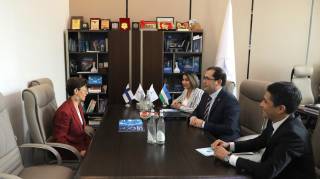
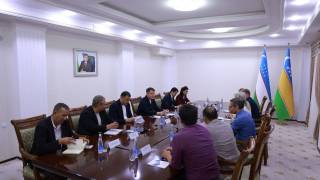
The high level of interagency engagement in the months before the Summit shows both sides are ready to shift into practical implementation. The Ministry of Investment, Industry and Trade and the Export-Import Bank of Korea signed a Memorandum on Strategic Cooperation during the 59th Annual Meeting of the ADB Board of Governors in Samarkand. Meanwhile, the Ministry of Transport continues negotiations with KIND Corporation over infrastructure projects, and the Ministry of Justice and KOICA have signed a protocol to develop an AI-based legal services environment in Uzbekistan. Cooperation between Tashkent and Seoul in public administration and digital transformation is also growing, including through the Uzbekistan – Korea Forum at the InterContinental Hotel. After the Minister of Investment, Industry and Trade Laziz Kudratov visited South Korea on June 24-26, bilateral investment relations have entered a new phase.
Conclusion: building technological sovereignty
The institutionalization of the strategic partnership between Uzbekistan and the Republic of Korea is creating a new geoeconomic landscape in Central Asia. The combined strengths of Uzbekistan’s demographic, resource, and reform potential with Seoul’s extensive financial and technological resources, such as concessional EDCF credit lines at 0.15% annual interest and grants from the Export-Import Bank of Korea, as well as engineering expertise from Hyundai Rotem, KIA, Incheon International Airport Corporation, Kyeryong, Saman Corporation, KOWEPO, KOICA, and KIRAM, are paving a stable path toward achieving industrial sovereignty.
The main conclusion is that for Uzbekistan, the South Korean connection is no longer just about foreign investment or diversifying labor migration. It now signifies deep integration into top-tier global technology value chains, including green energy, high-speed rail, biopharmaceuticals, microelectronics, critical materials, and space tech. The transition from importing finished Korean vehicles to local production and training E-7 skilled workers, from static PPP contracts to a model with concession payments rising from 5 to 27 percent, and from relying on a single labor migration market to a network of E-8 and E-9 agreements in specific Korean regions, indicates a major systemic overhaul of Uzbekistan’s foreign economic strategy.
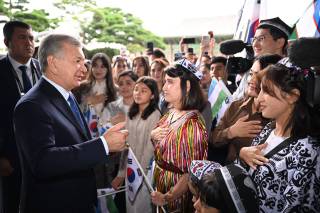
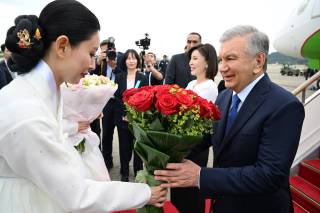
The ongoing state visit by the President of the Republic of Uzbekistan to Seoul and the upcoming first Central Asia – Republic of Korea Summit clearly showcase to the international community the achievements of Tashkent’s multi-faceted foreign policy. These events strengthen Uzbekistan’s position as the technological and logistical hub of a revitalized Eurasia – the central corridor where capital, expertise, and knowledge are now being redistributed.
Abduaziz Khidirov,
Master’s Student,
Academy of Public Policy and Administration under the President of the Republic of Uzbekistan
UzA