Mehmet Şahin: The future of the Turkic world depends on unity, shared values, and human potential
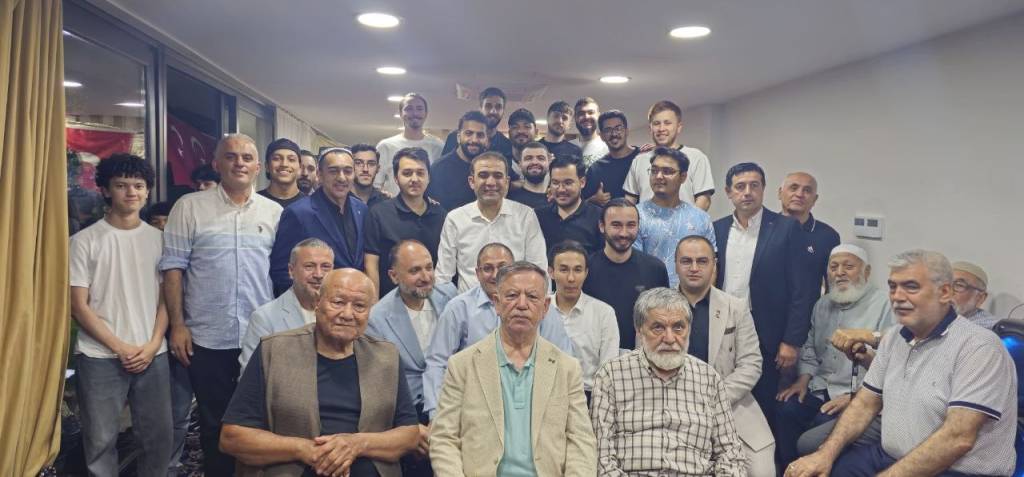
Shared historical, cultural, and spiritual ties among Turkic peoples have created a common space. The main goal is to enhance collaboration through economic, scientific, technological, and social partnerships.
Mehmet Şahin, leading the Istanbul Office for Relations with Turkic States, gave an exclusive interview to UzA.
– Today, the Turkic world spans a large region united by shared history, cultural memory, language, and spiritual values. The core connection is the genetic affinity formed over centuries, which underpins our modern relations. Deepening collaboration in sectors like economy, education, technology, transport, and culture helps boost our collective potential.
– Therefore, our primary aim is to convert historical affinity into tangible opportunities.
– Our brotherhood should manifest in all areas of modern life. This can include adopting new technologies from one country into another’s production lines, creating collaborative educational initiatives between universities, helping entrepreneurs access international markets, and working together on scientific and technological innovations.
– The Turkic World Vision 2040 outlines 60 key focus areas. Why is this approach important?
– A key element of the document is its thorough approach to examining and enhancing different sectors that shape the future of the Turkic world.
The successful advancement of energy, education, healthcare, the defense industry, technology, and the economy depends on their interconnected, systematic growth. For instance, implementing innovative technologies in the energy sector depends on skilled specialists, whose training is directly linked to the education system’s quality and standards.
– What factors should be considered to enhance economic and technological collaboration?
– Reaching the objectives depends on active involvement from both states and the private sector.
The Turkic world holds considerable potential because of its large market, rich natural resources, strong manufacturing capabilities, and youthful population. Yet, realizing this potential depends on effective management and coordination.
To capitalize on these opportunities, mechanisms need to be created and implemented to foster integration and collaboration. Special focus should be given to enhancing interaction among entrepreneurs, such as exchanging market trend information, engaging in joint planning, and launching new projects.
– What is your assessment of the present relationship between Uzbekistan and Türkiye?
– Uzbekistan occupies a unique position in global civilization. Samarkand, Bukhara, and Khiva are key hubs of science, culture, trade, and philosophical thought. Our respect for your country extends beyond politics and economics. It is grounded in profound historical and spiritual connections. As cooperation in economic, political, and cultural areas continues to grow daily, it fosters an environment conducive to expanding collaboration in emerging technologies, scientific research, joint manufacturing, and human resource development.
– Uzbekistan’s demographic potential is especially significant. How does this influence our shared development?
– Uzbekistan boasts the second-largest population among Turkic states after Türkiye. This figure represents more than just a statistic. It represents a vital resource: significant human capital, a domestic market, and the potential of its younger population.
In today’s world, human capital quality largely shapes competitiveness. Uzbekistan’s youth are a vital resource with the potential to significantly impact the nation’s progress. Providing quality education, access to modern technologies, and fostering entrepreneurial and scientific pursuits among young people can lay a foundation for prosperity not just for Uzbekistan, but for the entire Turkic world.
– Could you please share the activities you organize for Uzbekistan citizens living in Istanbul?
– For nearly a year, we have been working closely with your country’s representatives, listening to their proposals and discussing the necessary steps for their successful integration in Istanbul.
Our main conclusion is that full participation in public life goes beyond simply having the right to work or live. It also includes access to quality education, opportunities for professional development, active engagement in social activities, and building strong connections with the local community.
Ensuring Uzbek youth in Istanbul access quality higher education, build their professional skills, and adapt successfully to a new cultural environment is very important to us.
Recently, I attended a graduation ceremony for Uzbekistan students at a local university. These students are highly educated and talented, with many speaking multiple foreign languages. Their accomplishments play a significant role in enhancing the connection between Uzbekistan and Türkiye.
We have initiated projects to boost social engagement among women from Uzbekistan. Collaborating with civil society organizations, we are working on initiatives that promote cultural enrichment and social integration within the Uzbek diaspora.
We aim for Uzbeks to actively engage in Turkish society while maintaining their cultural traditions and values. This strategy promotes better mutual understanding between the peoples of Uzbekistan and Türkiye.
– How do you view the long-term prospects for the development of the Turkic world?
– Investing in education, technology, economic cooperation, and human capital today is a crucial strategic move for sustainable development.
Students currently in schools and universities will make important decisions for our countries in 2050. Providing access to quality education, modern technologies, entrepreneurial skills, and international collaboration will foster the right conditions for future success.
– If you had to sum up the future of the Turkic world in a single word, what would it be?
– Unity. However, this unity should transcend being merely a slogan. It must form the basis for progress across all sectors: education, the economy, technology, culture, and above all, in people’s relations.
As people with common historical backgrounds and values, our goal is to transform this connection into a strong basis for collaboration. The future of the Turkic world relies not just on government agreements but also on mutual trust, the potential of youth, and collective effort.
Interviewed by Nodira Qayumova, UzA
Istanbul, Türkiye